

“History is not an accidental occurrence; history is the sum of the finest deeds performed by the most capable people.”
February 23, 1969. The Racecourse Maidan reverberated with the thunderous slogans of hundreds of thousands of people. Standing on the stage, a vibrant 26-year-old student leader, in a voice resonating with conviction, announced a historic title: “Bangabandhu.”
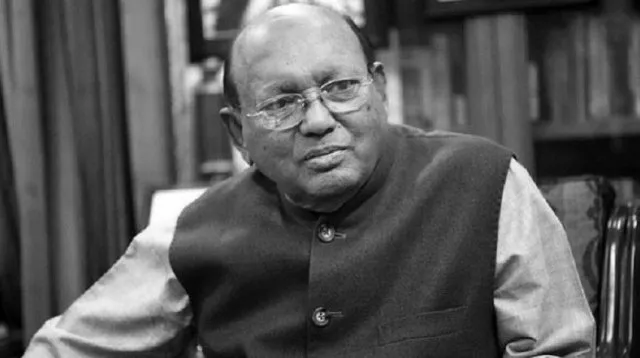
That young man was none other than Tofail Ahmed. The voice that conferred the title “Bangabandhu” upon Sheikh Mujibur Rahman has now fallen silent forever. On June 1, 2026, at the age of 82, he breathed his last at Square Hospital in Dhaka. With his passing, the curtain fell on a towering political epic spanning more than five decades. a one-man army who helped shape the political history of Bangladesh.
Born on October 22, 1943, in Koralia village of Bhola, Tofail Ahmed’s political rise began early. A brilliant student of Soil Science at the University of Dhaka, he served as Vice President of DUCSU from 1967 to 1969. As one of the principal architects of the Mass Uprising of 1969, he shook the foundations of Ayub Khan’s regime.
When the final struggle for Bangladesh’s independence began in 1971, Tofail Ahmed emerged as a frontline warrior of the liberation movement.
The famous Roman poet Ovid’s quote perfectly fits him –
“The mind, not the body, makes the champion.”
He was a champion not only in intellect but also in strength and determination.
As the commander of the western zone of the Mujib Bahini, one of the key driving forces of the Liberation War, he carried the responsibility of a vast region including Barisal, Khulna, and Faridpur. In 1970, at just 27 years of age, he was elected to Pakistan’s National Assembly with the Boat symbol and later became one of the signatories to the Constitution Drafting Committee of independent Bangladesh.
As the Political Secretary to Bangabandhu Sheikh Mujibur Rahman, Tofail Ahmed remained at the center of power until the events of 1975. But after the national tragedy of that year, his life took a dramatic turn. He endured 33 months of imprisonment and severe torture. When the Awami League returned to power in 1996, he was entrusted with the responsibilities of Minister of Industries and later Minister of Commerce.
Yet, there is a famous quote by the French philosopher Voltaire –
“In politics, there are no permanent friends or enemies.”
During the military-backed caretaker government of 2007, Tofail Ahmed supported a change in party leadership. As a result, an invisible distance gradually emerged between him and his longtime political ally, Sheikh Hasina. Despite being elected to Parliament nine times with the Boat symbol and remaining an MP until January 2024, he spent more than a decade of his later life politically marginalized within his own party. Having once stood at the pinnacle of power, he suffered from profound loneliness and disappointment in his final years. Yet until his death, he never deviated even an inch from the ideals of Bangabandhu.
Amid the turbulent ocean of politics, Tofail Ahmed’s family life resembled a peaceful island.
In 1964, he married Anwara Begum, the eldest daughter of Alhaj Mofizul Haque Talukdar of Donia. After six decades of a happy married life, Anwara Begum passed away in 2025, a loss that deeply affected him emotionally. The couple’s only daughter, Taslima Ahmed Zaman Munni, is a physician by profession. His son-in-law, Touhiduzzaman Tuhin, is also a renowned cardiologist at Square Hospital.
Perhaps the most emotional chapter of Tofail Ahmed’s family life was his relationship with his adopted son, Mainul Hossain Biplob.
After the death of his elder brother, he took his younger nephew Biplob under his care and loved him even more than his own child. Everywhere, he introduced him as his son. Tofail Ahmed carried a deep sense of guilt throughout his life, believing that his political involvement and commitments had indirectly contributed to the political murder of his non-political elder brother. It was from that profound remorse that he showered his brother’s son with extraordinary affection and care.
Just as the moon has its blemishes, Tofail Ahmed’s long political career was not without controversy.
In August 1969, during tensions surrounding the Education Commission issue, an attack allegedly carried out under his leadership on Islamic student leader Abdul Malek became one of the darker chapters in the history of Bangladesh’s student politics. Abdul Malek later died as a consequence of that incident.
As political circumstances changed, the veteran leader also found himself facing legal battles in the final phase of his life. In May 2026, a court formally framed charges against him over allegations of embezzlement and abuse of power. During his final days, when his body had already been weakened by the ailments of old age, court proceedings and legal notices only deepened the tragedy of his twilight years.
One is reminded of the famous lines of the American poet Robert Frost –
“The woods are lovely, dark and deep, but I have promises to keep…”
Tofail Ahmed, too, had some unfulfilled promises and final dreams—a Bhola-Barisal bridge, a public university in Bhola, and an international-standard cricket stadium for the district.
On June 1, 2026, all those dreams came to an end as he departed for the land of no return.
He belonged to a generation of politicians who spent less time reading history and more time creating it.