Tofail Ahmed’s Political Push, Zia’s Support, and Osmani’s Ultimatum: How Cadet Colleges Survived a National Crisis
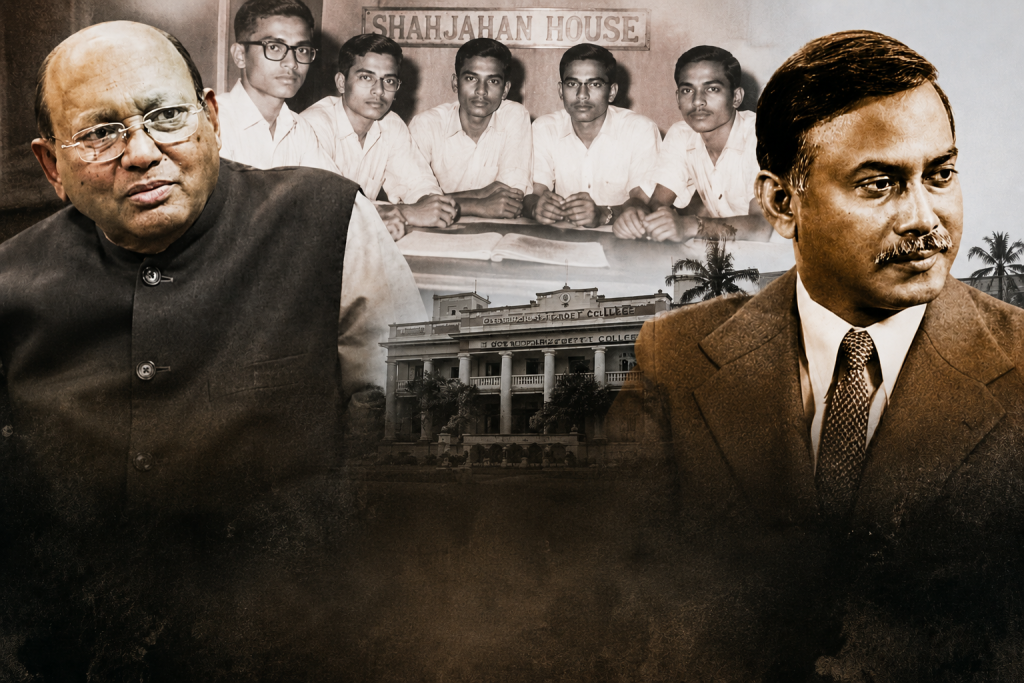
A meeting. Only five cadets. And one decision: student politics would not be allowed to enter cadet colleges. After that decision in 1972, a chain of events began that eventually pushed the very existence of all cadet colleges in the country into crisis. Later, the initiative of the cadets, the support of military officers, and the firm stance of General M A G Osmani brought a new turn to that history. Bangabandhu’s political assistant, Mr. Tofail Ahmed, visited the Faujdarhat Cadet College in 1972 with the aim of creating a political wing for students. At that time, five cadets led by Anwarul Haque gathered in a meeting at “Shahjahan House.” Along with Anwarul Haque, the meeting was attended by the late Kayyumul Huda, M A Tarek, Minu Khadem, and M Nurur Rahman. There, it was decided that student politics must not be allowed to enter the cadet colleges under any circumstances. For this reason, everyone agreed to tell others not to attend Tofail Ahmed’s political meeting. Not only that, but they also decided to persuade everyone not to go to the auditorium that day. The result was significant. Tofail Ahmed had to return empty-handed. He became angry with all cadet colleges. Just 10 days later, news came through radio, television, and newspapers that the then four cadet colleges Faujdarhat, Jhenidah, Mirzapur, and Rajshahi had been declared abolished. In a “Presidential Ordinance” (PO) signed by Bangabandhu, the abolition of cadet colleges was announced. It was stated there that from then on these institutions would be treated as general government colleges under the Ministry of Education. After this announcement, the same five people again held a meeting at “Shahjahan House.” The subject of the meeting was: “What should we do, and what must we do, to preserve cadet colleges in Bangladesh?” It was decided there that opinions would be collected from cadets of all batches in all colleges in favor of keeping cadet colleges alive. This initiative was named the “Keep Cadet Colleges Campaign.” Every cadet at that time supported the campaign. The senior cadets in charge of the campaign later came to Dhaka and met Colonel Chowdhury M Mohsin, an ex-cadet of Faujdarhat and an officer in the armed forces. He advised them to meet Brigadier Ziaur Rahman for consultation and guidance. Following his advice, an appointment was made with Ziaur Rahman. One evening, they went to his residence at Dhaka Cantonment regarding the matter. There, Brigadier Ziaur Rahman spoke over the phone with General M A G Osmani about the future and necessity of cadet colleges. Ziaur Rahman then remarked, “If General Osmani cannot do it, no one in Bangladesh can stop the abolition of cadet colleges.” Although he was a cabinet member, General Osmani knew nothing about the government’s decision to abolish cadet colleges. After learning about it, he expressed strong anger and concern. He said that he would speak to Bangabandhu about it that very day. Later, he contacted Bangabandhu through the red phone. He asked Bangabandhu, “Who advised him to abolish the cadet colleges, and how was such a move made without my knowledge?” While speaking with Bangabandhu in both Bangla and English, his anger and concern were clearly evident. He emphasized the importance of cadet colleges in the country’s education system and said that the PO abolishing cadet colleges should be revoked. At one point in that discussion, Osmani made his position clear. His final words were: “Cadet colleges will stay, I will stay; otherwise, I will resign.” “If cadet colleges stay, I stay; otherwise, I resign.” Due to Tofail Ahmed’s frustration in 1972–73 over not being able to form the student league committee, or because of the politicization of educational institutions, the country’s renowned cadet colleges would otherwise have been destroyed today by internal factionalism.
Even Stars Like Tofail Ahmed Must One Day Fade
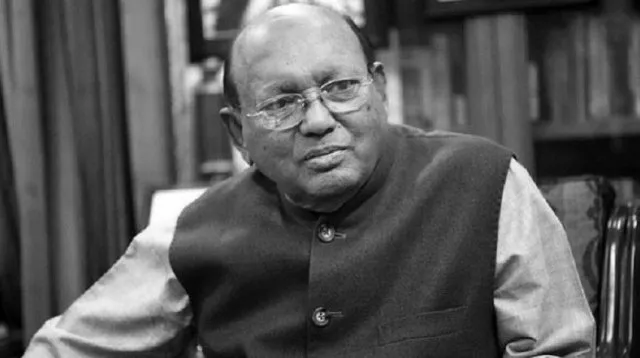
“History is not an accidental occurrence; history is the sum of the finest deeds performed by the most capable people.” February 23, 1969. The Racecourse Maidan reverberated with the thunderous slogans of hundreds of thousands of people. Standing on the stage, a vibrant 26-year-old student leader, in a voice resonating with conviction, announced a historic title: “Bangabandhu.” That young man was none other than Tofail Ahmed. The voice that conferred the title “Bangabandhu” upon Sheikh Mujibur Rahman has now fallen silent forever. On June 1, 2026, at the age of 82, he breathed his last at Square Hospital in Dhaka. With his passing, the curtain fell on a towering political epic spanning more than five decades. a one-man army who helped shape the political history of Bangladesh. Born on October 22, 1943, in Koralia village of Bhola, Tofail Ahmed’s political rise began early. A brilliant student of Soil Science at the University of Dhaka, he served as Vice President of DUCSU from 1967 to 1969. As one of the principal architects of the Mass Uprising of 1969, he shook the foundations of Ayub Khan’s regime. When the final struggle for Bangladesh’s independence began in 1971, Tofail Ahmed emerged as a frontline warrior of the liberation movement. The famous Roman poet Ovid’s quote perfectly fits him – “The mind, not the body, makes the champion.” He was a champion not only in intellect but also in strength and determination. As the commander of the western zone of the Mujib Bahini, one of the key driving forces of the Liberation War, he carried the responsibility of a vast region including Barisal, Khulna, and Faridpur. In 1970, at just 27 years of age, he was elected to Pakistan’s National Assembly with the Boat symbol and later became one of the signatories to the Constitution Drafting Committee of independent Bangladesh. As the Political Secretary to Bangabandhu Sheikh Mujibur Rahman, Tofail Ahmed remained at the center of power until the events of 1975. But after the national tragedy of that year, his life took a dramatic turn. He endured 33 months of imprisonment and severe torture. When the Awami League returned to power in 1996, he was entrusted with the responsibilities of Minister of Industries and later Minister of Commerce. Yet, there is a famous quote by the French philosopher Voltaire – “In politics, there are no permanent friends or enemies.” During the military-backed caretaker government of 2007, Tofail Ahmed supported a change in party leadership. As a result, an invisible distance gradually emerged between him and his longtime political ally, Sheikh Hasina. Despite being elected to Parliament nine times with the Boat symbol and remaining an MP until January 2024, he spent more than a decade of his later life politically marginalized within his own party. Having once stood at the pinnacle of power, he suffered from profound loneliness and disappointment in his final years. Yet until his death, he never deviated even an inch from the ideals of Bangabandhu. Amid the turbulent ocean of politics, Tofail Ahmed’s family life resembled a peaceful island. In 1964, he married Anwara Begum, the eldest daughter of Alhaj Mofizul Haque Talukdar of Donia. After six decades of a happy married life, Anwara Begum passed away in 2025, a loss that deeply affected him emotionally. The couple’s only daughter, Taslima Ahmed Zaman Munni, is a physician by profession. His son-in-law, Touhiduzzaman Tuhin, is also a renowned cardiologist at Square Hospital. Perhaps the most emotional chapter of Tofail Ahmed’s family life was his relationship with his adopted son, Mainul Hossain Biplob. After the death of his elder brother, he took his younger nephew Biplob under his care and loved him even more than his own child. Everywhere, he introduced him as his son. Tofail Ahmed carried a deep sense of guilt throughout his life, believing that his political involvement and commitments had indirectly contributed to the political murder of his non-political elder brother. It was from that profound remorse that he showered his brother’s son with extraordinary affection and care. Just as the moon has its blemishes, Tofail Ahmed’s long political career was not without controversy. In August 1969, during tensions surrounding the Education Commission issue, an attack allegedly carried out under his leadership on Islamic student leader Abdul Malek became one of the darker chapters in the history of Bangladesh’s student politics. Abdul Malek later died as a consequence of that incident. As political circumstances changed, the veteran leader also found himself facing legal battles in the final phase of his life. In May 2026, a court formally framed charges against him over allegations of embezzlement and abuse of power. During his final days, when his body had already been weakened by the ailments of old age, court proceedings and legal notices only deepened the tragedy of his twilight years. One is reminded of the famous lines of the American poet Robert Frost – “The woods are lovely, dark and deep, but I have promises to keep…” Tofail Ahmed, too, had some unfulfilled promises and final dreams—a Bhola-Barisal bridge, a public university in Bhola, and an international-standard cricket stadium for the district. On June 1, 2026, all those dreams came to an end as he departed for the land of no return. He belonged to a generation of politicians who spent less time reading history and more time creating it.
One Word, Two Narratives: How ‘Partition’ Became Bengal’s New Political Weapon
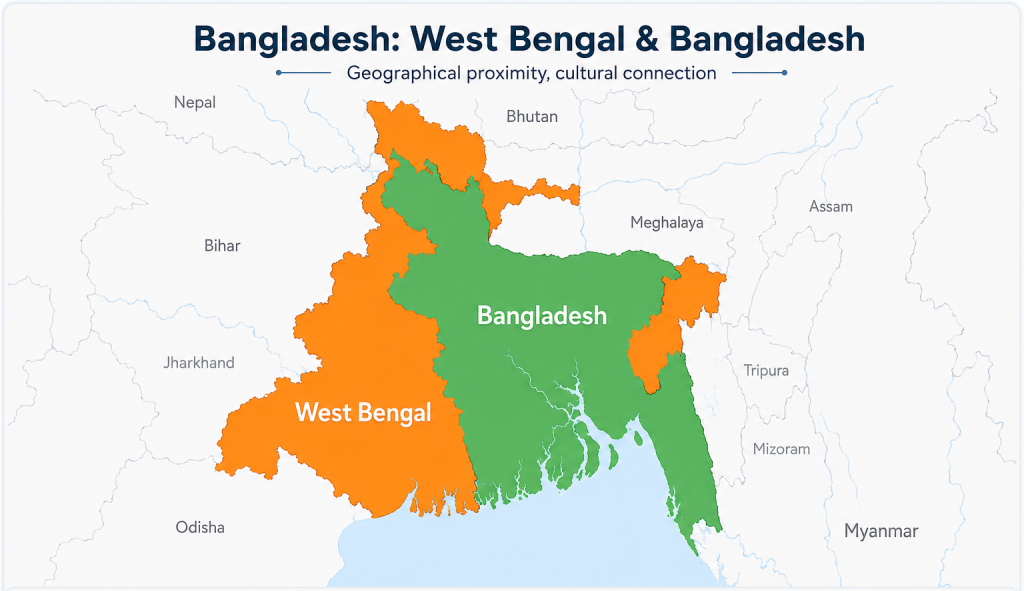
Nearly 80 years after the Partition of 1947, that old word from history seems to be returning in a new form. However, this time it is not through refugee-packed trains, barbed-wire borders, or bloody separation, but through Facebook posts, viral videos, political slogans, and heated social debates surrounding Eid-ul-Adha. Recently, the West Bengal government issued strict guidelines regarding animal slaughter and Qurbani (Eid sacrifice), which the Calcutta High Court also upheld. According to the new rules, animal slaughter without administrative permission, open public sacrifice, and slaughter activities without proper certification are prohibited. The government claims that these measures are intended to ensure law and order, public health, and environmental protection. However, critics argue that although administrative permission is mentioned, obtaining it in practice has become difficult in many areas, or delays in the approval process make it impossible to complete procedures on time. As a result, uncertainty and confusion have emerged regarding religious practices, further increasing public dissatisfaction. The situation became so sensitive that even the Imam of Kolkata’s historic Nakhoda Mosque urged Muslims to refrain from sacrificing cattle. This statement further intensified the debate on social media. A wave of posts, videos, and live discussions quickly spread anger, frustration, religious sentiment, and political arguments. A major factor fueling this controversy is the algorithm-driven nature of social media platforms. On Facebook, YouTube, X (Twitter), and Reddit, numerous pages and political accounts interpret events in line with their own ideologies. Short video clips, interviews of distressed farmers, confrontations with police, and even old footage are often circulated with new claims, spreading rapidly within minutes. As a result, real events, exaggerations, and misinformation blend, creating a highly charged digital environment. However, this crisis is not purely religious; it is also deeply connected to economic and political factors. Many farmers and traders in the cattle markets have suffered financial losses due to reduced sales during the Eid season. Not only Muslims but also many Hindu cattle farmers have reportedly been affected economically. Traders claim that reduced cattle supply from border areas, transportation difficulties, and increased administrative monitoring have also impacted the market. Consequently, the issue has gradually shifted from a religious debate to a broader discussion on social and economic instability. According to political analysts, religious polarization in West Bengal has intensified since the rise of the Bharatiya Janata Party. On one side is the expansion of Hindu nationalist politics, while on the other is a counter-political stance centered around the Muslim vote bank. In this conflict, even the religious sentiments of ordinary people are increasingly being used as political tools. Various social media posts claim that Muslims are facing growing social and administrative pressure. On the other hand, hardline Hindu nationalist groups use terms like “West Bengal” to mock the Muslim population and political landscape of West Bengal. Some also use the term “Muslim Bengal” as a symbol of demographic change and cultural transformation. Thus, the same words carry completely different meanings for different groups. This debate is not limited to West Bengal alone—it has also triggered strong reactions across the broader Bengali-speaking online community, including Bangladesh. Users from both sides interpret the issue from different perspectives: some view it as an example of religious rights being restricted, while others see it as a matter of law enforcement and social regulation. Interestingly, both sides are now using the term “Partition” in their own ways. One side argues that Muslim rights are being restricted, while the other claims that the identity of West Bengal is changing. In other words, the same word that once physically divided people in 1947 is now, in 2026, dividing them mentally, culturally, and politically. However, the reality is that not all information circulating on social media is true. Several videos, images, and claims have already been proven misleading or false. Old footage from past riots has been circulated as recent events, videos from other countries have been presented as if they were from West Bengal, and edited clips have been used to create emotional tension. Yet in the politics of emotion, feelings often spread faster than facts. For this reason, “Partition” is no longer just a chapter of history; it has once again become a political symbol, a social anxiety, and a slogan in a new age of online conflict.
From Sacrificial List to National Zoo: The Crazy Story of Bangladesh’s “Donald Trump” Buffalo
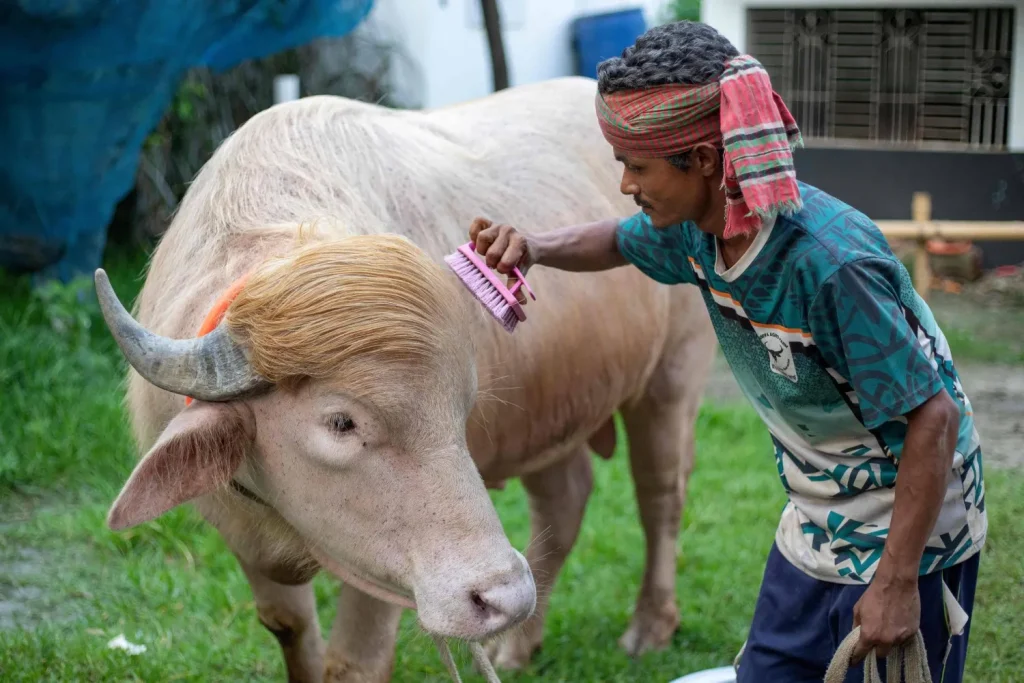
At Rabeya Agro Farm in Narayanganj, a rare white albino buffalo weighing nearly 700 kilograms was affectionately named “Donald Trump.” Because of the golden hair-like patch on its head and its unusual facial expression, the farm owners jokingly gave it the name. However, what began as a simple and humorous naming choice gradually evolved into something much bigger, transforming from a viral social media sensation into a topic involving international diplomacy, state sensitivity, and discussions about Bangladesh’s national identity. At first, people viewed the matter purely as entertainment. Thousands of visitors crowded the farm just to catch a glimpse of the “Donald Trump” buffalo. International media outlets also covered the story as a humorous and unusual event. Major foreign news organizations, including Reuters, CBS, and NDTV, published reports about the buffalo from Bangladesh. However, the situation changed when reports emerged that the viral buffalo was going to be sacrificed during Eid al-Adha. At that point, the issue moved beyond social humor and entered the realm of politics and diplomacy. Eventually, following intervention from the Ministry of Home Affairs, a decision was reportedly made to remove the buffalo from the sacrifice list and relocate it to the national zoo. This is where the idea of “Buffalo Diplomacy” truly emerged. The concept of diplomacy centered around animals is not entirely new in global politics. The most famous example is China’s “Panda Diplomacy.” For decades, China has used pandas as gifts or long-term loans to strengthen friendships, expand soft power, and reinforce political relationships with other countries. Sometimes, even an animal can become a symbol of a nation’s image, strategy, and international messaging, and the controversy surrounding the “Donald Trump” buffalo has highlighted that reality in a new way. Many people jokingly remarked that Bangladesh had unintentionally found itself in its own version of “Buffalo Diplomacy.” One side argues that the government intervened because it understood the potential seriousness of the situation. Today’s global political climate is highly polarized and sensitive. The name “Donald Trump” is no longer merely the name of an individual; it has become a global political symbol. If the buffalo had been sacrificed publicly, some fear that Islamophobic groups, segments of Western media, or political actors could have intentionally misrepresented the event. There were concerns that Bangladesh’s religious culture and Muslim traditions might be portrayed negatively or taken out of context. From this perspective, many believe the government acted to avoid unnecessary diplomatic risks. Critics, however, see the matter very differently. According to them, the fact that a sacrificial animal was named “Donald Trump” should not automatically be interpreted as an international insult. A farm owner has the right to name an animal however they wish, and sacrificing it as part of a religious tradition would have been entirely normal. Critics argue that if the state becomes uncomfortable merely because of a viral name, it reflects a lack of diplomatic confidence. Many have drawn comparisons with India, saying that larger states often face controversies directly and establish their positions more firmly. In contrast, Bangladesh’s excessive caution, in their view, has appeared to symbolize insecurity and defensiveness. Another large group believes the government could have handled the situation in a more mature and strategic way. It may have been possible to preserve the farm owner’s freedom while simultaneously communicating a clear international message. Such an approach could have projected both boldness and confidence, helping create the image of a self-assured state in the eyes of the public. Instead, by attempting to avoid any possible controversy, the government may have unintentionally created a new debate: “Is Bangladesh becoming overly defensive?” That question has now started circulating widely. The incident also attracted international attention. Several foreign media outlets described it as a form of “viral buffalo diplomacy.” Discussions and satire surrounding the issue reportedly spread across certain Iranian and Russian media spaces as well. On social media, many users began linking the controversy to the broader dynamics of contemporary global power politics. Some observers believe that amid ongoing global conflicts, international pressure, and the highly sensitive geopolitical environment surrounding the United States, the Bangladeshi government wanted to remain especially cautious about its international image. Perhaps the intervention was intended to avoid unnecessary attention, questions, or misinterpretations from the U.S. administration. Some consider this decision a sign of foresight, while others see it as an overly defensive reaction from an independent nation. Nevertheless, one thing is clear: what began as humor surrounding a buffalo eventually sparked a much larger debate about Bangladesh’s society, politics, diplomacy, and national self-confidence. While “Panda Diplomacy” represents a carefully planned form of soft power, Bangladesh’s “Buffalo Diplomacy” appeared to emerge completely unintentionally. Yet it still demonstrated how, in today’s world, even an animal can sometimes become the center of international politics, national image, and diplomatic sensitivity. Only time will tell whether the government’s decision was truly far-sighted or whether it will continue to raise even bigger questions in the future.
What is Cockroach Janta Party? The Full Story of the Viral Youth Anger Movement
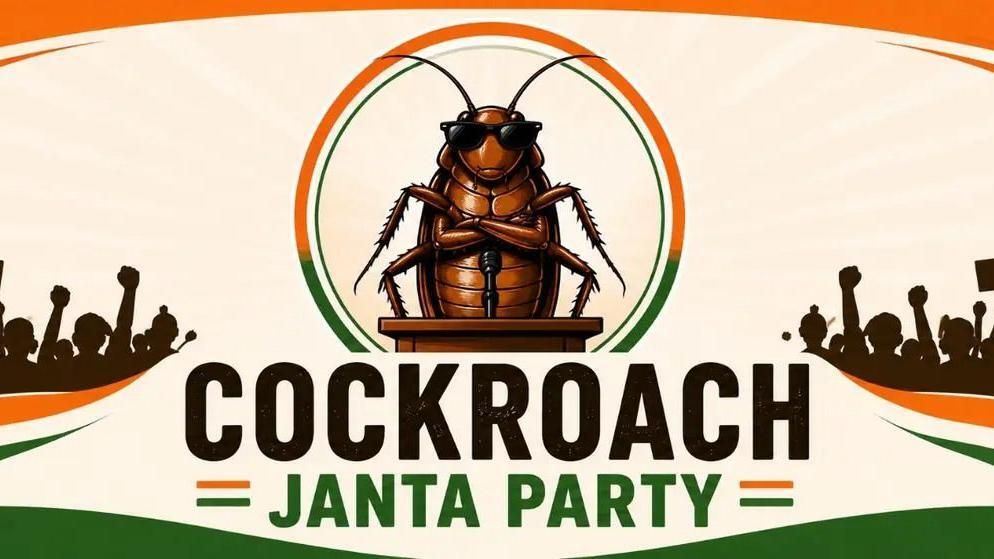
Recently, a strange but powerful movement had gone viral on Indian social media, ” Cockroach Janta Party” or CJP for short. At first glance, the name may sound laughable, but behind it lies the deep anger, frustration, and protest of millions of young people in today’s India. Within just 7 to 10 days, the movement became so popular that the government was forced to take swift action. It all began with a remark made by Chief Justice of India Surya Kant. During a hearing, he referred to a group of young people as “cockroaches.” The comment deeply offended many young people, who felt that their unemployment, frustration, and struggles had been insulted in this way. At that very moment, Abhijit Dipke, a 30-year-old living in Boston, seized the opportunity and launched a website and social media accounts under the name Cockroach Janta Party. He declared himself the founder of the movement and said it was “the voice of idle and unemployed youth.” Their posts were very different, sharp satire, funny memes, and direct criticism of the government and institutions. On issues such as the NEET paper leak, irregularities in recruitment exams, the failure of the education system, and unemployment, they spoke in a way that drew young people by the thousands. Within just a few days, their Instagram following crossed 20 million. Their manifesto contained several clear demands. These included ending post-retirement benefits for judges, introducing 50 percent reservation for women, supporting independent media, imposing a 20-year ban on political leaders switching parties, and demanding the education minister’s resignation over exam irregularities such as those in NEET. These demands struck a strong chord among the youth. But the government did not welcome this rapid rise. Suddenly, their official website was blocked, and their X (Twitter) account was also shut down. The government said it was a threat to national security and that the action was taken based on an Intelligence Bureau report. Abhijit Dipke has said that he and his family have received death threats. He has now filed a case in the Delhi High Court seeking the unblocking of the account. Political reactions have also come from both sides. The BJP attacked the movement as a “foreign conspiracy” and something “backed by the opposition,” saying it was an attempt to destabilize the country. On the other hand, Congress leader Shashi Tharoor said that in a democracy, there should be space for satirical criticism and for young people to express their anger. He called for channeling that anger in the right direction. In fact, Cockroach Janta Party is not a registered political party. It will not contest any election. It is simply a satirical expression of the long-suppressed frustration and anger of young people. But its rapid spread and the government’s equally swift crackdown have together made one thing clear: the condition of the youth and the reality of digital politics in today’s India remain highly sensitive.
Public Servants: Serving the State or the Party ?
One of the fundamental conditions for maintaining political stability in a state is ensuring the professional neutrality, accountability, and constitutional responsibility of public officials. Administrative officers play a crucial role in preserving institutional balance between political parties within the state structure. However, when the administrative system becomes subordinated to partisan influence, the institutional foundation of the state gradually weakens. As a consequence, democracy itself not only becomes vulnerable but, at times, its very existence comes into question. The state is inherently a political institution, and political parties are an integral part of it. Although the Constitution of Bangladesh recognizes democracy as the core principle of governance, democracy in the political culture of the Indian subcontinent has rarely developed into a fully institutionalized system. Bangladesh is no exception. Since independence, the country has repeatedly experienced different forms of authoritarian rule under the façade of democracy. Immediately after independence, flawed elections and the establishment of BAKSAL dismantled the multi-party political structure. Later, military coups, prolonged military rule, and shifting political equations shaped the country’s trajectory. Although the mass uprising of 1990 created hope for the restoration of democracy, the political realities that followed the 1991 election repeatedly challenged that expectation. The Magura by-election, the one-sided election of 1996, and subsequent political confrontations continuously weakened democratic institutions. However, after 2008, the crisis deepened further as constitutional institutions increasingly came under executive control. This raised serious public concerns regarding administrative neutrality and the effectiveness of democratic institutions. In this context, the role of public servants becomes critically important. Although they operate under the executive branch of government, their conduct and responsibilities are regulated by clear laws and codes of conduct. According to the Government Servants (Conduct) Rules, 1979, no public official is allowed to engage directly or indirectly in political activities. Yet, the reality often reflects the opposite. In many cases, partisan loyalty, political identity, and overt support for the ruling party have become major factors behind promotions and institutional influence within the administration. Recently, a high-ranking police official publicly expressed loyalty to the government and openly embraced the ideology of the ruling party during a speech. Despite the presence of top government officials at the event, no visible concern or administrative action followed. Yet Rule 25 of the Government Servants (Conduct) Rules, 1979 clearly states that no public servant may become a member of any political party or participate in political activities. Such incidents therefore represent not only violations of official conduct rules, but also serious threats to administrative neutrality itself. Bangladesh’s recent political history demonstrates how politicized and submissive bureaucracies can push a state toward dangerous instability. Over the years, administrative culture based on political allegiance has weakened democratic institutions and eroded public trust. Following recent political movements and democratic aspirations, there was hope that the administrative structure would return to a path of neutrality and accountability. In reality, however, signs of continued politicization remain evident. Even unofficial recommendation letters from MPs and ministers regarding promotions have become increasingly normalized. Rules 20 and 30 of the Government Servants (Conduct) Rules prohibit public servants from using political or external influence regarding service-related matters. Furthermore, the Government Servants (Discipline and Appeal) Rules, 2018 provide punishments ranging from reprimand and demotion to compulsory retirement or dismissal for misconduct. Yet due to the lack of effective enforcement, these regulations often remain confined to paper rather than practice. Democracy is not merely an election-centered system; it is fundamentally an institution-centered political culture. That culture becomes strong only when the administration rises above political loyalty and remains accountable solely to the Constitution, the law, and the people. The democratic future of Bangladesh largely depends on restoring that institutional balance. Otherwise, merit, professionalism, and constitutional responsibility within the administration will continue to surrender to political favoritism and partisan interests, ultimately weakening the state itself and undermining its democratic foundations.
Before 1971, Fazlul Huq Already Knew Pakistan Would Fail
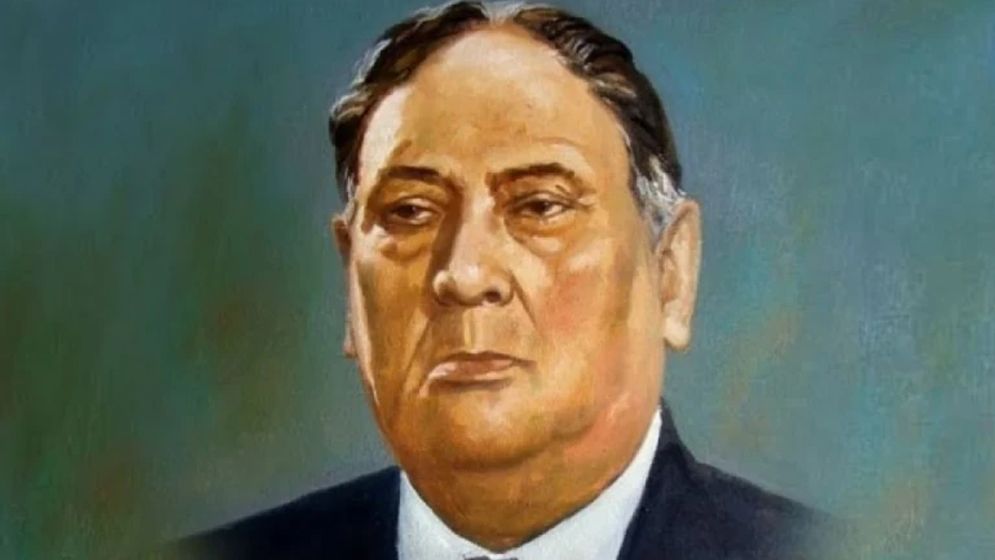
The elites of Kolkata once argued that there was no need to establish a university in Dhaka. According to them, a small agricultural college near Farmgate or Dhanmondi would be enough. Outraged by this narrow-minded and self-serving attitude, A. K. Fazlul Huq went to the British authorities and firmly argued that Dhaka deserved a full-fledged university. The British eventually softened their stance, though the First World War delayed the project. When University of Dhaka was finally established in 1921, Sher-e-Bangla Fazlul Huq was serving as the Education Minister of Bengal. In 1916, he became the president of the All-India Muslim League. The following year, in 1917, he became the General Secretary of the Indian National Congress. He remains the only person in history to have simultaneously held the positions of President of the Muslim League and General Secretary of the Congress. During 1918–19, Jawaharlal Nehru served as his personal secretary. Before the 1937 elections, Fazlul Huq declared that if elected, he would abolish the zamindari system forever. To stop him, landlords across Bengal and Kolkata spent enormous amounts of money against him. But it was of no use—the peasants voted for their own leader. At the historic Lahore Resolution session in 1940, Muhammad Ali Jinnah was delivering his speech when a sudden murmur spread through the audience. People’s attention shifted away from Jinnah because Fazlul Huq had just entered the hall. Seeing this, Jinnah reportedly remarked: “When the tiger arrives, the lamb must give way.” It was Fazlul Huq who moved the historic Lahore Resolution. In his proposal, he envisioned separate Muslim-majority states: one in the northwestern region and another comprising Bengal and Assam in the east. However, only a few days later, Jinnah altered the wording of the resolution. The original phrase “Muslim majority states” was changed into “Muslim majority state,” transforming the vision of two sovereign Muslim states into a single Pakistan. Fazlul Huq bitterly remarked: “Jinnah circumcised my Lahore Resolution.” He believed that a country divided into eastern and western wings with India in between could never survive in the long run. History proved his fears correct in 1971 during the Bangladesh Liberation War. Sheikh Mujibur Rahman later wrote in his memoirs that ordinary people loved Fazlul Huq so deeply that criticizing him often provoked public anger. Bangabandhu’s own father once advised him: “Whatever you do, never speak against Sher-e-Bangla. He did not become Sher-e-Bangla without reason.” Professionally, Fazlul Huq was one of the most respected lawyers of the Calcutta High Court. Before studying law, he completed triple honours in Physics, Chemistry, and Mathematics, and later earned a master’s degree in Mathematics. Once, during a legislative budget session, an MP personally attacked him and even began singing a mocking song aimed at humiliating him. Fazlul Huq calmly responded: “Mr. Speaker, I can jolly well face the music, but I cannot face a monkey.” When controversy erupted, he cleverly clarified: “I never mentioned any honourable member of this House. But if any honourable member thinks that the cap fits him, I withdraw my remark.” Throughout his life, he held almost every major political office possible. He served as the first Prime Minister of Bengal, the Chief Minister of East Bengal, the Home Minister of Pakistan, the Governor of East Pakistan, and the Chancellor of the University of Dhaka. Yet above all, Fazlul Huq became beloved because he stood for the peasants and working-class people of Bengal. He once said: “The day the newspapers of Kolkata begin praising me, know that the peasants of Bengal are in danger.” In 1948, when Jinnah visited Dhaka and declared Urdu to be the sole state language of Pakistan, students fiercely protested. Jinnah suspected that Fazlul Huq was secretly encouraging the students. Eventually, the two leaders met privately. According to Fazlul Huq’s assistant, the conversation unfolded sharply. Jinnah said: “You never truly wanted Pakistan.” Fazlul Huq replied: “I was the one who moved the proposal. Later, it was mutilated.” When Jinnah warned him by saying, “You are talking to the Governor-General of Pakistan,” Fazlul Huq calmly answered: “I know the powers of a constitutional Governor-General.” And when Jinnah attempted to intimidate him further, Fazlul Huq responded boldly: “This is Bangladesh, and you are talking to the Royal Bengal Tiger.” A. K. Fazlul Huq was not merely a politician. He was the voice of Bengal’s peasants and workers, a visionary leader who foresaw the future long before others did, and one of the greatest figures in the political history of Bengal.
Maulana Bhashani: The Voice of the Oppressed and a Forgotten Architect of Bangladesh’s Freedom
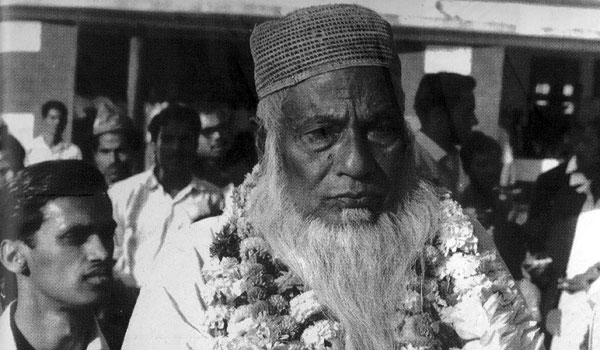
Maulana Abdul Hamid Khan Bhashani was one of the most influential political leaders in the history of the Indian subcontinent. Known as the “Leader of the Oppressed” (Majlum Jananeta), he dedicated his entire life to fighting injustice, inequality, and exploitation. Born in 1880 in Dhangara village of Sirajganj district, Bhashani received only limited formal education in schools and madrasas. His professional life began in 1909 as a teacher at Kagmari School in Tangail. Later, he received political inspiration from renowned anti-British nationalist leader Chittaranjan Das. Bhashani entered politics not for personal gain or family legacy, but to serve ordinary people. Throughout his life, he stood beside farmers, laborers, and marginalized communities. During the 1950s, he had already realized that East Bengal could never achieve true freedom and justice within the political structure of Pakistan. His political foresight was later proven correct by history. One of the most significant events of his political career was the historic Long March toward the Farakka Barrage on May 16, 1976. Bhashani believed that the Farakka Barrage would severely damage the rivers, agriculture, and environment of Bangladesh. In protest, he organized a mass movement and led thousands of people in resistance. His fearless leadership made him even more respected among the common people. Maulana Bhashani also played a crucial role in Bangladesh’s independence movement and Liberation War. Alongside Sheikh Mujibur Rahman, he was one of the strongest voices advocating for the freedom of East Pakistan. On March 9, 1971, at Paltan Maidan in Dhaka, he delivered a historic speech urging the people to prepare for armed resistance. From January until March 25, he traveled across the country, inspiring people to join the struggle for independence. After the Liberation War began, the Pakistani military attempted to arrest or assassinate him. They reportedly referred to him as “Kafir Bhashani” while searching for him. Unable to find him, Pakistani forces burned down his house. Eventually, Bhashani managed to escape to India through various secret routes and strategies. Upon arriving in India, his appeal for support for Bangladesh’s freedom struggle received wide attention in Indian newspapers. He actively sought international support for Bangladesh by sending letters and telegrams to the United Nations, leaders of Muslim countries, democratic governments, and world leaders. He strongly protested against the support given to Pakistan by China and the United States, openly criticizing their role during the war. Throughout the Liberation War, Maulana Bhashani traveled across different parts of India while continuing diplomatic efforts for Bangladesh. Using his international influence, he appealed to governments around the world, including the Soviet Union, China, and members of the United Nations, to support the Bengali people. During the time when Sheikh Mujibur Rahman was imprisoned in Pakistan, Bhashani also served as the chairman of the all-party advisory committee that assisted in guiding the Liberation War effort. Even after Bangladesh achieved independence on December 16, 1971, Maulana Bhashani did not immediately return home. He came back to Bangladesh on January 22, 1972 — twelve days after Sheikh Mujibur Rahman returned from Pakistani imprisonment. Upon his return, his first major demand was the withdrawal of Indian troops from Bangladeshi soil, demonstrating his strong commitment to national sovereignty and independence. Bhashani was widely respected for his courage and straightforward political stance. During the political deadlock of 1971, while negotiations over the transfer of power were ongoing, he famously advised Sheikh Mujibur Rahman by saying, “Nothing will come from discussions; just say goodbye to them.” This statement reflected his deep distrust of the Pakistani ruling establishment and his clear understanding of the political reality. He also maintained an important relationship with Indian Prime Minister Indira Gandhi. While expressing gratitude for India’s support during the Liberation War and for sheltering millions of refugees, he simultaneously emphasized the importance of recognizing Bangladesh’s independence. One of his memorable statements was: “I want India’s support and cooperation, but I do not want to become dependent on them.” Maulana Bhashani lived until the age of 96. He died at PG Hospital in Dhaka and was buried in Tangail. He was one of the founders of Awami League, yet over time, his immense contribution to Bangladesh’s political history has often been overlooked. The history of Bangladesh was not built by a single individual alone. It was shaped through the sacrifices and contributions of countless leaders, activists, freedom fighters, and martyrs. Alongside Sheikh Mujibur Rahman, figures such as Maulana Bhashani, Tajuddin Ahmad, the National Four Leaders, Comrade Moni Singh, General Osmani, Colonel Taher, Khaled Mosharraf, and the seven Bir Sreshthas all played vital roles in the creation of Bangladesh. Remembering and honoring all of them is essential to preserving the true spirit of the nation.