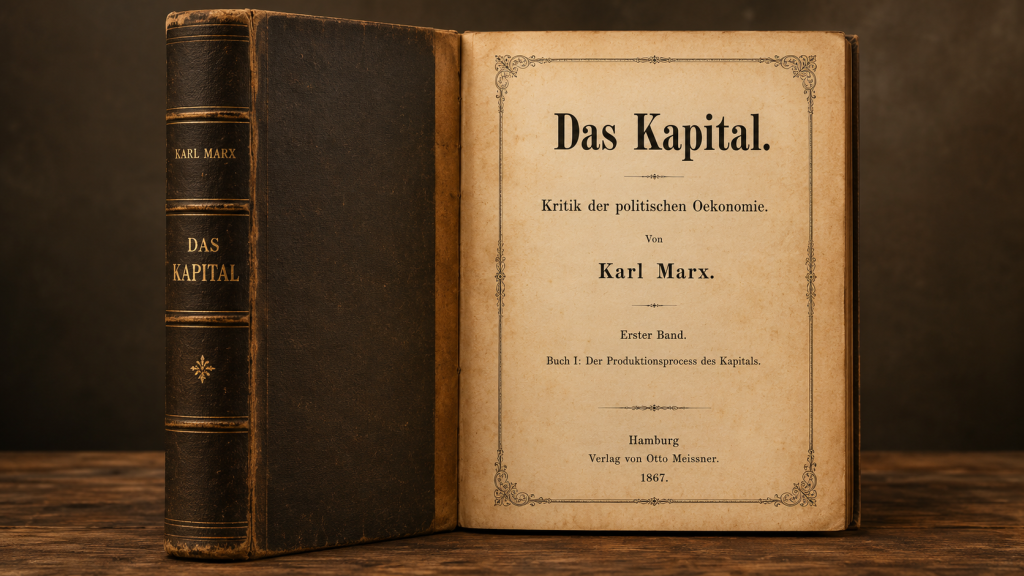


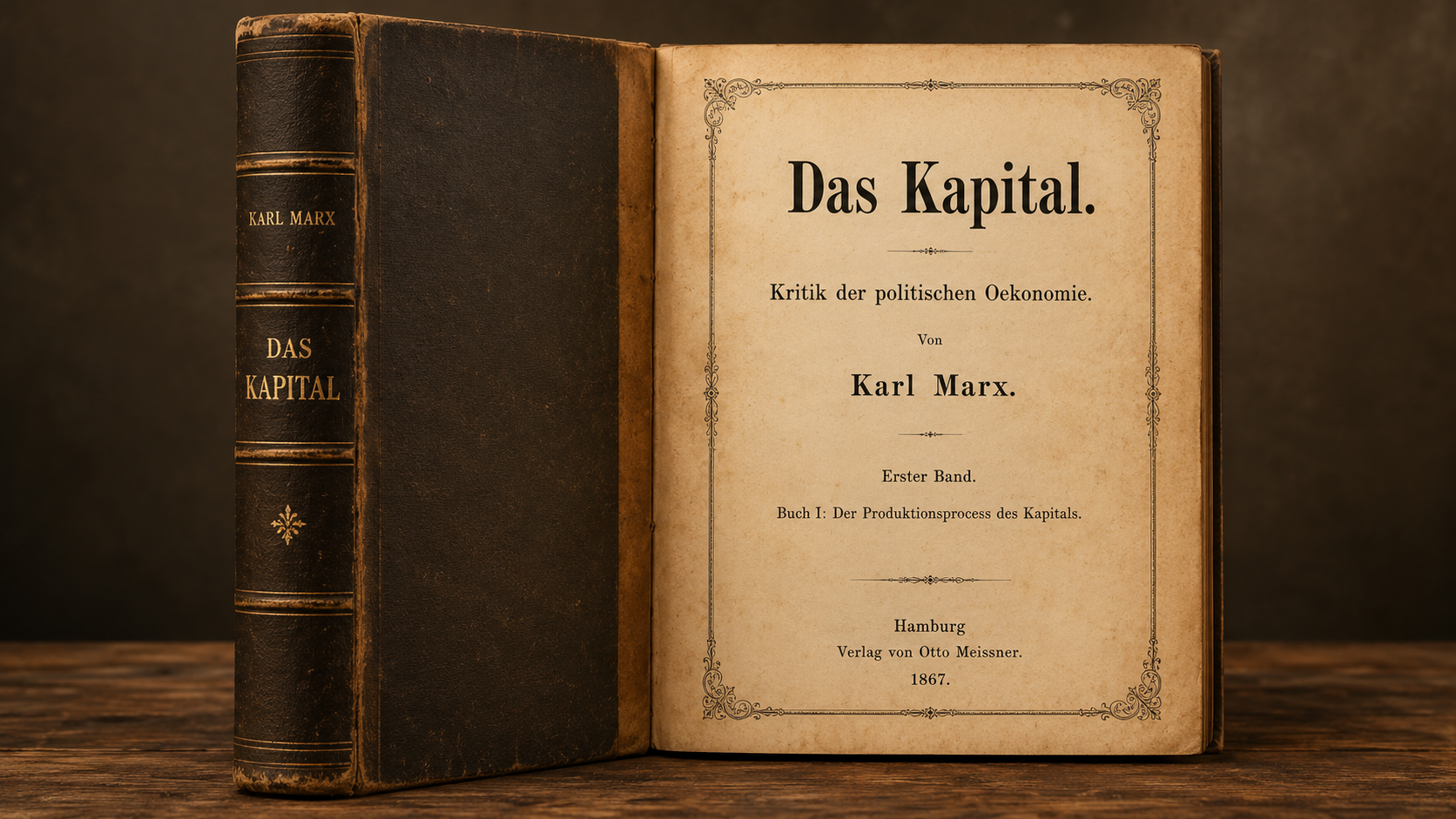
Karl Marx’s Das Kapital is one of the most important books about capitalism and economic society. In this work, Marx tries to explain how capitalism actually functions beneath its surface appearance. He argues that capitalism may look fair because workers receive wages and goods are exchanged through markets, but the system is built on an unequal relationship between workers and capitalists.
Marx begins with the idea of commodities. A commodity is something produced to be sold in the market. Every commodity has a use value, meaning its practical usefulness, and an exchange value, meaning what it can be traded or sold for. Marx believes that the value of a commodity is closely connected to the labor used to produce it. Human labor, therefore, becomes central to understanding capitalism.
The most important relationship in capitalism is between the worker and the capitalist. Workers usually do not own land, factories, machines, or other means of production. Because of this, they must sell their labor power in order to survive. Capitalists buy this labor power by paying wages. However, Marx argues that workers create more value through their labor than they receive in wages. The extra value produced by workers is called surplus value, and this surplus becomes the source of profit for the capitalist.
This is where Marx sees exploitation. The worker is paid, so the system appears legal and fair. But in reality, the capitalist gains wealth from the unpaid portion of the worker’s labor. For Marx, this hidden exploitation is the foundation of capitalist profit.
Marx also discusses how capitalism affects human life. Workers can become alienated from their work because they do not own what they produce. The product belongs to the capitalist, not to the worker. As a result, work becomes less creative and meaningful and more like a forced activity done only for survival.
Another major idea in Das Kapital is accumulation. Capitalists are always pressured to make more profit, expand production, reduce costs, and compete with others. This can lead to technological progress and economic growth, but it also creates inequality, unemployment, and economic crises. Marx believed that capitalism contains internal contradictions because it depends on workers while also exploiting them.
Overall, Das Kapital is a critical analysis of capitalism. Marx’s main argument is that capitalism creates wealth, but that wealth is produced by workers and controlled by capitalists. The book challenges readers to look beyond the surface of markets and wages and understand the power relations hidden inside the economic system.