How Bangladeshi Freelancers Are Secretly Building the AI Revolution

When you type a question into an AI chatbot and get a perfect, smart answer in seconds, it feels like magic. We often think that Artificial Intelligence is a super-smart machine that learns everything by itself. But that is a big misunderstanding. The truth is, AI cannot learn on its own. Behind every smart, accurate, and safe answer given by an AI, there is a real human being working hard behind a computer screen. These workers are called Data Annotators. They are the ones who clean up the AI’s mistakes, fix its messy language, and block it from saying harmful things. What is even more amazing is that Bangladesh has become a global superpower in this industry. Today, Bangladeshi freelancers make up about 15% of the entire global freelancing market on websites like Upwork and Fiverr. They are the invisible army shaping the future of technology. The Secret Life of a Data Annotator To understand why this is such a big deal, we have to look at what these freelancers actually do every day. An AI model starts out like a blank notebook. It does not know the difference between right and wrong, or between a cat and a dog. Tech companies need humans to teach the AI, and this is where Bangladeshi freelancers come in. One of their most important jobs is something called “Red-Teaming.” This sounds like a military term, and in a way, it is. Freelancers act like hackers or testers who intentionally try to break the AI. They ask the chatbot tricky questions, try to make it angry, or trick it into giving illegal advice. When the AI fails, the freelancer marks the mistake so the engineers can fix it. This keeps the AI safe for the public. Apart from that, they do a massive amount of data labeling and tagging. If an AI needs to recognize cars on the road for self-driving technology, thousands of photos of roads must be manually tagged. A human has to draw a box around every car, traffic light, and pedestrian in a photo so the AI can learn what they look like. Bangladeshi freelancers spend hours doing this detailed work, along with listening to audio clips to type them out for voice-recognition AI. Why Global Companies Love Bangladeshi Freelancers It is not an accident that 15% of the world’s online marketplace is filled with workers from Bangladesh. International companies actively look for Bangladeshi talent for a few major reasons. First of all, the youth of Bangladesh are incredibly quick learners. As the world shifted from simple data entry to complex AI training, Bangladeshi freelancers upgraded their skills almost overnight. They learned how to talk to AI, how to grade its logic, and how to spot bias in machine learning. Second, Bangladesh offers high-quality work at a very competitive price. Because the cost of living in Bangladesh is much lower than in countries like the USA, UK, or Australia, local freelancers can afford to charge rates that are highly attractive to global tech giants. This affordability makes them the top choice for companies that need thousands of hours of data work done without breaking the bank. A Massive Financial Blessing for Bangladesh This massive wave of freelancing is doing wonders for the country’s economy. These are not just young people earning a little bit of pocket money. This is a massive professional industry that brings huge amounts of foreign currency directly into the country. During the 2024-25 financial year, Bangladeshi freelancers brought in a staggering $725 million in remittances. In local currency, that is around 8,500 Crore BDT. When a freelancer gets paid in US dollars, that money enters the Bangladeshi banking system and helps the entire nation’s economy grow stronger. It creates jobs, powers local businesses, and gives thousands of families a better standard of living. The Road Ahead for the Digital Nation The AI industry is growing faster than almost any other industry in human history. As tech giants build bigger and more complex AI systems, they will need even more humans to test, train, and fix those systems. For Bangladesh, this is a golden ticket to the future. By focusing more on teaching young people good English communication skills and basic computer literacy, Bangladesh can easily grow its share from 15% to an even higher number. The hardworking youth of the country have already proven that they can compete with the best in the world, and they are just getting started.
The End of an Era? Why OpenAI’s New ‘Jalapeño’ Chip is a Direct Strike at Nvidia’s AI Throne
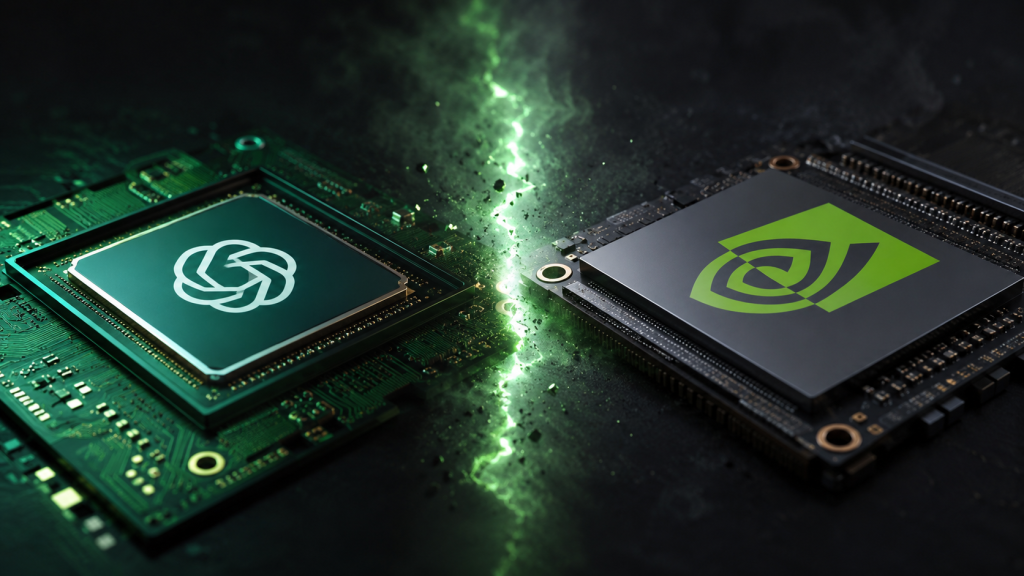
The artificial intelligence industry recently witnessed a seismic paradigm shift. OpenAI, a company globally renowned for defining the modern AI software era with ChatGPT, has officially crossed the Rubicon into custom hardware. Its weapon of choice is a proprietary, custom-designed silicon chip codenamed Jalapeño. This move into silicon is far more than an experimental side project; it is an aggressive, calculated offensive designed to break OpenAI’s structural and financial reliance on Nvidia. The announcement instantly sent shockwaves through Wall Street and Silicon Valley alike. Fear of a shifting status quo triggered a massive selloff in semiconductor stocks. Industry titans Nvidia, AMD, and Micron all watched their share prices tumble as investors suddenly faced a reality they had not seriously considered for years: the potential erosion of Nvidia’s absolute market dominance. The Birth of Jalapeño: A Speed Record in Silicon To bring Jalapeño to life, OpenAI bypassed the traditional, agonizingly slow hardware development cycles by forming a tight strategic alliance with Broadcom. Jalapeño is an Application-Specific Integrated Circuit (ASIC). Unlike general-purpose graphics processing units (GPUs), which are built to handle a wide variety of computational tasks, an ASIC is laser-focused. Jalapeño was engineered from the substrate up for a singular, high-stakes mission: AI inference. While training is the resource-heavy process of teaching an AI model using massive datasets, inference is the operational phase. It occurs every time a user types a prompt into ChatGPT and the model processes that data to generate a real-time response. Inference represents the day-to-day operational cost of running AI at a global scale. What has left hardware engineers astonished is the sheer velocity of Jalapeño’s development. Under normal circumstances, a cutting-edge AI chip requires three to five years to progress from architectural concepts to a final manufacturing “tape-out” the point where the design is sent to a foundry like TSMC for production. Jalapeño completed this entire journey in just nine months. OpenAI achieved this unprecedented timeline by turning its own technology inward. Engineers used advanced, proprietary large language models to automate and optimize the chip’s microarchitecture, verify circuits, and route complex physical layouts. This has initiated a profound, recursive loop where current-generation AI software is actively designing the next-generation hardware required to run future AI. By compressing the development timeline by years, OpenAI has fundamentally rewritten the rules of silicon engineering. Why This is a Direct Threat to Nvidia’s Business For the past several years, Nvidia has enjoyed what amounted to a sovereign monopoly over the AI ecosystem. Its hardware has been the gold standard, allowing the company to command staggering 75% gross margins and dictate premium pricing to desperate tech giants. OpenAI’s Jalapeño is designed to completely shatter that pricing power across three critical fronts. First, running inference for hundreds of millions of active users is a massive financial burden for OpenAI. However, Broadcom CEO Hock Tan recently revealed that early testing of Jalapeño yielded jaw-dropping results: the ASIC delivers a roughly 50% cost savings compared to equivalent Nvidia architectures when running specialized inference workloads. For a company spending billions annually on compute, cutting operational hardware costs in half is an existential victory. Second, by designing its own silicon, OpenAI drastically reduces its vulnerability to Nvidia’s notorious supply chain bottlenecks. OpenAI no longer has to wait in line or pay a premium for hardware allocations. Furthermore, because Jalapeño is bespoke, OpenAI can fine-tune the silicon specifically to optimize the underlying transformer architectures of models like ChatGPT, Sora, and Codex. This results in an ecosystem where software and hardware are perfectly tuned to each other, resulting in blindingly fast user response times at a fraction of the power consumption. Third, in a maneuver that directly bleeds Nvidia’s sales pipeline, Microsoft OpenAI’s primary cloud partner and one of Nvidia’s single largest customers has reportedly stepped in with a massive commitment. Microsoft has agreed to absorb 40% of the initial Jalapeño chip output. These chips will be deployed directly into Azure data centers to power Microsoft’s Copilot and Azure AI services, pulling a massive amount of capital right out of Nvidia’s revenue stream. The “Inference” vs. “Training” Battleground To properly evaluate this hardware war, one must understand the distinct dichotomy between the two phases of artificial intelligence compute. Jalapeño is explicitly an inference-only chip, built to process live user prompts rather than train models from scratch. For the immediate future, Nvidia’s crown jewel remains secure. OpenAI will continue to purchase and utilize Nvidia’s ultra-powerful GPU architectures to train its cutting-edge frontier models. Training a model requires processing chaotic, petabyte-scale datasets, demanding a level of architectural flexibility and raw brute force that only Nvidia’s general-purpose processors can currently provide. However, Nvidia cannot afford to be complacent. OpenAI has openly confirmed that Jalapeño is merely Phase 1 of a broader hardware roadmap. The company is already actively exploring an expansion of its custom silicon initiative into model training chips. If OpenAI successfully replicates its nine-month development miracle for a training ASIC, it will land a devastating, direct strike to Nvidia’s primary profit engine. Can Nvidia Maintain Its Moat? Despite the Wall Street panic, many hardware purists and market analysts argue that Nvidia remains in an entirely different league. It will take years for any competitor even one backed by OpenAI and Microsoft to truly dethrone the king, thanks to several structural advantages. Nvidia routinely pulls in more data center revenue in a single quarter ($75.2 billion) than Broadcom expects to generate from its entire AI chip portfolio across a whole fiscal year. Nvidia’s financial war chest allows it to out-invest any competitor on earth in research and development. Furthermore, Nvidia’s true secret weapon isn’t its silicon; it’s CUDA (Compute Unified Device Architecture). For over fifteen years, global developers have built their AI software libraries on top of Nvidia’s proprietary CUDA ecosystem. Custom chips like Jalapeño cannot natively run CUDA software. Breaking this developer lock-in requires a monumental shifting of industry-wide software standards. Finally, the global demand for AI compute is growing exponentially. Even if OpenAI completely replaces Nvidia chips
The Comprehensive Guide to Data Science: Transforming the Digital World

Data science is a multifaceted, interdisciplinary academic field that uses scientific methods, statistics, scientific computing, algorithms, and systems to extract knowledge and insights from data. It is often described as the “fourth paradigm” of science following empirical, theoretical, and computational research because it is purely data-driven. In our modern world, everyday activities like social media scrolling, online shopping, and sensor use generate millions of terabytes of data each day. Data science turns this “chaotic mix” of signals into meaningful information for smart decision-making. The History and Evolution of Data Science The journey of data science is rooted in the convergence of statistics and computer science. 1962: John Tukey described “data analysis” as an empirical science focused on deriving meaning rather than just theoretical math. 1974: Peter Naur proposed the term “data science” as a better alternative to “computer science” to reflect an emphasis on data-driven methods. 1985–1997: C.F. Jeff Wu suggested statistics be renamed “data science” to help the field shed old stereotypes of being limited to simple accounting. 2001: William S. Cleveland outlined a vision for an independent discipline that integrated machine learning and computing. 2008–2012: The title “Data Scientist” was formalized by DJ Patil and Jeff Hammerbacher. Soon after, it was famously declared the “Sexiest Job of the 21st Century”. The Data Science Life Cycle Turning raw data into intelligence follows a structured cycle where each phase builds on the last: Obtaining Data: Gathering relevant raw data from databases, sensors, IoT devices, APIs, and online platforms. Cleaning Data (Data Wrangling): Formatting data and handling missing values, duplicates, and errors. Data scientists often spend the majority of their time here to ensure reliability. Exploring Data (EDA): Using statistics and visualization to identify underlying structures, patterns, and anomalies. Modeling Data: Applying machine learning algorithms to predict outcomes or explain relationships (e.g., forecasting future sales). Interpreting Results: Communicating findings clearly to stakeholders using visualization and storytelling to aid decision-making. Core Techniques of Analysis Data science uses four primary analytical approaches depending on the goal: Descriptive Analysis: Summarizing what happened using averages and frequencies (e.g., average customer spending). Diagnostic Analysis: Investigating why something happened (e.g., why hospital readmission rates are high). Predictive Analysis: Estimating what is likely to happen in the future using historical patterns and models. Prescriptive Analysis: Recommending specific actions to take based on insights. A Deep Dive into Machine Learning (ML) Machine learning is the “brain” of data science, training computers to learn from data. It is categorized into several main types: Supervised Learning The computer learns from labeled data, where the correct answer is already known. Key algorithms include: Decision Trees: Intuitive models that partition data into binary decisions. They are easy to interpret but prone to overfitting. Support Vector Machines (SVM): Powerful classifiers effective in high-dimensional spaces and robust to noise. Neural Networks: Inspired by the human brain, these consist of interconnected neurons that perform nonlinear transformations. Deep Neural Networks (DNNs) are capable of learning complex patterns from raw data but require massive computing resources. Unsupervised Learning The computer finds hidden patterns in unlabeled data. Clustering: Grouping similar items (e.g., k-means). Dimensionality Reduction: Simplifying data while keeping its main features (e.g., Principal Component Analysis or PCA). Reinforcement Learning An agent learns by interacting with its environment, receiving rewards or punishments based on its actions. This is highly effective for robotics, autonomous navigation, and game playing. Advanced Methods Ensemble Learning: Combining multiple models to improve accuracy. This includes Bagging (Random Forests), Boosting (AdaBoost, GBM), and Stacking. Deep Learning Specialized Architectures: CNNs (for images), RNNs (for sequential data like stock prices), and Transformers (for natural language tasks like translation). Time Series Analysis: Using historical observations to forecast the future (e.g., ARIMA, Exponential Smoothing, or LSTM networks). Technical Infrastructure and Tools Data science relies on a robust set of tools and scalable architectures: Programming Languages: Python (valued for versatility and simplicity), R (excellent for statistical research), and SQL (essential for querying structured data). Big Data & Cloud: Platforms like Apache Spark, Hadoop, and Databricks allow for parallel processing of massive datasets. Cloud platforms like AWS, Google Cloud, and Azure provide the necessary storage and power. Scalability: Systems can scale horizontally (adding more computers) or vertically (adding more power to a single computer) to handle growing data volumes. Notebooks: Platforms like Anaconda Notebooks allow users to code in the browser instantly with pre-installed libraries like Pandas and Scikit-learn. Real-World Applications Data science is transformative across diverse sectors: Healthcare: Used for disease diagnosis, medical imaging (X-rays/MRIs), medication development, and personalized treatment. Human Well-being & Mental Health: Artificial Emotional Intelligence (AEI) helps technology understand human emotions. One major project uses mobile apps to provide collaborative care for cancer patients with depression by tracking moods and helping social workers intervene at the right time. Finance: Algorithms detect fraud in real-time, perform algorithmic trading, and assess creditworthiness. Retail & Marketing: Predicting stock needs for festivals, providing personalized recommendations (like Netflix or Amazon), and analyzing customer sentiment. Cybersecurity: Enhancing digital security through smart, automated decision-making to flag unusual transaction patterns. Environment: Climate change modeling, resource management, and tracking biodiversity. Career Paths and Success Strategies The field is open to those from non-technical backgrounds, such as biology or publishing, provided they upskill. Roles: Data Analysts interpret history, Data Scientists predict the future, ML Engineers build production systems, Data Engineers build the infrastructure. Technical Skills: Mastery of Python, SQL, statistics, and linear algebra is essential. Soft Skills: The ability to speak the “language of business” rather than just technical jargon is critical. Data scientists must be able to tell a story with data to show how it drives business value. Expert Advice: The best way to learn is to do data science. Building a portfolio of real-world projects is often more valuable than certifications alone for proving your skills to employers. Challenges, Ethics, and the Future As the field advances, it faces significant hurdles: Privacy & Bias: Protecting sensitive data and ensuring algorithms do not perpetuate human prejudices found in historical data. Ethics: Professionals must develop ethical
No woman has been executed in the history of Bangladesh

Throughout Bangladesh’s history, more than a hundred women have been sentenced to death for serious crimes. Many have spent years, sometimes decades, inside condemned cells, awaiting the outcome of appeals or a presidential clemency decision. Yet one remarkable fact remains unchanged: since the country’s independence in 1971, not a single woman has been executed in Bangladesh. This stands in stark contrast to the numerous male death-row inmates whose sentences have been carried out over the same period. The question, therefore, is unavoidable: Is there a legal barrier preventing the execution of women, or does the answer lie elsewhere within the country’s justice system? Legal Myth vs. Reality A common misconception persists among the public that Bangladeshi law does not permit the execution of women. Legal experts, however, say this belief is entirely unfounded. Under Bangladesh’s Penal Code and criminal justice system, men and women are subject to the same punishments. Courts may impose the death penalty on female defendants convicted of murder, terrorism, war crimes, or other capital offenses. In fact, numerous women have received death sentences over the years. The distinction lies not in the law itself, but in what happens after a death sentence is handed down. From Death Row to Life Imprisonment In Bangladesh, every death sentence issued by a lower court is automatically reviewed by the High Court Division. Convicted individuals also retain the right to appeal to the Appellate Division of the Supreme Court. It is during this lengthy judicial review process that many death sentences imposed on women are ultimately commuted to life imprisonment or imprisonment for the remainder of their natural lives. One of the most prominent examples is Oishee Rahman, who was sentenced to death in 2015 for the murder of her parents. The High Court later reduced her sentence to life imprisonment after considering factors such as her age, mental condition, personal circumstances, and subsequent surrender to authorities. Similarly, Sharifa Begum spent nearly 24 years under a death sentence before the Appellate Division commuted her punishment to life imprisonment in 2024. Legal practitioners note that courts often take into account social, familial, and humanitarian considerations when reviewing cases involving female defendants, factors that can significantly influence the outcome. The Long Road Through the Appeals Process Before a death sentence can be carried out in Bangladesh, a case must pass through several layers of judicial scrutiny. These generally include: High Court confirmation of the death sentence (Death Reference) Appeal before the Appellate Division Review petition Presidential clemency application Completing these stages can take anywhere from ten to twenty years or even longer. Research on Bangladesh’s death penalty system has found that the average time required for final disposal of death sentence cases often exceeds a decade. As a result, many condemned prisoners remain on death row for years without a final resolution. A notable example is Ayesha Siddika Minni, convicted in the widely publicized Rifat Sharif murder case. Since receiving a death sentence in 2020, she has remained at Kashimpur Women’s Central Jail while her appeal continues through the courts. For many female death-row inmates, the prolonged legal process itself has become a defining feature of their imprisonment. Death Row Inmates, But No Gallows Perhaps one of the most striking aspects of Bangladesh’s prison history is that the country’s largest women’s correctional facility, Kashimpur Women’s Central Jail, was reportedly built without a dedicated execution platform. Prison officials have previously indicated that, because no woman had ever been executed in independent Bangladesh, authorities did not consider such infrastructure a necessity when the facility was established. Today, a significant portion of the country’s female death-row population is housed within that same prison. How Many Women Are on Death Row? According to recent prison statistics, 96 women are currently among Bangladesh’s 2,594 condemned prisoners.(Kaler Kantho) The largest concentration of female death-row inmates is held at Kashimpur Women’s Central Jail in Gazipur. Most were convicted in cases involving murder, family disputes, child killings, or other serious criminal offenses. Several high-profile names have recently been added to the list. Swapna Swapna was sentenced to death in the widely discussed rape and murder case of child victim Ramisa in Savar. The verdict was delivered in what was described as one of the country’s fastest criminal trials. Sheikh Hasina Former Prime Minister Sheikh Hasina has also become one of the most prominent names on the list of female death-row convicts following a verdict delivered by the International Crimes Tribunal. What History Tells Us Archived prison records and media reports indicate that while hundreds of executions have been carried out in Bangladesh since independence, all of those executed have been men. Reports published over the years have consistently noted that although dozens of women were sentenced to death, none ultimately faced execution. As a result, Bangladesh continues to maintain a unique and largely overlooked record: for more than five decades, no woman has been sent to the gallows. Will the Record Be Broken? For now, the answer remains uncertain. On one hand, courts continue to impose death sentences on female offenders in cases deemed exceptionally grave. On the other hand, judicial review, lengthy appeals, humanitarian considerations, and evolving legal standards frequently result in those sentences being reduced or overturned before reaching the stage of execution. Consequently, the extraordinary record remains intact. Fifty-five years after independence, Bangladesh has never executed a woman. Whether that record survives the years ahead or eventually becomes history itself will depend on the decisions of the courts, the state, and the evolving direction of the country’s justice system.
বাংলাদেশের ইতিহাসে কোনো নারীর ফাঁসি কার্যকর হয়নি
বাংলাদেশের ইতিহাসে শতাধিক নারী আসামি মৃত্যুদণ্ডপ্রাপ্ত হয়েছে। তাদের অনেকেই বছরের পর বছর ধরে কনডেম সেলে বন্দি জীবন কাটাচ্ছেন, প্রতিদিন অপেক্ষা করছেন আদালতের চূড়ান্ত সিদ্ধান্ত কিংবা রাষ্ট্রপতির ক্ষমার রায়ের জন্য। কিন্তু বিস্ময়কর একটি বাস্তবতা হলো ১৯৭১ সালে স্বাধীনতার পর থেকে আজ পর্যন্ত বাংলাদেশের ইতিহাসে কোনো নারীর ফাঁসি কার্যকর হয়নি। অথচ একই সময়ে শত শত পুরুষ মৃত্যুদণ্ডপ্রাপ্ত আসামির সাজা কার্যকর হয়েছে। এই দীর্ঘ ৫৫ বছরের ব্যতিক্রমী ধারার পেছনে কি আইনি কোনো বাধা রয়েছে, নাকি বিচারব্যবস্থার অন্য কোনো বাস্তবতা কাজ করছে? আইনি মিথ বনাম বাস্তবতা সাধারণ মানুষের মধ্যে একটি প্রচলিত ধারণা রয়েছে যে বাংলাদেশের আইন হয়তো নারীদের মৃত্যুদণ্ড কার্যকর করার অনুমতি দেয় না। বাস্তবে ধারণাটি সম্পূর্ণ ভুল। বাংলাদেশের দণ্ডবিধি ও ফৌজদারি বিচারব্যবস্থায় নারী ও পুরুষের জন্য শাস্তির বিধান সমান। হত্যা, যুদ্ধাপরাধ, সন্ত্রাসবাদ বা অন্যান্য গুরুতর অপরাধে আদালত প্রয়োজন মনে করলে নারী আসামিকেও মৃত্যুদণ্ড দিতে পারে। বাস্তবেও বিভিন্ন সময়ে বহু নারীকে মৃত্যুদণ্ড দেওয়া হয়েছে। তবে রায় ঘোষণার পর শুরু হয় দীর্ঘ আইনি প্রক্রিয়া, আর সেখানেই বদলে যায় অধিকাংশ মামলার পরিণতি। মৃত্যুদণ্ড থেকে যাবজ্জীবন: উচ্চ আদালতের ভূমিকা বাংলাদেশে কোনো নিম্ন আদালত মৃত্যুদণ্ড দিলে তা স্বয়ংক্রিয়ভাবে হাইকোর্টে অনুমোদনের জন্য যায়। এরপর আপিল বিভাগে চ্যালেঞ্জ করার সুযোগ থাকে। এই দীর্ঘ বিচারিক পর্যালোচনায় বহু নারী আসামির মৃত্যুদণ্ড কমে যায় যাবজ্জীবন বা আমৃত্যু কারাদণ্ডে। সবচেয়ে আলোচিত উদাহরণ হলো ঐশী রহমান। ২০১৫ সালে নিজের বাবা-মাকে হত্যার দায়ে মৃত্যুদণ্ডপ্রাপ্ত হলেও পরবর্তীতে হাইকোর্ট তার সাজা কমিয়ে যাবজ্জীবন কারাদণ্ডে রূপান্তর করে। আদালত রায়ে তার বয়স, মানসিক অবস্থা, অপরাধ সংঘটনের প্রেক্ষাপট এবং আত্মসমর্পণের বিষয়গুলো বিবেচনায় নেয়। একইভাবে শরিফা বেগম প্রায় ২৪ বছর মৃত্যুদণ্ডপ্রাপ্ত অবস্থায় কারাগারে থাকার পর ২০২৪ সালে আপিল বিভাগে তার সাজা কমিয়ে যাবজ্জীবন করা হয়। আইনজীবীদের মতে, নারী আসামিদের ক্ষেত্রে আদালত প্রায়ই সামাজিক, পারিবারিক ও মানবিক প্রেক্ষাপটকে গুরুত্ব দিয়ে থাকে, যা অনেক সময় চূড়ান্ত শাস্তি পরিবর্তনে ভূমিকা রাখে। বছরের পর বছর ঝুলে থাকা আপিল বাংলাদেশে মৃত্যুদণ্ড কার্যকর করার আগে একাধিক স্তরের বিচারিক অনুমোদন প্রয়োজন। প্রক্রিয়াটি সাধারণত নিম্নোক্ত ধাপ অতিক্রম করে : হাইকোর্টে ডেথ রেফারেন্স শুনানি আপিল বিভাগে আপিল রিভিউ আবেদন রাষ্ট্রপতির কাছে প্রাণভিক্ষা এই প্রতিটি ধাপ সম্পন্ন হতে অনেক সময় ১০ থেকে ২০ বছরেরও বেশি সময় লেগে যায়। গবেষণায় দেখা গেছে, মৃত্যুদণ্ড সংক্রান্ত মামলার চূড়ান্ত নিষ্পত্তিতে গড়ে এক দশকেরও বেশি সময় লাগতে পারে। বরগুনার আলোচিত রিফাত শরীফ হত্যা মামলার দণ্ডপ্রাপ্ত আসামি আয়েশা সিদ্দিকা মিন্নি ২০২০ সাল থেকে কাশিমপুর মহিলা কেন্দ্রীয় কারাগারে রয়েছেন। তার আপিল এখনো বিচারাধীন। ফলে অনেক নারী বন্দি বছরের পর বছর কনডেম সেলে থাকলেও তাদের মামলার চূড়ান্ত নিষ্পত্তি হয় না। মৃত্যুদণ্ডপ্রাপ্ত নারী আছে, কিন্তু ফাঁসির মঞ্চ নেই বাংলাদেশের কারা ইতিহাসে সবচেয়ে বিস্ময়কর তথ্যগুলোর একটি হলো দেশের বৃহত্তম নারী কারাগার কাশিমপুর মহিলা কেন্দ্রীয় কারাগারে দীর্ঘদিন কোনো ফাঁসির মঞ্চ নির্মাণ করা হয়নি। কারা কর্মকর্তারা অতীতে জানিয়েছেন, স্বাধীনতার পর কোনো নারীর মৃত্যুদণ্ড কার্যকর না হওয়ায় কারাগার নির্মাণের সময় সেখানে আলাদা ফাঁসির মঞ্চের প্রয়োজনীয়তা বিবেচনা করা হয়নি। বর্তমানে মৃত্যুদণ্ডপ্রাপ্ত নারী বন্দিদের বড় অংশই এই কারাগারে রয়েছেন। কারাগারে কতজন নারী মৃত্যুদণ্ডপ্রাপ্ত? সাম্প্রতিক কারা পরিসংখ্যান অনুযায়ী, বাংলাদেশের বিভিন্ন কারাগারে মোট ২,৫৯৪ জন মৃত্যুদণ্ডপ্রাপ্ত বন্দির মধ্যে ৯৬ জন নারী (কালের কন্ঠ)। তাদের মধ্যে সবচেয়ে বেশি বন্দি গাজীপুরের কাশিমপুর মহিলা কেন্দ্রীয় কারাগারে। এই নারীদের অধিকাংশই হত্যা, পারিবারিক বিরোধ, শিশু হত্যা অথবা আলোচিত অপরাধমূলক মামলায় দণ্ডিত। সাম্প্রতিক সময়ে এ তালিকায় যুক্ত হয়েছে কয়েকটি বহুল আলোচিত নাম স্বপ্না সাভারের শিশু রামিসা ধর্ষণ ও হত্যা মামলায় দ্রুততম সময়ের বিচারে প্রধান আসামি সোহেল রানার সহযোগী স্বপ্নাকে মৃত্যুদণ্ড দেওয়া হয়েছে। শেখ হাসিনা আন্তর্জাতিক অপরাধ ট্রাইব্যুনালের রায়ের পর সাবেক প্রধানমন্ত্রী শেখ হাসিনার নামও মৃত্যুদণ্ডপ্রাপ্ত নারীদের আলোচিত তালিকায় যুক্ত হয়েছে। ইতিহাস কী বলে? কারা অধিদপ্তরের বিভিন্ন তথ্য এবং সংবাদপত্রের সংরক্ষিত প্রতিবেদনে দেখা যায়, স্বাধীনতার পর বাংলাদেশে শত শত মৃত্যুদণ্ড কার্যকর হলেও সেগুলোর সবই ছিল পুরুষ আসামির ক্ষেত্রে। ২০১০ সালে প্রকাশিত এক প্রতিবেদনে উল্লেখ করা হয়, স্বাধীনতার পর ৪০০-এর বেশি ব্যক্তির ফাঁসি কার্যকর হয়েছিল, কিন্তু মৃত্যুদণ্ডপ্রাপ্ত অন্তত কয়েক ডজন নারীর কারও সাজা কার্যকর হয়নি। ২০২৪ সালেও দেশের সর্বোচ্চ আদালতের এক রায়ে পুনরায় উল্লেখ করা হয় যে, বাংলাদেশের ইতিহাসে এখনো কোনো নারীর মৃত্যুদণ্ড কার্যকর হওয়ার নজির নেই। ভবিষ্যতে কি ভাঙবে এই ৫৫ বছরের রেকর্ড? প্রশ্নটি এখনো উন্মুক্ত। একদিকে আদালত নিয়মিতভাবে নারী আসামিদের মৃত্যুদণ্ড দিচ্ছেন। অন্যদিকে উচ্চ আদালতের পুনর্বিবেচনা, দীর্ঘ আপিল প্রক্রিয়া, মানবিক বিবেচনা এবং বিচারিক নজরদারির কারণে সেই রায়গুলোর বড় অংশই পরিবর্তিত হচ্ছে। ফলে স্বাধীন বাংলাদেশের ৫৫ বছরের ইতিহাসে যে ব্যতিক্রমী রেকর্ড তৈরি হয়েছে, “কোনো নারীর ফাঁসি কার্যকর হয়নি” তা এখনো অটুট রয়েছে। তবে বর্তমানে কনডেম সেলে থাকা প্রায় একশ নারী বন্দির ভাগ্যে শেষ পর্যন্ত কী অপেক্ষা করছে, সেই উত্তর ভবিষ্যতের আদালত ও রাষ্ট্রীয় সিদ্ধান্তই নির্ধারণ করবে।
THE COMPANY THAT ACCIDENTALLY BECAME THE INTERNET’S ENGINE ROOM
NVIDIA set out to make graphics cards for gamers. Three decades later, it quietly ended up owning the hardware that runs modern artificial intelligence and, with it, an uncomfortable amount of leverage over the entire tech world. There is a strange kind of power that comes not from being the biggest, the loudest, or the most aggressive, but from being the thing everything else quietly depends on. NVIDIA has that kind of power. It is infrastructure power. The kind that makes itself felt not in press releases or keynote speeches but in the cold arithmetic of what breaks if you take it away. Think about what runs a modern AI model. Not the software. Not the algorithm written by some PhD who drinks too much coffee. The actual computation, the billions of matrix multiplications per second that translate a text prompt into a coherent paragraph or a chest X-ray scan into a diagnosis. That computation, in an overwhelming share of cases, happens on NVIDIA hardware. Specifically on chips branded H100 or A100, cooled by industrial fans in data centers the size of aircraft hangars, owned by Amazon or Microsoft or Google, and quietly rented out by the second to thousands of companies and researchers around the world. NVIDIA did not plan any of this. Or at least, not all of it. Jensen Huang, who co-founded the company in a Denny’s diner in California in 1993, wanted to build graphics processors. The GPU was a product aimed squarely at gamers who wanted smoother frame rates and more realistic explosions. For most of the 1990s and 2000s, that is exactly what NVIDIA was: a very good, very focused graphics chip company, locked in a fierce rivalry with ATI (later absorbed by AMD) over who could render more polygons per second. CUDA: THE BET THAT CHANGED EVERYTHING The real turning point was not a product. It was a software decision that, at the time, looked to most observers like a strange and expensive vanity project. In 2006, NVIDIA released CUDA, Compute Unified Device Architecture. The idea was simple but radical: let developers program GPUs not just for graphics, but for any highly parallel computation. GPUs, it turns out, are structurally different from CPUs. Where a CPU has a handful of very powerful cores optimized for sequential tasks, a GPU has thousands of smaller cores that can all run simultaneously. For graphics, this made sense. Rendering pixels is embarrassingly parallel work. But it also made GPUs extraordinarily well suited for anything that required doing many similar calculations at once. Things like simulating physics. Doing financial modeling. And, as it turned out, training neural networks. The machine learning community noticed. A landmark 2012 paper by Geoffrey Hinton’s team at the University of Toronto, the famous AlexNet, used NVIDIA GPUs to train a deep neural network that blew past everything else in an image recognition competition. The speedup compared to CPU-based training was not marginal. It was transformative. Suddenly every serious AI researcher wanted NVIDIA hardware, and more importantly, they wanted CUDA, because years of libraries and tools had already been built on top of it. This is the part of the story that is easy to miss. The GPUs themselves are impressive hardware, but hardware can theoretically be replicated. What is harder to replicate is the software ecosystem. CUDA has had a twenty-year head start. Frameworks like TensorFlow and PyTorch are built around it. Research papers assume it. PhD students learn on it. When a new AI startup spins up and needs to train a model, they do not re-evaluate the chip ecosystem from first principles. They reach for what the entire field already knows how to use. That network effect is NVIDIA’s real moat, and it is deeper than most people outside the industry appreciate. THE DATA CENTER BECOMES THE PRODUCT For most of NVIDIA’s history, gaming was its bread and butter. GeForce graphics cards were what kept the lights on, and the company’s data center revenue was a smaller, growing, but secondary line of business. That changed with breathtaking speed. The arrival of large language models, GPT-3 in 2020, then the explosion of ChatGPT in late 2022, created demand for compute that the world had simply never seen before. Training a large language model requires not a single GPU but thousands of them, running in parallel for weeks or months at enormous cost. OpenAI’s GPT-4 training reportedly cost over $100 million in compute alone. The models that came after it were larger still. Every major tech company- Google, Meta, Amazon, Microsoft- embarked on their own AI infrastructure buildouts simultaneously. What followed was the GPU shortage that defined the AI industry’s awkward adolescence. Companies that had been planning to build AI products suddenly found themselves unable to get the hardware they needed. H100 chips that nominally cost around $30,000 were trading on secondary markets for two or three times that. Cloud access to GPU clusters was oversubscribed for months. Venture capitalists, in a genuinely surreal turn, began treating “GPU allocation” as a competitive advantage in due diligence conversations. Not code quality, not team pedigree, but raw access to NVIDIA chips. NVIDIA’s revenue figures tell the story numerically, but they do not fully capture the structural shift they represent. This is no longer a company whose primary customers are teenagers buying graphics cards. It is a company whose primary customers are the largest corporations on earth, purchasing infrastructure to build products that will define the next decade of the internet. WHAT THIS MEANS FOR THE REST OF THE INDUSTRY There is a paradox sitting at the heart of the relationship between NVIDIA and the major cloud providers. AWS, Google Cloud, and Microsoft Azure are simultaneously NVIDIA’s biggest customers and among its most motivated potential rivals. They buy NVIDIA GPUs in quantities that beggar belief, then rent access to those GPUs as one of their most profitable cloud services. Every time someone uses a cloud AI API, there is a reasonable chance an NVIDIA chip is involved, and a percentage
How Royal Challengers Bengaluru Transformed from IPL’s Biggest Meme to a Championship Dynasty

For nearly two decades, supporting Royal Challengers Bengaluru (RCB) was never merely about cricket. It was an emotional commitment, a journey defined by hope, heartbreak, and unwavering loyalty. Every IPL season began with dreams. Every season seemed to end with disappointment. Yet millions of supporters continued to believe. Through final defeats, dramatic collapses, relentless trolling, and countless memes, one slogan remained alive in the hearts of fans: “Ee Sala Cup Namde” — This year, the cup is ours. For seventeen long seasons, it wasn’t. Then, history changed. In 2025, Royal Challengers Bengaluru finally achieved what generations of supporters had been waiting for. By defeating the Punjab Kings in the IPL final, they lifted their maiden trophy and ended one of the longest title droughts in franchise cricket. Many believed that victory was the perfect conclusion to a story filled with suffering and perseverance. Instead, it became the beginning of a new chapter. Just a year later, RCB successfully defended their title, defeating Gujarat Titans in the 2026 IPL Final and establishing themselves as one of the league’s elite franchises. The team that had once been cricket’s most famous underachiever had transformed into a champion dynasty. The Long Road to Glory When the IPL was launched in 2008, RCB immediately became one of its most glamorous franchises. Backed by Vijay Mallya and featuring icons such as Rahul Dravid, Anil Kumble, Jacques Kallis, and Mark Boucher, expectations were enormous. However, the inaugural season exposed a fundamental problem. While other teams adapted quickly to the fast-paced nature of T20 cricket, RCB struggled with a more traditional approach and finished seventh out of eight teams. Yet the disappointing start did little to weaken the bond between the franchise and the city of Bengaluru. The fanbase continued to grow, laying the foundation for one of cricket’s most loyal supporter cultures. Years of Near Misses The heartbreak truly began in 2009 when Anil Kumble led RCB to their first IPL final. Despite a brilliant bowling performance from the legendary captain, the team fell agonizingly short against the Deccan Chargers. More disappointment followed in 2011. Powered by the explosive arrival of Chris Gayle and the emergence of Virat Kohli, RCB reached another final only to be outclassed by Chennai Super Kings. The years that followed produced some of the most entertaining cricket ever witnessed in the IPL. Gayle’s six-hitting heroics, AB de Villiers’ extraordinary innovation, and Kohli’s relentless consistency turned RCB into a global phenomenon. Yet trophies remained elusive. The Pain of 2016 For many supporters, no season was more painful than 2016. Virat Kohli delivered arguably the greatest individual campaign in IPL history, scoring 973 runs and smashing four centuries. Alongside AB de Villiers, he carried RCB into the final against Sunrisers Hyderabad. Everything appeared perfectly scripted. Playing at home in Bengaluru, chasing a challenging target, with Kohli in the form of his life, RCB seemed destined to create history. Instead, they suffered another heartbreaking defeat. For fans, it felt like the cruelest chapter of all. From Mockery to Mastery The years between 2017 and 2019 marked the franchise’s darkest period. The infamous 49 all-out against the Kolkata Knight Riders became a symbol of RCB’s struggles. Social media mockery intensified, and “Ee Sala Cup Namde” became one of cricket’s most ridiculed slogans. However, beneath the criticism, the franchise began to learn valuable lessons. RCB gradually shifted away from relying solely on superstar names and focused on building a balanced squad. Better recruitment, improved bowling resources, stronger domestic talent development, and a clearer strategic vision began to reshape the organization. The Championship Era The breakthrough finally arrived in 2025. This RCB team looked different. More mature. More balanced. More composed. In a tense final against the Punjab Kings, they held their nerve and secured a memorable victory, bringing an 18-year wait to an end. For Virat Kohli, who had devoted the prime years of his career to the franchise, it was a deeply emotional moment. One year later, RCB proved their success was no accident. By successfully defending the IPL title in 2026, they silenced the remaining doubters and completed one of the greatest redemption stories in sports history. Virat Kohli: The Heart of the Journey No figure embodies the RCB story more than Virat Kohli. He experienced every setback, every criticism, every final defeat, and every failed campaign. Yet he remained loyal to the franchise throughout. When RCB finally lifted the trophy in 2025, it was more than a championship victory. It was the completion of a journey nearly two decades in the making. The successful title defense in 2026 elevated that journey into legend. More Than a Cricket Story RCB’s transformation is about far more than winning trophies. It is a story of resilience in the face of failure. It is a story of supporters who never stopped believing. It is a story of a franchise that endured years of disappointment before finally reaching the summit. From heartbreak to history, from memes to medals, from underachievers to champions, Royal Challengers Bengaluru have authored one of the greatest redemption arcs in IPL history. And for millions of fans who waited nearly two decades to witness it, the slogan that once represented hope has finally become reality. “Ee Sala Cup Namde.”
The Coding Revolution: Is AI Making Students Smarter or Lazier?
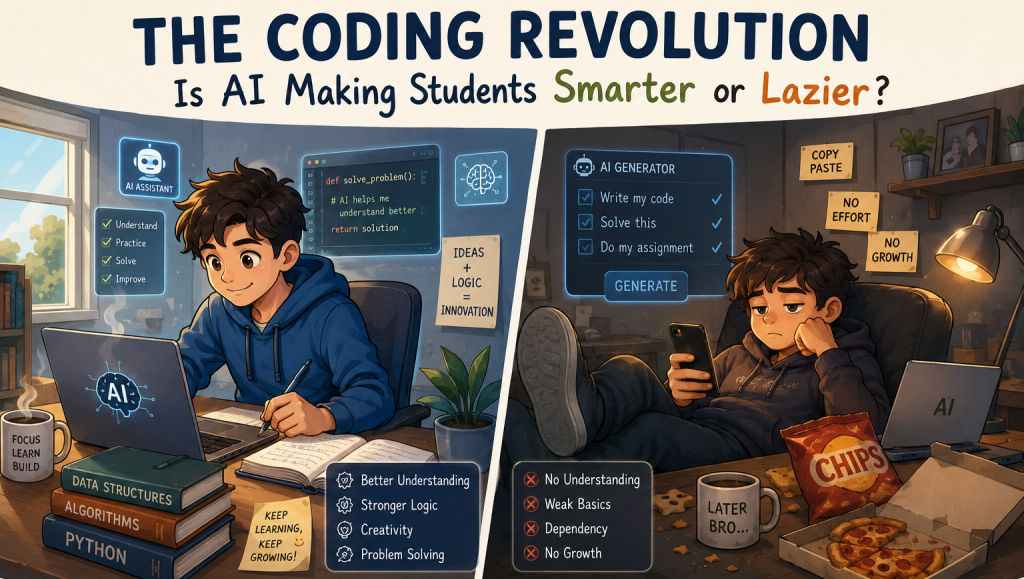
Imagine typing thousands of lines of computer code, pressing enter, and watching the whole screen crash because of one missing dot. For decades, learning computer science was a painful nightmare. Students spent sleepless nights crying over a single syntax error. But today? That nightmare is dead. Now, an eight-year-old child can tell an AI, “Build me a video game about a flying astronaut,” and it appears instantly. Why am I writing about this? AI in education is the hottest topic in the market right now. Everyone is talking about it, and everyone wants to know: Is AI creating tech geniuses, or is it making students completely lazy? Elementary School: Learning Without the Stress In primary schools, learning about computers used to be a bit boring. Kids just dragged colorful blocks around a screen to move a digital cat. Today, kids just talk to the AI like a friend. They ask for a feature, and the AI builds it instantly. The AI then explains the logic behind it. This allows little kids to focus entirely on creativity and big ideas instead of getting stuck on frustrating technical rules. High School: A 24/7 Coding Tutor High school is where students start typing real text languages like Python or Java. In the past, this is where most students got confused, lost confidence, and quit. Now, AI acts as a patient, always-available helper. When a teenager writes broken code, the AI does not just say “Error.” It looks at the mistake and gently explains, “Hey, you forgot a small part here. Don’t worry, here is how you fix it. “It keeps students excited instead of frustrated. Higher Education: Trading Typing for Thinking At the university level, the change is massive. In the old days, college students spent weeks writing basic, repetitive lines of code from scratch. But today, AI can write that basic code in two seconds. Because of this, professors are completely changing how they teach. Students are no longer graded on how fast they can type code. Instead, they are graded on how well they can check the AI’s work, find bugs, and connect giant software systems together. Why AI is an Amazing Tool? Super Fast Learning: Students do not get stuck for hours on a single mistake. They get instant feedback and keep moving forward. Personalized Help: The AI acts like a private tutor that perfectly matches the student’s speed. It gives easier hints to struggling students and harder challenges to advanced students. No More Busywork: AI handles the boring parts of coding, allowing students to focus on the big picture and build cooler projects faster. The Risks We Must Avoid The “Lazy Brain” Danger: If the AI does all the heavy lifting, students will stop thinking for themselves. If you never struggle with a hard problem, your brain muscles will never grow. AI Mistakes: AI tools sound very confident, but they can be completely wrong. If students blindly trust the AI without checking the facts, they will learn incorrect information. Massive Cheating: Teachers are heavily struggling with plagiarism. Since AI can write perfect assignments instantly, it is becoming very hard to know if a student actually understands the lesson. AI will not replace human programmers. But programmers who know how to use AI will replace the ones who don’t. The goal of computer science education today is no longer to teach humans to type like a machine, but to teach them how to lead the machine.
Mystery “Crypto Phone” Spotted in Prime Minister Tarek Rahman’s Hand Sparks Massive Online Buzz

Attention! Those who still haven’t fastened their seatbelts, please do so immediately. Because today, we are going to talk about a device that has created a huge buzz across the internet. This is not an ordinary phone. It is reportedly the same device seen in the hands of the Honorable Prime Minister of Bangladesh, Mr. Tarique Rahman, inside his car! Since then, curiosity among people has been endless. Online, countless news reports have been circulating, and many people are eager to know what exactly is this phone like? Below, we will uncover every single detail of this mysterious and unique device in a clear and detailed way. Unboxing and First Impression The Sirin Labs Finney is not a new phone. The discussion around this device first started around 2017, and it was officially launched in late 2018. However, even in 2026, it still appears in a brand-new, premium-looking box that instantly grabs attention. Box Design: Unlike regular smartphone boxes, which are usually slim and minimal, this one is noticeably large and wide. The box features a stunning black and grey color combination with “Sirin Labs Finney” written on top. It is known as the world’s first blockchain smartphone. Inside Surprise: Right after opening the box, you are greeted with a coin-like circular design that resembles a Bitcoin, instantly giving a strong crypto vibe. Removing it reveals the main phone underneath. Box Contents: Below the phone, you will find the user manual and warranty card. Unique Charger: The charger included is quite unusual and eye-catching. It has a square-shaped design, and the pins can be folded neatly inside it. Global Socket System: On another side of the box, there is a thoughtful addition. Different socket adapters are included for various countries around the world. This means no matter where you buy or use it, charging won’t be an issue. Cable Quality: A Type-C to Type-C cable is provided with a very premium build quality. Considering it was introduced around late 2018, having a C-to-C cable at that time was quite advanced and impressive. When Lionel Messi Was the Brand Ambassador! In 2018, when Sirin Labs launched their “Finney” model in the market, it received massive global attention. The reason was its completely different concept compared to regular smartphones. At that time, people in Bangladesh were not very familiar with it. However, recently, after the device was seen in the hands of the country’s Prime Minister, interest has increased again. It feels like the phone has come back into the spotlight, almost as if it is ruling once again just like it did in 2018! Here’s a fascinating fact this Finney smartphone from Sirin Labs had none other than football legend Lionel Messi as its global brand ambassador! Yes, during that time, Messi himself promoted and represented this phone, adding huge international hype to the brand. Why This Phone Is So Special? Now the big question naturally comes up why is this device so special? And why are people calling it the world’s first cryptocurrency smartphone? The reason behind its attention is its unique focus on security. The device is designed in a way that puts privacy and data protection at a much higher level compared to regular Android phones or even iPhones. Most smartphones today store everything in a connected environment, but this device was built with a different philosophy. It keeps personal data, files, and browsing activity in a highly secured environment, making it extremely difficult to access without authorization. However, the biggest attraction of this phone is its hidden display system and built-in cold storage wallet feature. A cold storage wallet means your cryptocurrency assets are stored offline, away from internet exposure. This reduces the risk of hacking significantly, since online attacks cannot easily reach offline storage. That is why the phone earned the reputation of being the “world’s first blockchain smartphone,” developed around the idea of combining security with crypto management in one device. Special Feature of the Cold Wallet The most unique part of the phone is its cold wallet system. On the upper section of the back panel, there is a sliding mechanism. When you slide it upward, a hidden display appears. As soon as it activates, the screen shows the message “Warming Up”. This is not just a normal display it is a fully functional touchscreen. You can interact with it directly using your finger to perform cryptocurrency transactions. The most impressive part is that you don’t need any third-party apps. Through this built-in system, users can send and receive cryptocurrencies like Bitcoin, Ethereum, and others directly from the device. This combination of a hidden physical interface and built-in crypto wallet is what makes the phone stand out as a truly unique blockchain-focused smartphone. Can the Cold Wallet Be Hacked? Many people assume that when the slider is pushed inside, the camera and microphone are completely turned off. Some media reports have also suggested this idea. However, the real concept is a bit different. The key technology is that the hidden wallet display is designed to operate in a more isolated environment compared to the main phone system. In simple terms, it reduces exposure to the main operating system and online connectivity when activated or separated via its hardware mechanism. However, one important point needs to be clarified: it is not accurate to say it is completely disconnected from all hardware systems or impossible to compromise under any condition. In real-world cybersecurity, no device is 100% unhackable. Even advanced systems can have risks depending on firmware vulnerabilities, physical access attacks, supply chain issues, or implementation flaws. What makes this system strong is that it is designed with a reduced attack surface meaning the cold wallet environment is more isolated than normal apps and internet-connected storage. This significantly improves security, especially for storing and handling cryptocurrencies like Bitcoin and Ethereum. This balance between usability and isolation is what makes the device interesting in the blockchain smartphone category. Design Language and Build Quality Unlike the curved