Why Bangladesh Should Introduce Complementary Military Training in Its Education System
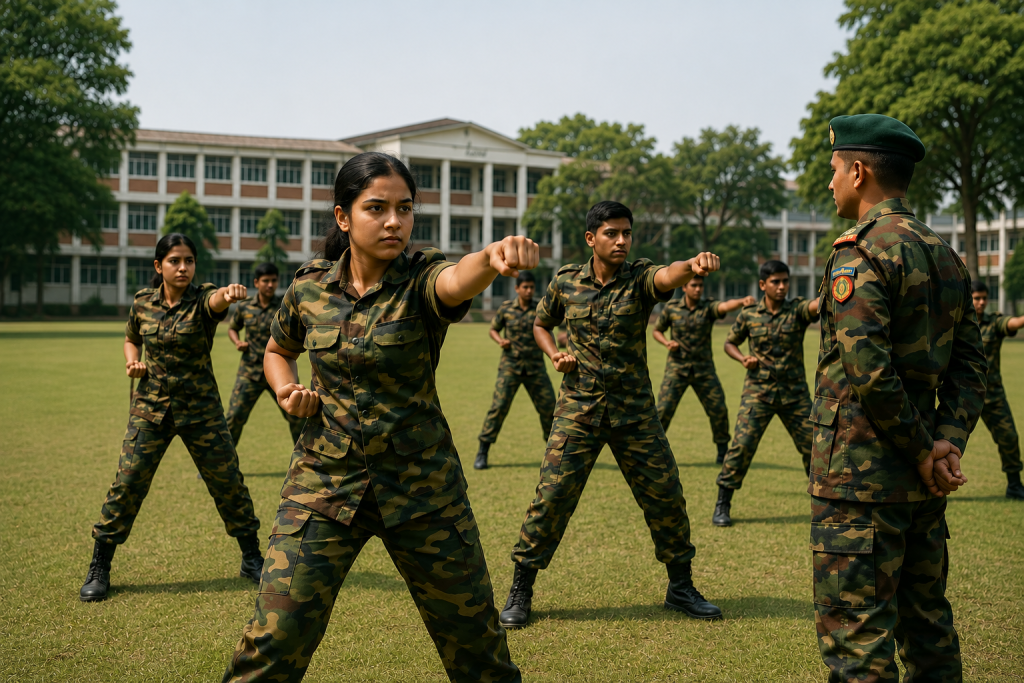
Education is not only about acquiring academic knowledge; it is also about developing responsible, disciplined, and capable citizens. In Bangladesh, the education system has traditionally focused on theoretical learning while giving limited attention to practical skills, leadership, discipline, and emergency preparedness. Introducing Complementary Military Training (CMT) as an educational component for intermediate and university students could help bridge this gap by equipping young people with essential life skills without replacing their academic education. One of the major challenges of Bangladesh’s education system is its limited emphasis on practical learning. Although students spend years completing their education, many graduate without acquiring sufficient leadership experience, teamwork skills, crisis management abilities, or practical communication skills. As a result, many struggle to adapt to professional environments where discipline, collaboration, and decision-making are essential. Complementary Military Training can address these shortcomings by providing structured training that develops physical fitness, mental resilience, leadership, teamwork, communication, and problem-solving abilities. The program would also contribute to character building. Military-based training emphasizes values such as integrity, honesty, responsibility, respect, patriotism, courage, and self-discipline. These values are essential not only for military service but also for building responsible citizens who contribute positively to society. Through practical exercises, ethical discussions, and leadership activities, students can develop a stronger sense of civic responsibility and national commitment. Another important benefit is national preparedness. Bangladesh is one of the world’s most disaster-prone countries, frequently facing floods, cyclones, and other natural disasters. Students who receive basic military-oriented training in first aid, disaster response, emergency communication, evacuation procedures, and crisis management would be better prepared to support their communities during emergencies. Such training would strengthen community resilience while complementing the efforts of law enforcement agencies, disaster management authorities, and emergency responders. International experience demonstrates that structured military or national service programs can contribute to national development. South Korea requires most able-bodied male citizens to complete compulsory military service followed by reserve training. Beyond strengthening national defense, the system has contributed to discipline, teamwork, civic responsibility, and national preparedness among young citizens (Military Manpower Administration, n.d.). Likewise, Switzerland maintains a militia-based defense system in which citizens receive military training and remain part of the reserve force, ensuring a highly prepared population during national emergencies (Swiss Confederation, 2026). Although Bangladesh has a different political, economic, and social context, these examples demonstrate that well-designed military training can complement formal education without preventing students from pursuing higher education or professional careers. Complementary Military Training would also improve students’ communication and interpersonal skills. Modern education increasingly requires students to work with individuals from different backgrounds, solve problems collaboratively, and communicate effectively under pressure. Military training naturally develops these competencies through team-based exercises, leadership tasks, and real-life simulations. Such experiences prepare graduates not only for national service but also for careers in business, public administration, research, journalism, healthcare, and entrepreneurship. Furthermore, Complementary Military Training promotes lifelong learning and adaptability. Today’s rapidly changing world demands continuous skill development, critical thinking, ethical judgement, technological awareness, and resilience. Military training encourages individuals to remain physically active, mentally prepared, and committed to continuous improvement throughout their lives. These qualities are increasingly valuable in both public and private sectors. Importantly, Complementary Military Training should not be viewed as the militarization of education. Instead, it should be designed as a short-term, educational, and skill-oriented program integrated into the national curriculum. The objective is not to produce soldiers but to develop disciplined, responsible, resilient, and socially conscious citizens who are capable of responding effectively during emergencies while contributing positively to national development. In conclusion, Bangladesh should seriously consider introducing Complementary Military Training as part of its education system. Such a program would strengthen practical skills, leadership, discipline, civic responsibility, disaster preparedness, and national resilience among young people. By learning from successful international examples while adapting the program to Bangladesh’s own needs, the country can prepare a generation that is not only academically qualified but also physically capable, mentally resilient, ethically responsible, and ready to serve society whenever needed.