

For Argentina, July 13, 2014, was not just another football match. It was the night a nation stood one step away from history at the Maracanã, in Brazil, against Germany, with Lionel Messi carrying the dream of a third World Cup star.
But for many Argentine supporters, the final is remembered not only for Germany’s 1-0 victory. It is remembered for refereeing decisions that, even years later, remain deeply controversial.
The biggest flashpoint came in the 57th minute. Gonzalo Higuaín chased a ball inside the German penalty area as goalkeeper Manuel Neuer rushed out to challenge him. Neuer reached the ball first, but his follow-through was violent. His knee crashed into Higuaín’s head, leaving the Argentine striker on the ground.
For many fans, this was not a normal football collision. It was dangerous play. In most matches, such contact would immediately raise questions of a penalty, a card, or even a sending off. Instead, referee Nicola Rizzoli gave a foul against Higuaín.
That decision still shocks Argentine supporters. Winning the ball should not give a goalkeeper permission to endanger an opponent. The contact was high, forceful, and reckless. Yet Germany escaped punishment.
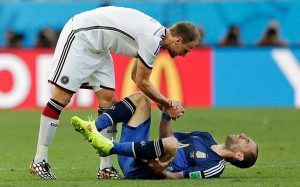
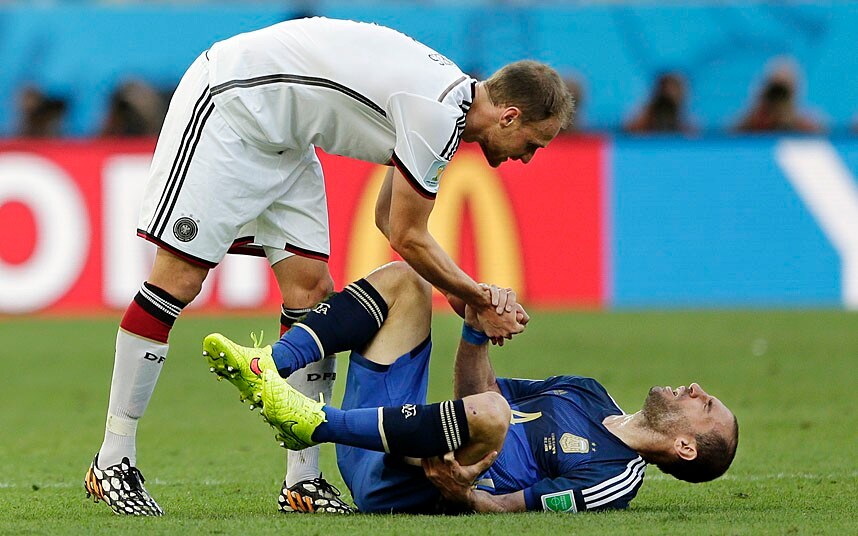
The Neuer incident was not the only controversial moment. Earlier in the match, Benedikt Höwedes made a studs-up challenge on Pablo Zabaleta. The tackle was late and dangerous, but Höwedes received only a yellow card. Many Argentina fans believe it should have been a red.
These decisions shaped the feeling of the match. Germany were allowed to play physically and aggressively, while Argentina’s attacking players struggled to receive the same level of protection. Messi, Lavezzi, Agüero, and Higuaín all faced heavy pressure, but the referee rarely took strong action.
Germany eventually survived into extra time, where Mario Götze scored the winning goal. Officially, Germany became world champion. But for Argentina, the pain went beyond defeat.
To millions of Argentine fans, the 2014 final was not simply lost. It was a match filled with missed chances, harsh calls, and decisions that still feel impossible to accept.
The trophy went to Germany, but the controversy never left Argentina.