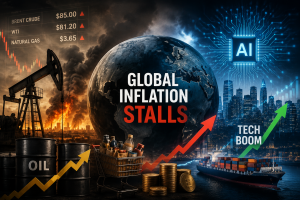


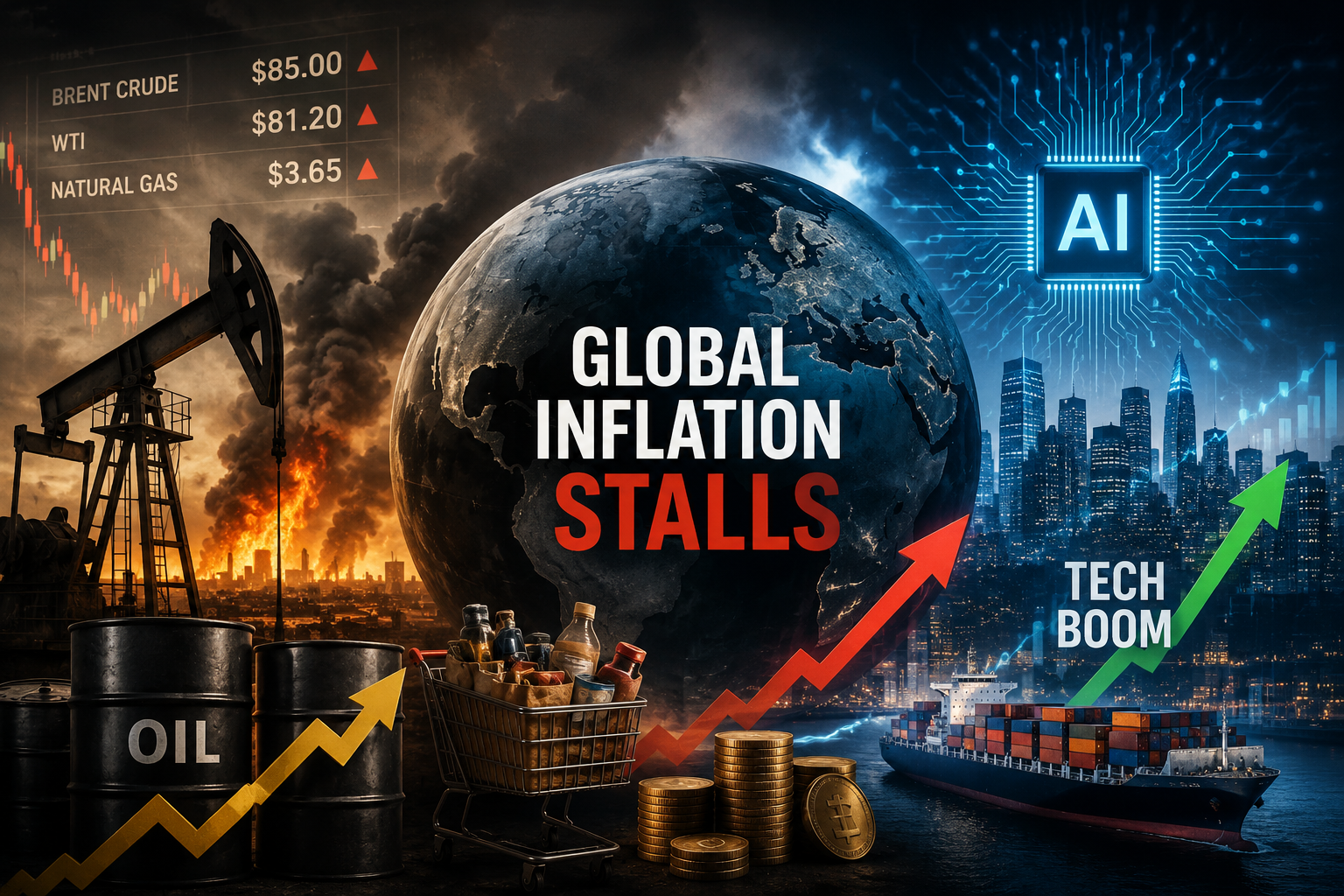
The global economy finds itself pulled in two directions at once. On one side, an ongoing conflict in the Middle East is pushing oil prices higher and unsettling energy-dependent economies. On the other, a surge in artificial intelligence investment is powering unexpected growth in countries plugged into the technology supply chain. The result, according to the International Monetary Fund’s latest World Economic Outlook Update released this month, is a lopsided global recovery that defies easy forecasting.
The IMF projects global growth of 3.0 percent for 2026, holding roughly steady from earlier estimates, before climbing to 3.4 percent in 2027. But that headline number masks sharp divergences beneath the surface. Economies reliant on imported energy, particularly those with limited exposure to the AI-driven technology boom, are bearing the brunt of the war’s economic fallout. Meanwhile, nations integrated into global tech supply chains are seeing demand-driven momentum that is cushioning, or even offsetting, the drag from higher energy costs.
Perhaps the more troubling signal for policymakers is on inflation. The steady disinflation that took hold globally since early 2024 has effectively stalled. Global headline inflation has been revised upward, driven largely by volatile oil prices tied to tensions around the Strait of Hormuz, a critical corridor for global crude shipments. Brent crude has traded near $85 a barrel in recent sessions, a level that ripples through transportation costs, manufacturing input prices, and ultimately household budgets worldwide.
Emerging markets are feeling this unevenness most acutely. In Latin America, the effects are a case study in contrast. Mexico’s inflation has actually eased to its lowest level since 2020, opening room for its central bank to consider rate cuts. Yet the peso has been whipsawed by renewed geopolitical anxiety, a reminder that domestic progress on inflation can be undone quickly by external shocks. Brazil faces a tighter bind: retail sales are softening even as policymakers hold interest rates at a restrictive level, wary that another oil-driven price shock could force them to pause any easing plans.
In South Asia, Bangladesh exemplifies the severe strain on developing nations caught on the wrong side of this global divide. The IMF recently projected the country’s economic growth to slow to just 3.5 percent for the 2026-27 fiscal year, warning it could slip below 3.0 percent over the medium term in the absence of decisive fiscal and banking sector reforms. Already grappling with domestic financial stress and limited fiscal space, Bangladesh has seen its challenges compounded directly by the Middle East conflict. Higher global commodity prices have inflated import and subsidy costs, renewing domestic inflationary pressures and prompting the government to negotiate a new, expanded reform program with the IMF to stabilize its economy.
For major economies, the divergence is just as stark. China’s growth is expected to slow this year, weighed down by higher oil costs and structural headwinds, while India continues to post some of the strongest growth among major economies, buoyed by resilient consumer spending and a robust services sector.
What emerges from this outlook is not a single global story but several running in parallel: a war economy for energy importers, a boom economy for technology exporters, and a policy dilemma for everyone caught between the two. Central banks that spent years fighting inflation now face a harder question whether to hold firm against a shock they cannot control or risk letting price pressures become entrenched again just as they appeared to be tamed.
The International Monetary Fund’s latest World Economic Outlook Update released this month is a lopsided global recovery that defies easy forecasting.