
Eid-ul-Azha has barely ended, and gone are the days when sacrificial animal hides would lie rotting on the streets and in dustbins. Many people, out of frustration, would simply throw them away. But that picture has changed significantly now. Hides are no longer wasted. Instead, they have become a major source of support for orphans, madrasa students, and poor families.
What was the situation like before?
Just a few years ago, the collection of hides was in a very poor state. Young boys from the neighborhood would roam around all day in the scorching sun and sell hides for only 50-100 Taka. Due to the manipulation of syndicates, they wouldn’t get a fair price, so many would angrily throw the hides onto the streets. As a result, the country’s resources were wasted on one hand, and orphanages and madrasas were deprived of their rightful income on the other.
Who changed the picture?
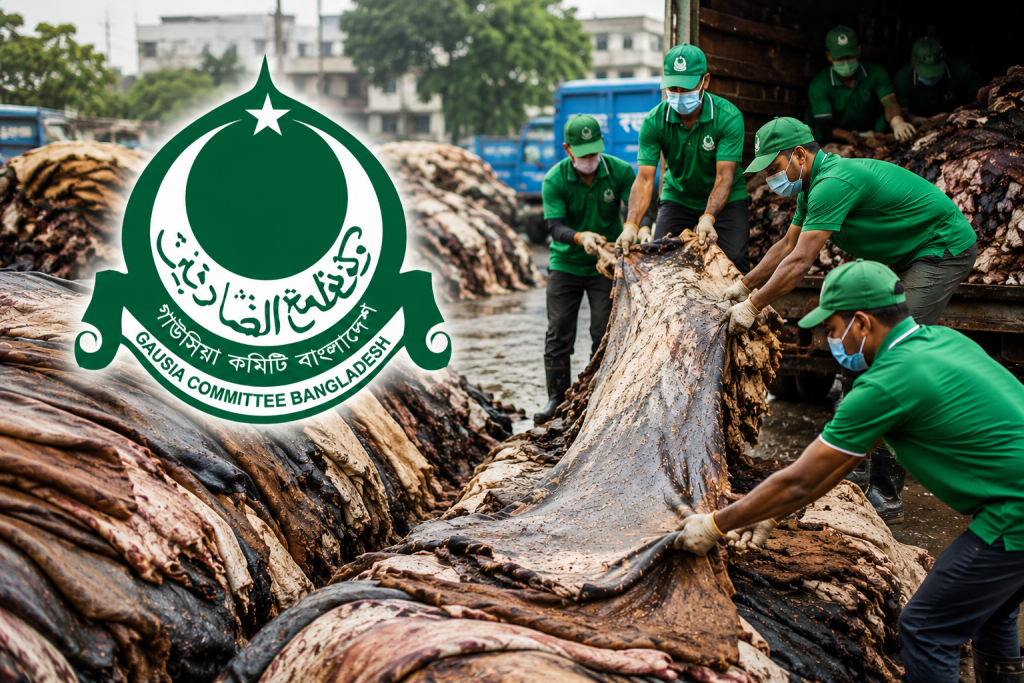
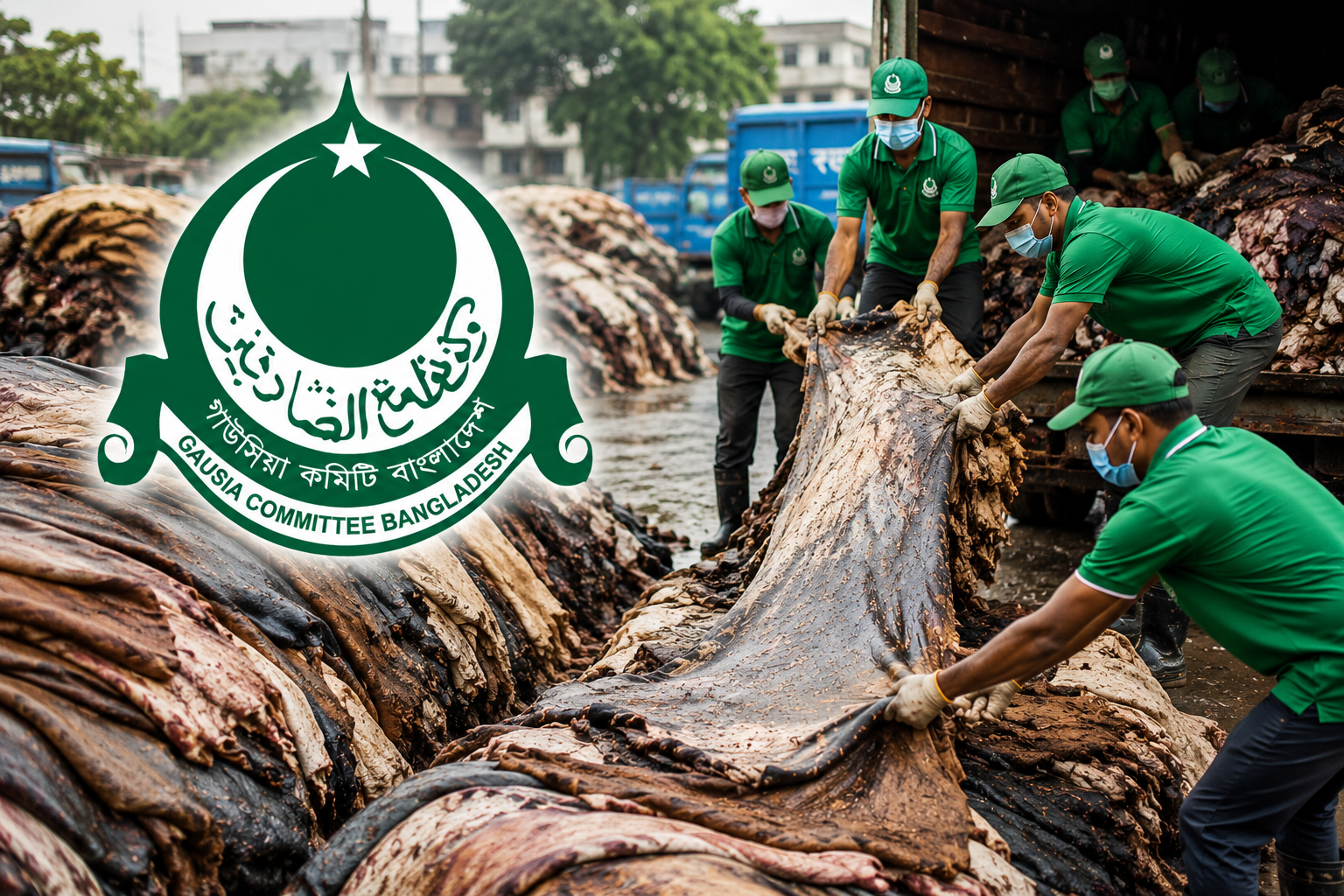
A positive change began in 2022. The non-political volunteer organization Gausia Committee Bangladesh took this initiative into their own hands. They have significantly reduced the dominance of the leather syndicates and have organized a proper system for the collection, transportation, and preservation of hides.
Every Eid, they preserve hundreds of thousands of hides at the field of Jameya Ahmadiya Sunnia Alia Kamil Madrasa in Chattogram. Not just in Chattogram, but across the country, more than 250 madrasas and educational institutions are now benefiting from the income generated by these hides.
7,000 volunteers are working tirelessly
Every Eid, around seven thousand volunteers from the Gausia Committee take to the field. They collect the hides, transport them to the right places, and preserve them properly. Because of their dedication, the wastage of hides has decreased significantly, and prices have also become somewhat stable.
What changes have taken place?
The most noticeable change is that hides are no longer wasted like before. The scenes of hides lying on the streets or being thrown into dustbins have become rare. Due to organized collection, almost all hides now reach the right destinations and are being preserved as national resources.
Along with this, there has been a real positive impact on the lives of orphans and poor students. Madrasas and orphanages, which previously received only nominal amounts, now earn significantly more from the sale of hides. More than 250 institutions across the country are directly benefiting from this income, which plays a major role in meeting their needs for food, educational materials, and other essentials.
There is now clear discipline in leather management. The monopoly of syndicates has been greatly reduced. Since volunteers collect hides directly from the field, the influence of dishonest middlemen has diminished. As a result, hide prices have become somewhat stable, and the entire system is no longer as chaotic as before.
The most beautiful change has occurred in people’s minds. Those who once threw away hides in frustration now hand them over with peace of mind. They know that their sacrificial hides are truly being used for orphans and poor students. This brings them spiritual satisfaction along with fulfilling their religious duty.
In this way, the initiative of the Gausia Committee is gradually transforming a religious festival into a meaningful social movement. The management of sacrificial hides is no longer just a religious matter. It has become a beautiful social responsibility. The silent and dedicated work of the Gausia Committee volunteers truly deserves praise.