

Attention! Those who still haven’t fastened their seatbelts, please do so immediately. Because today, we are going to talk about a device that has created a huge buzz across the internet.
This is not an ordinary phone. It is reportedly the same device seen in the hands of the Honorable Prime Minister of Bangladesh, Mr. Tarique Rahman, inside his car! Since then, curiosity among people has been endless.
Online, countless news reports have been circulating, and many people are eager to know what exactly is this phone like?
Below, we will uncover every single detail of this mysterious and unique device in a clear and detailed way.
Unboxing and First Impression
The Sirin Labs Finney is not a new phone. The discussion around this device first started around 2017, and it was officially launched in late 2018. However, even in 2026, it still appears in a brand-new, premium-looking box that instantly grabs attention.
Box Design:
Unlike regular smartphone boxes, which are usually slim and minimal, this one is noticeably large and wide. The box features a stunning black and grey color combination with “Sirin Labs Finney” written on top. It is known as the world’s first blockchain smartphone.
Inside Surprise:
Right after opening the box, you are greeted with a coin-like circular design that resembles a Bitcoin, instantly giving a strong crypto vibe. Removing it reveals the main phone underneath.
Box Contents:
Below the phone, you will find the user manual and warranty card.
Unique Charger:
The charger included is quite unusual and eye-catching. It has a square-shaped design, and the pins can be folded neatly inside it.
Global Socket System:
On another side of the box, there is a thoughtful addition. Different socket adapters are included for various countries around the world. This means no matter where you buy or use it, charging won’t be an issue.
Cable Quality:
A Type-C to Type-C cable is provided with a very premium build quality. Considering it was introduced around late 2018, having a C-to-C cable at that time was quite advanced and impressive.
When Lionel Messi Was the Brand Ambassador!
In 2018, when Sirin Labs launched their “Finney” model in the market, it received massive global attention. The reason was its completely different concept compared to regular smartphones.
At that time, people in Bangladesh were not very familiar with it. However, recently, after the device was seen in the hands of the country’s Prime Minister, interest has increased again. It feels like the phone has come back into the spotlight, almost as if it is ruling once again just like it did in 2018!
Here’s a fascinating fact this Finney smartphone from Sirin Labs had none other than football legend Lionel Messi as its global brand ambassador! Yes, during that time, Messi himself promoted and represented this phone, adding huge international hype to the brand.
Why This Phone Is So Special?
Now the big question naturally comes up why is this device so special? And why are people calling it the world’s first cryptocurrency smartphone?
The reason behind its attention is its unique focus on security. The device is designed in a way that puts privacy and data protection at a much higher level compared to regular Android phones or even iPhones.
Most smartphones today store everything in a connected environment, but this device was built with a different philosophy. It keeps personal data, files, and browsing activity in a highly secured environment, making it extremely difficult to access without authorization.
However, the biggest attraction of this phone is its hidden display system and built-in cold storage wallet feature.
A cold storage wallet means your cryptocurrency assets are stored offline, away from internet exposure. This reduces the risk of hacking significantly, since online attacks cannot easily reach offline storage. That is why the phone earned the reputation of being the “world’s first blockchain smartphone,” developed around the idea of combining security with crypto management in one device.
Special Feature of the Cold Wallet
The most unique part of the phone is its cold wallet system.
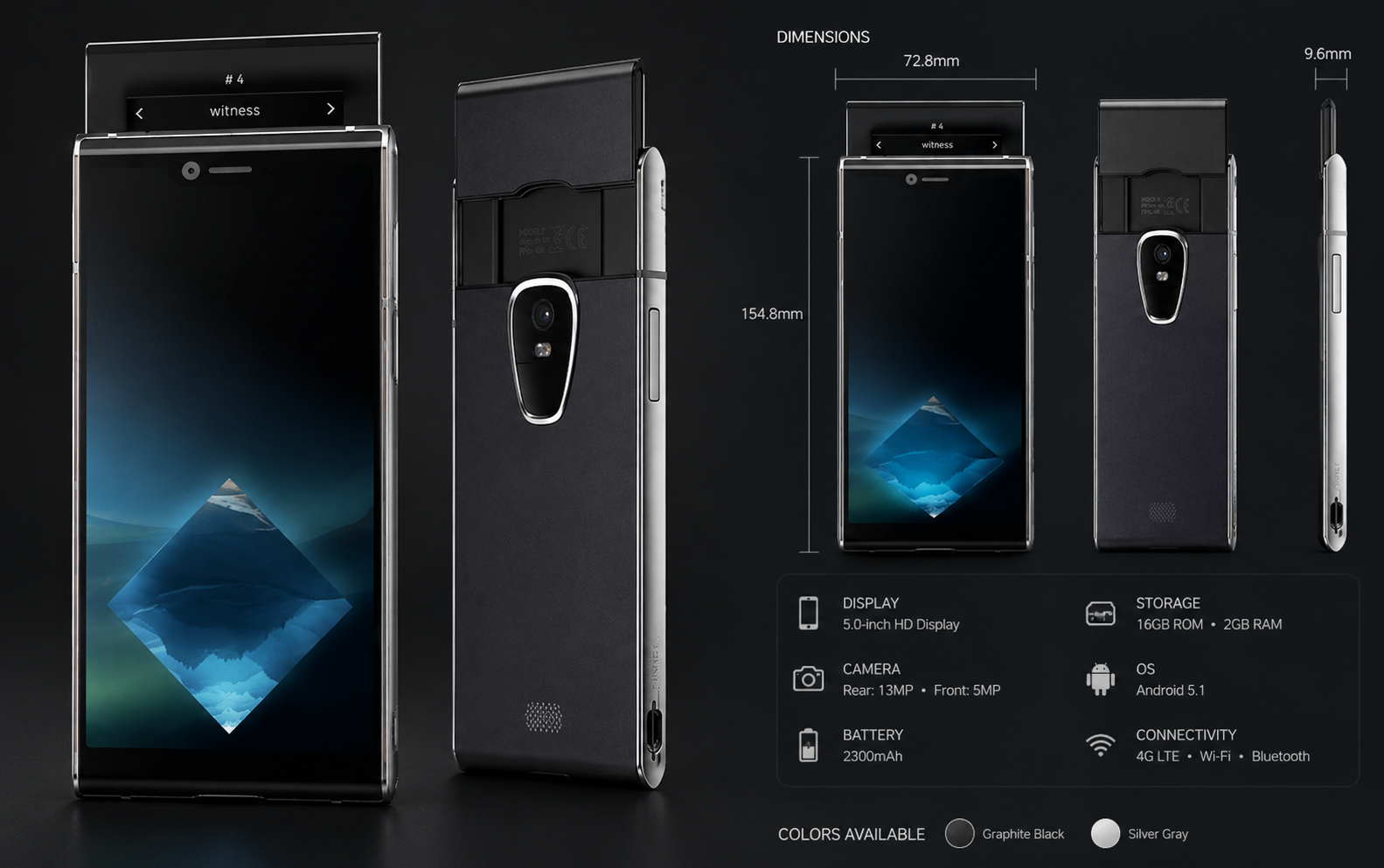
On the upper section of the back panel, there is a sliding mechanism. When you slide it upward, a hidden display appears. As soon as it activates, the screen shows the message “Warming Up”.
This is not just a normal display it is a fully functional touchscreen. You can interact with it directly using your finger to perform cryptocurrency transactions.
The most impressive part is that you don’t need any third-party apps. Through this built-in system, users can send and receive cryptocurrencies like Bitcoin, Ethereum, and others directly from the device.
This combination of a hidden physical interface and built-in crypto wallet is what makes the phone stand out as a truly unique blockchain-focused smartphone.
Can the Cold Wallet Be Hacked?
Many people assume that when the slider is pushed inside, the camera and microphone are completely turned off. Some media reports have also suggested this idea. However, the real concept is a bit different.
The key technology is that the hidden wallet display is designed to operate in a more isolated environment compared to the main phone system. In simple terms, it reduces exposure to the main operating system and online connectivity when activated or separated via its hardware mechanism.
However, one important point needs to be clarified: it is not accurate to say it is completely disconnected from all hardware systems or impossible to compromise under any condition.
In real-world cybersecurity, no device is 100% unhackable. Even advanced systems can have risks depending on firmware vulnerabilities, physical access attacks, supply chain issues, or implementation flaws.
What makes this system strong is that it is designed with a reduced attack surface meaning the cold wallet environment is more isolated than normal apps and internet-connected storage. This significantly improves security, especially for storing and handling cryptocurrencies like Bitcoin and Ethereum.
This balance between usability and isolation is what makes the device interesting in the blockchain smartphone category.
Design Language and Build Quality
Unlike the curved or flat smartphone designs commonly seen in the market, the design language of the Sirin Labs Finney is completely different.
Body and Frame:
The entire body frame is made of metal. Even with a metal build, the phone does not feel extremely heavy in hand.
In-Hand Feel:
Although the phone looks premium, it is not the most comfortable device to hold. The edges and lower corners feel quite sharp, which can create a slightly rough or uncomfortable sensation on the palm during use.
Curved Design:
The display itself is not fully curved. However, the top and bottom sections of the display, along with the sides of the rear panel, are smoothly blended into the metal frame. This gives the phone a very attractive look when the screen is off.
Other Ports and Layout:
The SIM card slot area is relatively large in size. However, there is no 3.5mm headphone jack, meaning audio playback is handled through the Type-C port.
The speaker grille is placed on the right side, and sound mainly comes from that direction. On the back, there is a single camera, and just below it sits the fingerprint scanner for security and quick unlocking.
Cyber Security and Current Functionality
Although it looks like a normal Android device, inside it runs Sirin OS, which is a heavily customized and security-focused version of Android. Today, Sirin Labs is more focused on software security rather than hardware development.
Peer-to-Peer Encryption:
This smartphone uses a peer-to-peer encrypted system for calls and messages. This means that communication is encrypted end-to-end, making it extremely difficult for any third party to intercept, decode, or tap into conversations.
Real-Time Cyber Security Protocol:
The device includes a built-in security monitoring system that continuously watches for threats. If any remote hacking attempt is detected, the phone responds in real time by alerting the user and blocking the attack.
Instant App Lock:
For added privacy, users can simply long-press any app and get an instant “Lock” option. This is useful when someone else is using the phone and you want to quickly hide sensitive apps like crypto wallets or personal data. However, it’s worth noting that this kind of feature is now also common in many modern smartphones.
Overall, the device combines encrypted communication and system-level security features to create a more privacy-focused smartphone experience.
Current Status in 2026
Since this is a 2018-era device, several of its services are no longer active in 2026.
For example, it had a built-in app store called D-Center (similar to Google Play Store). However, if you try to open it now, it shows a message like: “Your device ID seems to be invalid”, meaning the service is no longer operational.
Even some core features have degraded over time. The hidden screen does not always function smoothly. If the battery level is low, it may refuse to turn on and instead prompt the user to connect the charger first.
Additionally, most of the live blockchain-related services, including token conversion and real-time crypto features, are no longer fully active or supported. This includes various updates and online integrations that originally made the device stand out.
In short, while the hardware and concept were ahead of their time, many of the online and ecosystem-based features have now become partially or fully discontinued over time.
Phone Specifications in 2026 Perspective(subtitle)
If we look at it purely as a smartphone and judge its hardware in 2026 standards, it clearly cannot compete with modern devices.
Operating System:
The phone originally shipped with Android 8.1 Oreo, and even today it still runs this outdated version. In 2026 terms, this is extremely old, as many users may not even recognize or have used this version before.
Processor and RAM:
It is powered by the Qualcomm Snapdragon 845, which is around 7–8 generations behind current flagship chips. At the time, however, it was a top-tier processor. The device also includes 6GB RAM and 128GB internal storage.
Camera:
On the back, it has a single 12MP camera and an 8MP front camera. While it can still take basic photos and videos, it lacks modern features like portrait mode, advanced night photography, or AI enhancements.
Display and Battery:
The phone features a 6-inch display with an 18:9 aspect ratio and a relatively large notch similar to older iPhone designs. The battery is only 3000mAh, which is considered quite low by today’s standards.
Overall Verdict:
From a performance and specification standpoint, even many current budget smartphones easily outperform this device. So, for regular daily use in 2026, it is not a practical choice anymore.
Price and Who Would Buy This Phone?
Many people may be curious about its current price. To be honest, asking for an exact market price in 2026 doesn’t make much sense anymore, as availability is extremely limited and mostly depends on collector or resale markets.
Still, in some listings or rare resale cases, it is seen at around 5 lakh BDT (approximately) due to its rarity and niche appeal.
When it was first launched in 2018, the base variant officially started at around $999 USD.
However, in today’s context, this phone is not something regular users would realistically buy for daily use. Its hardware and software are too outdated compared to modern smartphones.
So who actually buys it now?
Mostly, it attracts a very specific group:
Tech enthusiasts who are interested in blockchain history.
Gadget collectors who value rare and experimental device.
Final Thoughts: Why Is Our Prime Minister Using It?
This brings us back to the question we started with: why is Bangladesh’s Prime Minister, Mr. Tarique Rahman, using this old smartphone?

The truth is, nobody outside his inner circle can know the exact reason. He may have been using the device for a long time, or he may simply prefer it for specific security-related purposes. Of course, he could easily choose a newer and more powerful smartphone if he wanted to.
What makes the Finney interesting, however, is its strong focus on security. Features such as its secure architecture, hardware-based wallet system, and encrypted communication capabilities were designed with privacy and data protection in mind. For high-profile individuals who handle sensitive information, such features can still be appealing even years after the phone’s release.
That said, it is important not to assume that any particular public figure uses a device solely because of its security features unless they have personally stated so. The exact reason remains unknown.
One thing is certain: the phone has sparked a huge amount of curiosity, and that is completely understandable. Even today, the Sirin Labs Finney stands out as one of the most unusual smartphones ever made.
Personally, what makes it fascinating is not its specifications, but its unique concept is the hidden cold wallet, the bold metal design, and the ambitious idea of combining blockchain technology with a smartphone long before it became a mainstream trend. Those are the features that truly make this device memorable.