The Stolen Star: How FIFA and Rizzoli Robbed Argentina in the Maracanã
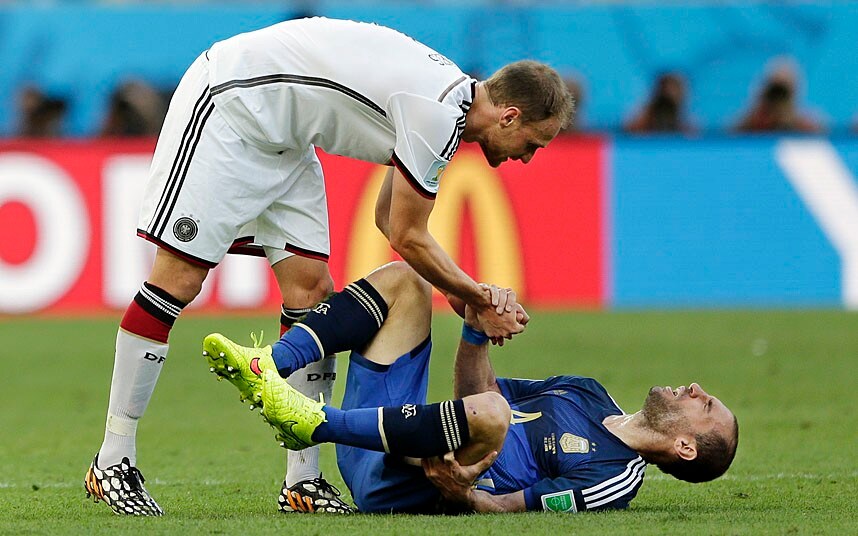
For Argentina, July 13, 2014, was not just another football match. It was the night a nation stood one step away from history at the Maracanã, in Brazil, against Germany, with Lionel Messi carrying the dream of a third World Cup star. But for many Argentine supporters, the final is remembered not only for Germany’s 1-0 victory. It is remembered for refereeing decisions that, even years later, remain deeply controversial. The biggest flashpoint came in the 57th minute. Gonzalo Higuaín chased a ball inside the German penalty area as goalkeeper Manuel Neuer rushed out to challenge him. Neuer reached the ball first, but his follow-through was violent. His knee crashed into Higuaín’s head, leaving the Argentine striker on the ground. For many fans, this was not a normal football collision. It was dangerous play. In most matches, such contact would immediately raise questions of a penalty, a card, or even a sending off. Instead, referee Nicola Rizzoli gave a foul against Higuaín. That decision still shocks Argentine supporters. Winning the ball should not give a goalkeeper permission to endanger an opponent. The contact was high, forceful, and reckless. Yet Germany escaped punishment. The Neuer incident was not the only controversial moment. Earlier in the match, Benedikt Höwedes made a studs-up challenge on Pablo Zabaleta. The tackle was late and dangerous, but Höwedes received only a yellow card. Many Argentina fans believe it should have been a red. These decisions shaped the feeling of the match. Germany were allowed to play physically and aggressively, while Argentina’s attacking players struggled to receive the same level of protection. Messi, Lavezzi, Agüero, and Higuaín all faced heavy pressure, but the referee rarely took strong action. Germany eventually survived into extra time, where Mario Götze scored the winning goal. Officially, Germany became world champion. But for Argentina, the pain went beyond defeat. To millions of Argentine fans, the 2014 final was not simply lost. It was a match filled with missed chances, harsh calls, and decisions that still feel impossible to accept. The trophy went to Germany, but the controversy never left Argentina.
Italy’s Long ‘Exile’ and a Sustained Footballing Tragedy
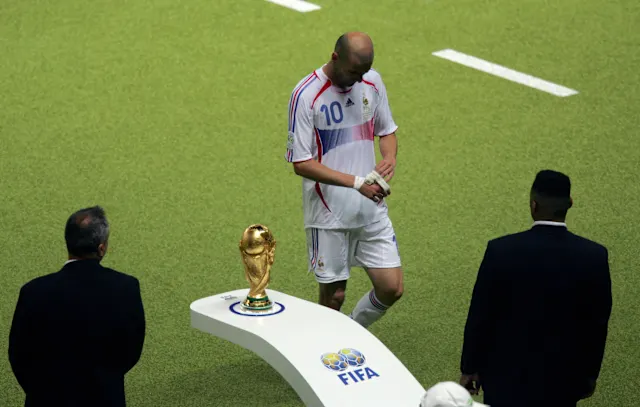
The night of July 9, 2006, at the Berlin Olympic Stadium remains a polarizing memory in football history. The iconic image of Zinedine Zidane’s infamous ‘headbutt’ and Italy’s subsequent World Cup triumph remains etched in the minds of football fans forever. However, beneath the jubilation of that victory lay a long-standing “curse” that has become increasingly evident two decades later. Since that glorious crowning moment, the four-time World Cup champions have lost their rhythm on the global stage. Having been absent from the main stage of the World Cup for twelve consecutive years, Italy’s current plight is not merely a matter of statistics, but a profound tragedy in football history. Following the pinnacle of 2006, Italy’s performance witnessed a catastrophic decline. The group-stage exits in 2010 and 2014 were only the beginning of a downward spiral. The situation grew even more dire when Italy failed to even qualify for the 2018 and 2022 World Cups. For a four-time champion to fall against teams like Sweden and North Macedonia during qualification was a humiliating ordeal. While football pundits attribute this to a “lack of new talent” or “structural weaknesses within Serie A,” a segment of Italian supporters views it through the lens of a supernatural destiny. They strongly believe that an ominous shadow has loomed over Italian football ever since that controversial final where they secured victory after Zidane’s exit. Beneath this prolonged downfall lie deep-rooted tactical issues. A lack of development for young Italian talent, a slow transition from traditional defensive football to a modern, attacking style, and an inability to manage the intense pressure of major tournaments have been the primary drivers of the Azzurri’s decline. Once the impenetrable fortress of world football, Italy now finds itself lost. The dominance of foreign players in Serie A and limited opportunities for local talent have severely hampered the depth of the national team. While that victory at Zidane’s farewell might have been their peak, the performance of the last two decades suggests that Italy has largely abandoned its traditional discipline and tactical philosophy. Despite Italy’s history of rising from the ashes, they currently appear to be a fading force in world football. Fans today deeply miss the artistic defensive battles and the relentless fighting spirit that once defined the Italian side. Can Italy move beyond the glorious memories of Berlin and craft a new vision? Will the new generation of players be able to break the old “curse” and usher in a new dawn for the Azzurri? That remains the question on the minds of millions of fans worldwide, as the absence of such a historic team continues to leave the World Cup stage feeling somewhat hollow. For Italy, it is time to move past the myths and face the harsh reality to chart a path forward.
Zidane’s Headbutt: The Defining Moment That Changed a World Cup Final
Few moments in football history have generated as much debate, emotion, and enduring fascination as the incident involving French captain Zinedine Zidane and Italian defender Marco Materazzi during the 2006 FIFA World Cup final. On July 9, 2006, inside Berlin’s Olympiastadion, the football world gathered to witness what was expected to be the crowning moment of one of the sport’s greatest players. Instead, the match produced an image that would become one of the most iconic and controversial scenes in World Cup history. France and Italy were locked at 1–1 deep into extra time. With penalties looming, tensions were high, and every action carried enormous significance. Then came the moment that stunned millions. Without warning, Zidane turned toward Materazzi and drove his head into the Italian defender’s chest. Materazzi collapsed to the ground, and confusion spread throughout the stadium. Moments later, after consultation among the officiating team, Zidane was shown a red card. It was the final match of his illustrious career. As Zidane slowly walked past the World Cup trophy on his way to the dressing room, football witnessed one of its most powerful and symbolic images: a legendary player leaving the game’s grandest stage not in celebration, but in controversy. For years, speculation surrounded what had been said between the two players in the moments before the headbutt. Subsequent accounts from both men helped clarify the situation. Materazzi later acknowledged that he had made comments involving Zidane’s sister during an exchange between the pair. While he described the remarks as “stupid,” he maintained that they did not justify a physical response. Zidane, however, offered a different perspective. The French icon explained that insults directed toward his family, particularly his mother and sister, crossed a deeply personal line. He stated that such remarks affected him more profoundly than physical challenges on the pitch. His explanation transformed public discussion of the incident from a purely sporting controversy into a broader conversation about respect, dignity, and emotional limits. From a footballing perspective, the dismissal proved costly. Zidane had already scored France’s opening goal from the penalty spot and remained the team’s most influential figure. His absence during the closing stages of extra time deprived France of its leader, most experienced penalty taker, and emotional focal point. The match eventually proceeded to a penalty shootout, where Italy prevailed 5–3 to secure its fourth World Cup title. Many analysts have since argued that Zidane’s presence during the shootout could have altered the outcome. While such scenarios remain speculative, there is little disagreement that France lost a critical advantage when their captain was sent off. Nearly two decades later, opinions remain divided. Critics view the incident as a momentary loss of composure that overshadowed an extraordinary career. They argue that, regardless of provocation, a player of Zidane’s stature had a responsibility to maintain discipline during the most important match in world football. Others interpret the episode differently. For them, the headbutt was not merely an act of frustration but an emotional response to comments perceived as deeply offensive toward family members. In this view, the incident reflects the complex reality that elite athletes, despite their achievements and fame, remain human beings capable of reaching emotional breaking points. The debate persists because the event exists at the intersection of two competing ideals: professional responsibility and personal conviction. The 2006 World Cup final is remembered not only because Italy lifted the trophy, but because it revealed the intensely human side of elite sport. Zidane’s final act as a professional footballer was neither a winning goal nor a championship celebration. Instead, it was a moment of emotion that continues to provoke discussion across generations of football supporters. Whether viewed as an unforgivable mistake or an understandable reaction to personal insult, the incident remains one of football’s most enduring stories. Nearly twenty years later, the image still resonates: Zidane walking past the World Cup trophy after receiving a red card, leaving behind a legacy defined not only by brilliance and success, but also by one unforgettable moment that demonstrated how personal values, human emotion, and professional competition can collide on football’s biggest stage.
Bangladesh Football Set for Landmark European Debut Against San Marino
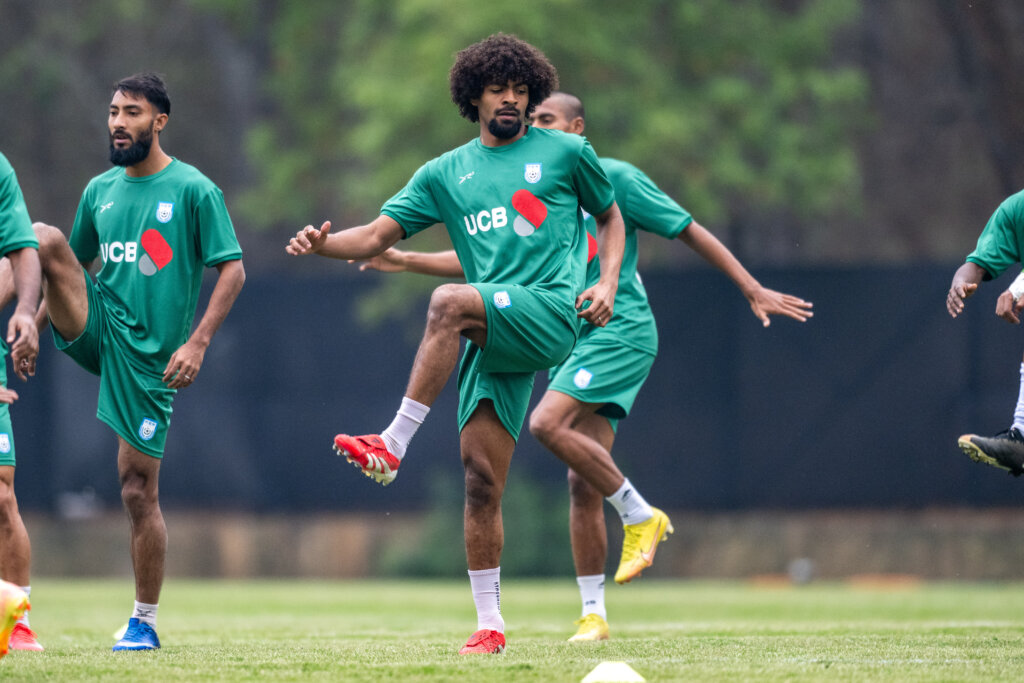
Bangladesh is set to make football history as the national team prepares to play its first-ever international match on European soil. The historic fixture will take place on June 5, 2026, when Bangladesh faces San Marino in an international friendly at the San Marino Stadium in Serravalle. The match marks a significant milestone for Bangladeshi football, which has never before played an international fixture in Europe. It will also be the first-ever meeting between Bangladesh and a European national team, making the occasion a landmark event for the country’s footballing journey. The Bangladesh squad and coaching staff have already arrived in San Marino ahead of the match. Preparations are underway as the team looks to make the most of this unique opportunity and deliver a memorable performance on a new continental stage. While the match is a friendly, its historical significance extends far beyond the result. For Bangladesh, the fixture represents growing international engagement and an opportunity to gain valuable experience against European opposition. Football supporters across Bangladesh have expressed excitement ahead of the encounter. Many see the match as a symbol of the sport’s gradual development in the country and a chance for the national team to showcase its progress to a wider audience. The fixture comes as Bangladesh continues its efforts to strengthen its position in international football. Playing in Europe for the first time is expected to provide players with exposure to different footballing environments and competitive standards. Regardless of the outcome, June 5 is expected to be remembered as a milestone date in the history of Bangladeshi football. As the national team takes the field in Serravalle, it will open a new chapter for the sport, carrying the hopes of millions of supporters back home.
Shakib Al Hasan: Hero, Villain, and the Tragedy of Bangladesh’s Greatest Cricketer
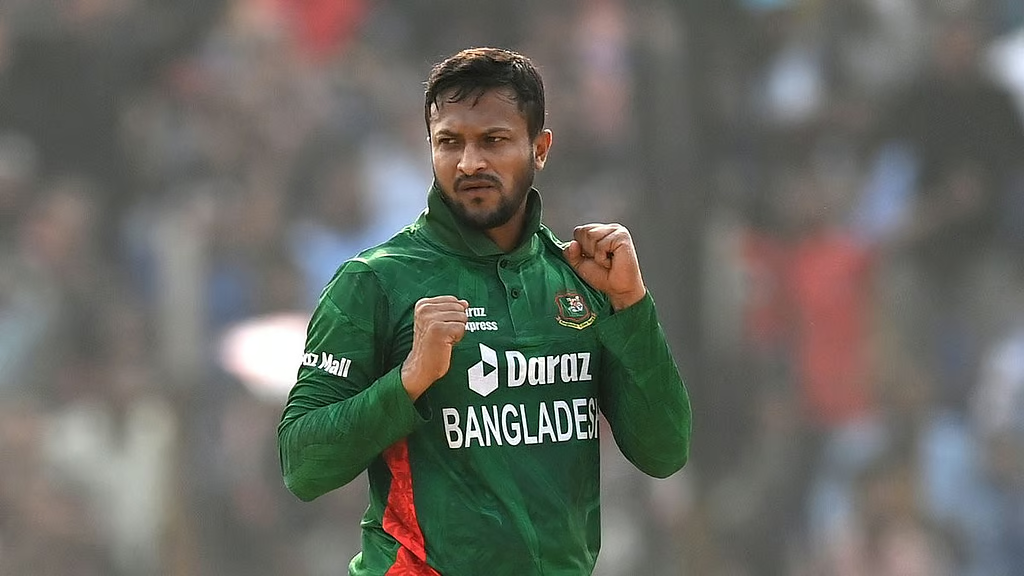
“You are the biggest cricket star Bangladesh has ever produced. Even your critics acknowledge your contribution to the game. Yet today, it seems that seven months of politics have overshadowed everything you achieved on the field, and you are paying the price for it. How unexpected is that?” For a few seconds, there was silence on the other end of the phone. Then came the voice of Shakib Al Hasan: – “Not just unexpected—it’s unacceptable to me. But what more can I say about it? You’re talking about seven months of politics. Some people even say my current situation is because I didn’t post a single Facebook status. What a situation this is!” Perhaps those four words—“What a situation”—capture the essence of Shakib Al Hasan’s entire life. As the saying goes: “People are not born heroes or villains; they are born people, and the world decides what to call them.” Few lives embody that idea as perfectly as Shakib’s. Once celebrated as a cricketing miracle, he has also been labeled arrogant, controversial, selfish, rebellious, and, by many, the greatest cricketer in Bangladesh’s history. He has been both hero and villain, often at the same time. And that is precisely what makes his story unique. There has never been another talent quite like him in Bangladeshi cricket. The sport has produced countless all-rounders, but very few have dominated all three formats of the game with the consistency required to become the world’s number-one all-rounder. Shakib was one of those rare exceptions. A player capable of being his team’s best batter, best bowler, and coolest head in the same match. He once said: “By Bangladesh’s standards, I’ve achieved many things before their time.” To some, that sounded like arrogance. In reality, Shakib was among the first Bangladeshi cricketers to normalize ideas such as franchise cricket, personal branding, and professional independence. Concepts that are commonplace today once earned him accusations of being unpatriotic. From Faisal of Magura to Shakib Al Hasan The story of Shakib Al Hasan is almost cinematic. Born on March 23, 1987, in Magura, he was obsessed with sports from childhood. His talent stood out so dramatically that local teams often hired him to play in village tournaments. During one such match, an impressed umpire arranged for him to train at Islampur Para Club in Magura. There, bowling with a proper cricket ball for the first time in his life, Shakib took a wicket with his very first delivery. The tape-tennis boy quickly began showcasing his abilities with both bat and ball. A brief period of training at BKSP, opportunities with Khulna Division, and an early call-up to Bangladesh’s Under-19 team soon followed. In the 2005 Under-19 Tri-Nation Tournament final, he scored a century off just 86 balls and took three wickets, announcing himself as a future star of Bangladeshi cricket. French novelist Victor Hugo once wrote: “Nothing is more powerful than an idea whose time has come.” Shakib’s time had arrived. Although his formal training at BKSP lasted only six months, it sharpened the extraordinary talent already within him. He made an immediate impact at every level. His Under-17 debut produced three wickets. In 2005, he scored 82 against England Under-19s and followed it with a century and three wickets in the tournament final. Across 18 Youth ODIs, he accumulated 563 runs and 22 wickets. At just 17, he made his first-class debut for Khulna and later claimed five wickets against Zimbabwe A in 2005. Looking back at those early years, one is reminded of T.S. Eliot’s famous words: “Home is where one starts from.” Shakib’s domestic foundation was built so solidly that conquering the world seemed only a matter of time. A Global Cricketing Nomad Shakib Al Hasan became one of cricket’s great globetrotters. Despite occasionally missing tournaments due to No Objection Certificate (NOC) complications, he remained a sought-after player across franchise leagues. In the 2023 Lanka Premier League, representing Galle Marvels, he scored 30 runs off 21 balls and claimed two wickets in a vintage all-round performance. After returning from his ICC suspension, he created history during the 2020 Bangabandhu T20 Cup, becoming only the third cricketer in the world to complete the remarkable double of 5,000 T20 runs and 300 wickets. He continued to deliver match-winning performances in domestic competitions, including the 2022 Swadhinata Cup. Controversies, criticism, and off-field storms never seemed capable of suppressing the cricketer within him. Like the mythical Phoenix, Shakib repeatedly rose from the ashes, proving that reinvention was one of his greatest gifts. Beyond the Boundary Shakib never confined himself to the 22-yard pitch. After obtaining a U.S. Green Card in 2018, his life became increasingly global. He served as a UNICEF Goodwill Ambassador, worked with anti-corruption campaigns, and collaborated with international brands such as Huawei. He ventured into business as Chairman of Monarch Holdings and later entered the gold trading sector through Burak Commodities. Yet the bouncers he faced outside cricket proved far more difficult to handle than those he encountered on the field. The Biggest Gamble: Politics Perhaps the greatest gamble of Shakib’s life was politics. In Bangladesh’s 2024 general election, he was elected as a Member of Parliament from Magura-1 under the Awami League banner. But fate had other plans. Only seven months later, the mass uprising of August led to the dissolution of Parliament, bringing his political career to an abrupt halt. Later, when BNP candidate Munawar Hossain Khan won the constituency in the 2026 election, the curtain effectively fell on Shakib’s political chapter. George Bernard Shaw once wrote: “Politics is the last refuge of the scoundrel.” Whether or not that applies here, Shakib undoubtedly encountered the harsh realities of political life. Reflecting on Bangladesh’s changing political landscape, he remarked: “There was a time when it seemed everyone supported the Awami League. Now it seems nobody does. That’s the situation.” When asked why he entered politics during his playing career, the confident and often combative cricketer suddenly sounded like the humble boy from Magura. “I was
How Royal Challengers Bengaluru Transformed from IPL’s Biggest Meme to a Championship Dynasty
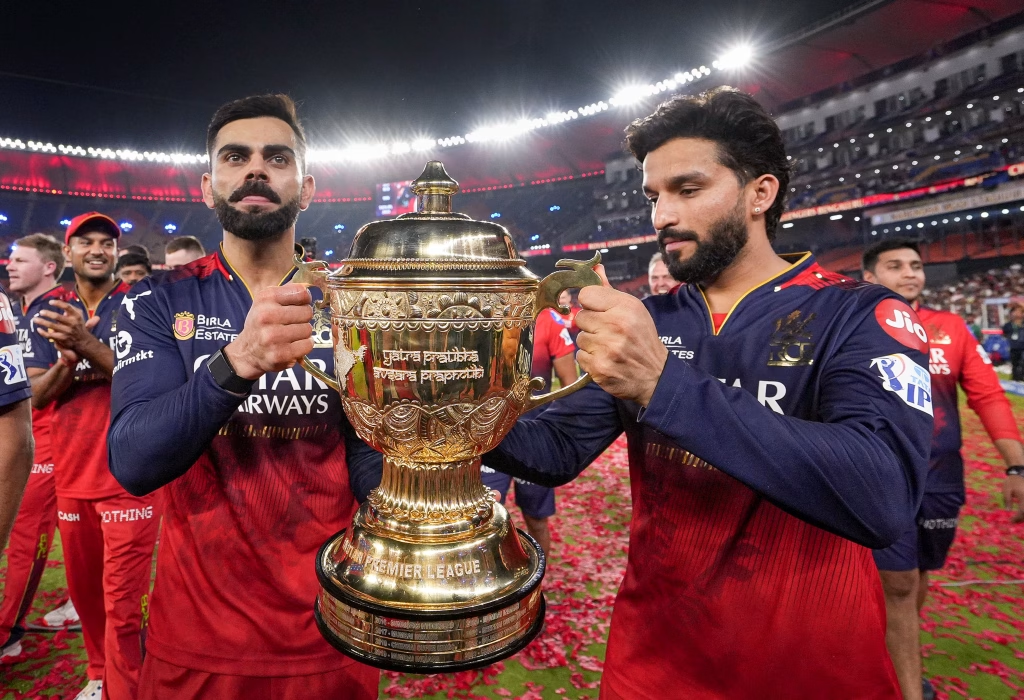
For nearly two decades, supporting Royal Challengers Bengaluru (RCB) was never merely about cricket. It was an emotional commitment, a journey defined by hope, heartbreak, and unwavering loyalty. Every IPL season began with dreams. Every season seemed to end with disappointment. Yet millions of supporters continued to believe. Through final defeats, dramatic collapses, relentless trolling, and countless memes, one slogan remained alive in the hearts of fans: “Ee Sala Cup Namde” — This year, the cup is ours. For seventeen long seasons, it wasn’t. Then, history changed. In 2025, Royal Challengers Bengaluru finally achieved what generations of supporters had been waiting for. By defeating the Punjab Kings in the IPL final, they lifted their maiden trophy and ended one of the longest title droughts in franchise cricket. Many believed that victory was the perfect conclusion to a story filled with suffering and perseverance. Instead, it became the beginning of a new chapter. Just a year later, RCB successfully defended their title, defeating Gujarat Titans in the 2026 IPL Final and establishing themselves as one of the league’s elite franchises. The team that had once been cricket’s most famous underachiever had transformed into a champion dynasty. The Long Road to Glory When the IPL was launched in 2008, RCB immediately became one of its most glamorous franchises. Backed by Vijay Mallya and featuring icons such as Rahul Dravid, Anil Kumble, Jacques Kallis, and Mark Boucher, expectations were enormous. However, the inaugural season exposed a fundamental problem. While other teams adapted quickly to the fast-paced nature of T20 cricket, RCB struggled with a more traditional approach and finished seventh out of eight teams. Yet the disappointing start did little to weaken the bond between the franchise and the city of Bengaluru. The fanbase continued to grow, laying the foundation for one of cricket’s most loyal supporter cultures. Years of Near Misses The heartbreak truly began in 2009 when Anil Kumble led RCB to their first IPL final. Despite a brilliant bowling performance from the legendary captain, the team fell agonizingly short against the Deccan Chargers. More disappointment followed in 2011. Powered by the explosive arrival of Chris Gayle and the emergence of Virat Kohli, RCB reached another final only to be outclassed by Chennai Super Kings. The years that followed produced some of the most entertaining cricket ever witnessed in the IPL. Gayle’s six-hitting heroics, AB de Villiers’ extraordinary innovation, and Kohli’s relentless consistency turned RCB into a global phenomenon. Yet trophies remained elusive. The Pain of 2016 For many supporters, no season was more painful than 2016. Virat Kohli delivered arguably the greatest individual campaign in IPL history, scoring 973 runs and smashing four centuries. Alongside AB de Villiers, he carried RCB into the final against Sunrisers Hyderabad. Everything appeared perfectly scripted. Playing at home in Bengaluru, chasing a challenging target, with Kohli in the form of his life, RCB seemed destined to create history. Instead, they suffered another heartbreaking defeat. For fans, it felt like the cruelest chapter of all. From Mockery to Mastery The years between 2017 and 2019 marked the franchise’s darkest period. The infamous 49 all-out against the Kolkata Knight Riders became a symbol of RCB’s struggles. Social media mockery intensified, and “Ee Sala Cup Namde” became one of cricket’s most ridiculed slogans. However, beneath the criticism, the franchise began to learn valuable lessons. RCB gradually shifted away from relying solely on superstar names and focused on building a balanced squad. Better recruitment, improved bowling resources, stronger domestic talent development, and a clearer strategic vision began to reshape the organization. The Championship Era The breakthrough finally arrived in 2025. This RCB team looked different. More mature. More balanced. More composed. In a tense final against the Punjab Kings, they held their nerve and secured a memorable victory, bringing an 18-year wait to an end. For Virat Kohli, who had devoted the prime years of his career to the franchise, it was a deeply emotional moment. One year later, RCB proved their success was no accident. By successfully defending the IPL title in 2026, they silenced the remaining doubters and completed one of the greatest redemption stories in sports history. Virat Kohli: The Heart of the Journey No figure embodies the RCB story more than Virat Kohli. He experienced every setback, every criticism, every final defeat, and every failed campaign. Yet he remained loyal to the franchise throughout. When RCB finally lifted the trophy in 2025, it was more than a championship victory. It was the completion of a journey nearly two decades in the making. The successful title defense in 2026 elevated that journey into legend. More Than a Cricket Story RCB’s transformation is about far more than winning trophies. It is a story of resilience in the face of failure. It is a story of supporters who never stopped believing. It is a story of a franchise that endured years of disappointment before finally reaching the summit. From heartbreak to history, from memes to medals, from underachievers to champions, Royal Challengers Bengaluru have authored one of the greatest redemption arcs in IPL history. And for millions of fans who waited nearly two decades to witness it, the slogan that once represented hope has finally become reality. “Ee Sala Cup Namde.”
Mashrafe Bin Mortaza and the Art of Never Giving Up
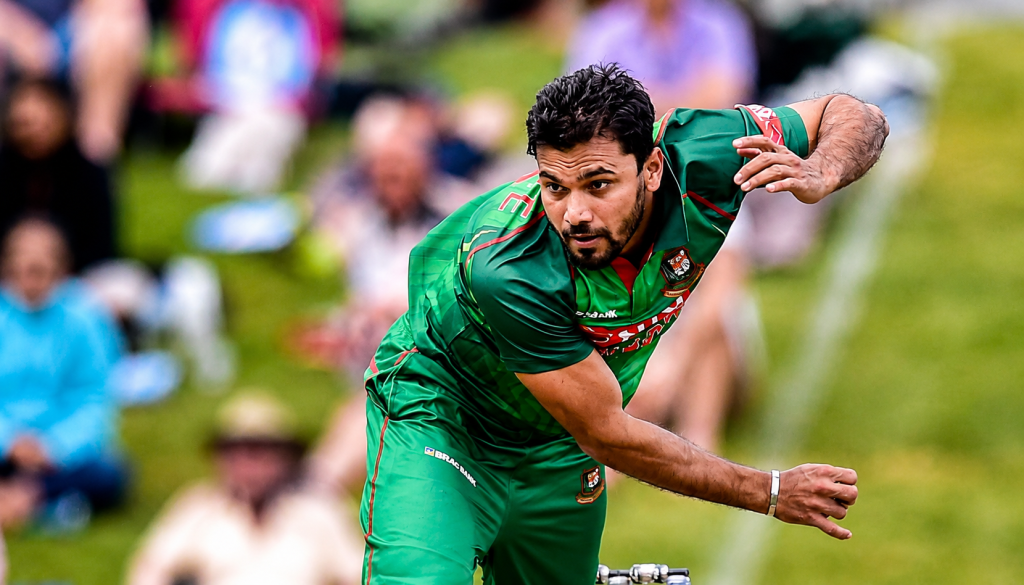
Some people in the history of Bangladesh cricket cannot be judged by statistics alone. They become emotions, symbols of an era. Mashrafe Bin Mortaza is one such name. He was not just a fast bowler; he was a warrior who kept fighting with a broken body, a captain who rebuilt the shattered dreams of a nation’s cricket. Those who have read The Old Man and the Sea know how the old fisherman Santiago fought alone against the sea. His body broke, but his spirit did not. In Bangladesh cricket, that Santiago was Mashrafe. His knees underwent surgery countless times, and doctors advised him to rest, yet he kept returning. Because some people do not play for themselves, they play for a flag. Ernest Hemingway once wrote: “Man can be destroyed, but not defeated.” It feels as though this line was written for Mashrafe’s life itself. Born in the small southwestern district of Narail, the boy loved football, badminton, and swimming in the Chitra River more than books during his childhood. Cricket came into his life later. At first, he was more interested in batting, but time transformed him into one of the most emotional and inspiring pacers in Bangladesh’s history. People began calling him—“The Narail Express.” In his hometown, he is not merely a cricketer; he is the “Prince of Hearts.” To thousands of young people, he proved that even a boy from a small town outside Dhaka could conquer the world. There was a time when Bangladesh hardly had a genuine pace bowler. In a cricket culture dependent on spin, Mashrafe arrived like a storm. Even at the Under-19 level, his fiery bowling caught the attention of legendary West Indian pacer Andy Roberts. Roberts understood: “This boy does not just have a ball in his hand; he carries rebellion.” After playing only one match for the Bangladesh A team, Mashrafe earned a call-up to the national side. On 8 November 2001, in his Test debut against Zimbabwe, he took four wickets and announced that a new era was about to begin in Bangladesh cricket. What made it even more astonishing was that it was also his very first first-class match. Such a rare event is hardly seen in cricket history. In 2006, he was among the highest wicket-takers in ODI cricket. With 49 wickets, he not only won matches but also gifted Bangladesh a new sense of belief. That same year, during Bangladesh’s historic victory over Australia in Cardiff, he dismissed Adam Gilchrist for a duck, leaving the cricket world stunned. Just as William Wallace in Braveheart sacrificed his body for the dream of freedom, Mashrafe sacrificed his body for Bangladesh cricket. While others tried to protect their careers, he chose to protect the honor of his nation’s flag. His four wickets against India in the unforgettable victory of the 2007 World Cup remain etched in history. That day, millions of people truly began to believe that Bangladesh, too, could stand tall on the world stage. During his 16-year career, injuries forced him away from the field 11 times. A knee injury against England kept him out of cricket for two years. Yet he returned. He got injured again. And he returned. Every comeback for him was never just about cricket; it was a battle against his own limitations. The 2011 World Cup at home was cruelly taken away from him by injury. The World Cup, where the entire nation wanted to see him play, had to be watched by him as a spectator. What greater pain could there be for a warrior? Still, he did not stop. Under his leadership, Bangladesh reached the quarter-finals of the 2015 World Cup. By defeating a powerhouse like England, they announced to the world: “Bangladesh is no longer a small team.” When Bangladesh grew exhausted from losing, Mashrafe stood alone at the front. In 2020, he stepped down as ODI captain after a victory against Zimbabwe. In 88 matches as captain, he secured 50 wins—marking the beginning of a new era in Bangladesh cricket. But a person’s life is never confined only to the field. The hero of cricket eventually stepped onto the political stage as well. In 2018, Mashrafe Bin Mortaza was elected as a Member of Parliament from the Narail-2 constituency while still serving as the national team captain. Such an event is rare in the history of world sports. He once said: “I wanted to work for people on a larger scale. But politics is not as simple as cricket. In cricket, the opposition is eleven people; in politics, sometimes the opposition becomes the entire society.” There was excitement surrounding his electoral victory, but there were also questions. His massive winning margin in the 2018 election drew criticism. Some said, “The legend of the field has become part of political reality.” Others believed it was simply the love of the people of Narail that brought him that victory. During the 2024 quota reform movement, his silence created even greater controversy. Young people expected him to take a stand, because to them Mashrafe was not just a cricketer—he was a symbol of courage. Later, he himself admitted that he had failed to meet people’s expectations. This confession made him even more human. Because truly great people know how to acknowledge their own mistakes. After the fall of the government of Sheikh Hasina, his house in Narail was attacked and set on fire. Yet he did not speak the language of revenge. Instead, he said: “I will not seek justice against the people of Narail.” Perhaps within these words lies Mashrafe’s greatest identity. Kazi Nazrul Islam once wrote: “I am the eternal rebel hero.” Mashrafe, too, seems like such a silent rebel. A rebellion against his own body, against failure, and sometimes against his own shortcomings. At one point, he said: “When I die, do not bring my body back to Narail.” Perhaps hidden within this sentence is the pain of a wounded man, a silent sorrow toward the city
Brazil’s World Cup Nightmare: The Biggest Threats Before 2026
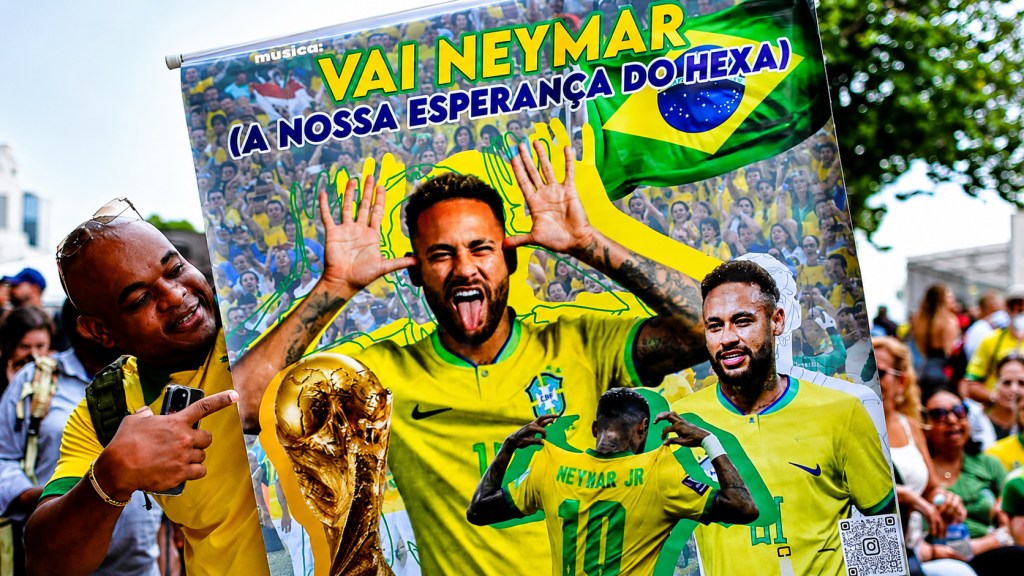
Ever since Brazil announced their final 26-man squad for the 2026 FIFA World Cup, intense debate has erupted across the football world. Although the squad still features global superstars such as , , and , many football analysts believe that Brazil’s dream of lifting a historic sixth World Cup trophy faces serious challenges once again. Questions surrounding the squad’s balance, aging core, tactical limitations, and lack of depth in certain areas have raised doubts about whether the South American giants can truly compete with Europe’s modern football powerhouses. The biggest concern revolves around the fitness of Neymar Jr., Brazil’s most experienced attacking player and emotional leader. After spending long periods sidelined due to injuries over the last few years, the 34-year-old forward remains a major uncertainty heading into the tournament. Brazil’s attacking structure still appears heavily dependent on Neymar’s creativity, vision, and ability to unlock defenses in high-pressure matches. If he is unable to maintain full fitness throughout the knockout stages—or suffers another injury setback—the team could struggle to maintain rhythm and attacking fluidity against elite opposition. Defensively, Brazil also faces growing concerns, particularly in the fullback positions. While center-backs such as , , and provide stability and physical presence in central defense, the modern game increasingly relies on dynamic and fast fullbacks who can contribute both offensively and defensively. Veteran defenders and bring valuable experience, but age has noticeably affected their pace and recovery speed. Against Europe’s explosive wingers and rapid counter-attacking systems, Brazil’s fullbacks may find themselves exposed in one-on-one situations. The midfield is another area where concerns have become increasingly visible. Experienced defensive midfielders and have been among the world’s best in their roles for years, but both are now entering the later stages of their careers. Maintaining the physical intensity required for modern pressing football over the course of an entire World Cup campaign may prove difficult. Furthermore, Brazil appears to lack a traditional deep-lying playmaker capable of controlling the tempo of matches with precise passing and creative vision from midfield. Against tactically disciplined European sides, losing control of midfield battles could become a decisive weakness.In attack, Brazil still possesses extraordinary individual talent. Players like , , and have been performing at a world-class level in European competitions and are capable of changing matches with moments of brilliance. However, beyond those established stars, much of Brazil’s attacking depth remains relatively inexperienced at the international level. Young talents such as , , and undoubtedly possess enormous potential, but the pressure of performing on football’s biggest stage is entirely different from club football. Meanwhile, striker has occasionally struggled with consistency in front of goal, raising concerns about Brazil’s ability to convert chances in crucial knockout matches. At the same time, European nations such as , , , and currently appear more advanced in terms of tactical structure, squad depth, athleticism, and overall team chemistry. Modern international football increasingly rewards collective organization, coordinated pressing systems, and positional discipline rather than relying solely on individual brilliance. Brazil’s traditional flair and technical creativity remain dangerous, but unless they can transform those qualities into a cohesive tactical unit, they may once again struggle against Europe’s highly organized football systems. Ultimately, Brazil still has enough star power to defeat any opponent on their day. The explosive pace of Vinícius Júnior, Neymar’s creativity, and the fearless energy of young talents like Endrick could produce moments capable of deciding matches instantly. However, the combination of an aging midfield, vulnerabilities at fullback, tactical uncertainty, and concerns surrounding Neymar’s fitness means Brazil’s road to World Cup glory in 2026 is far from smooth. Unless Brazil can evolve into a more tactically disciplined and balanced side while maintaining their traditional attacking identity, football experts believe the Seleção may once again fall short of winning the elusive “Hexa” and face another painful World Cup disappointment.