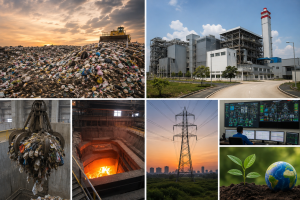


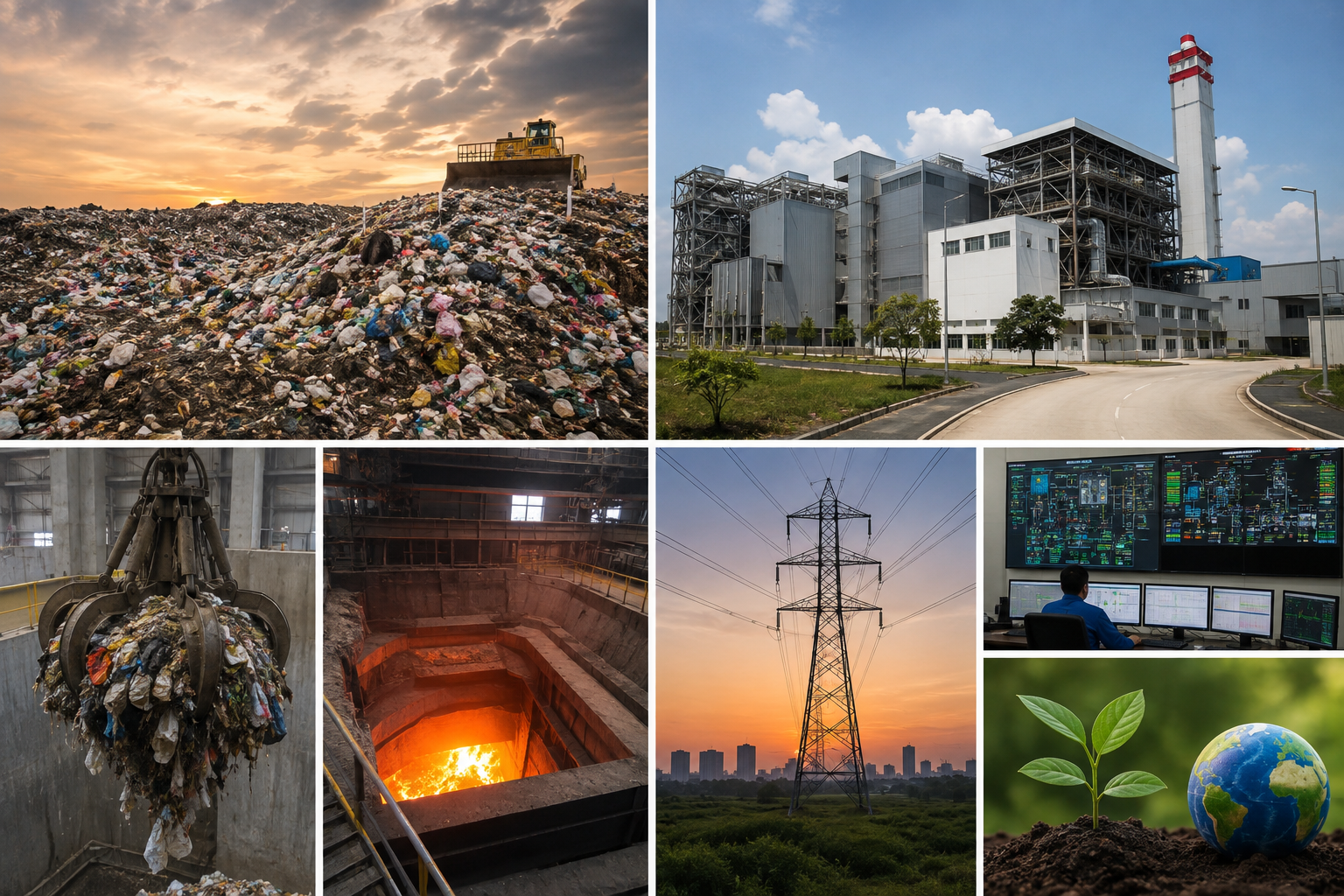
A proposed waste-to-energy project at the Aminbazar landfill in Dhaka has triggered a growing debate over the cost of electricity, environmental benefits and the long-term financial implications for Bangladesh.
The project, being developed with China Machinery Engineering Corporation (CMEC), aims to process around 3,000 tonnes of waste every day and generate approximately 42.5 megawatts of electricity. The electricity is expected to be purchased by the Bangladesh Power Development Board (BPDB) at a reported price of Tk 25 per unit.
While the government argues that the project should not be assessed solely on the basis of electricity prices, critics question whether such a high tariff can be justified.
Government: The project will address Dhaka’s waste crisis
After meeting the Chinese ambassador on 27 August, Local Government State Minister Mir Shahe Alam said the price may appear high, but the project should be considered in the broader context of Dhaka’s worsening waste-management problems.
According to the government, the project will not only generate electricity but also process a significant amount of municipal waste. Organic fertilizer is expected to be produced from the waste, while the company will reportedly pay the city corporation a monthly fee for using the landfill.
The government also says Bangladesh will not have to make a direct investment in the project. Officials argue that environmental benefits and potential carbon-credit revenues could provide additional economic value.
Why is the electricity price so high?
The reported Tk 25 per unit purchase price has become the central point of controversy.
Critics argue that the price is considerably higher than figures previously cited for the country’s average electricity generation cost. They fear that purchasing electricity at such a rate over a long period could create a significant financial burden for the government.
But there is another side to the calculation.
Unlike a conventional power plant, the Aminbazar project is designed to perform two functions simultaneously: waste management and electricity generation. Supporters argue that the economic value of reducing landfill waste, pollution and associated public-health risks should therefore be included when assessing the project’s overall cost.
The key question is whether those benefits have been transparently quantified and whether they justify the additional cost of electricity.
Environmental benefits and concerns
Waste-to-energy projects are often promoted as an alternative to conventional landfill disposal. Processing thousands of tonnes of waste each day could reduce pressure on the landfill and potentially decrease some of the environmental and public-health problems associated with unmanaged waste.
However, environmental concerns remain.
Previous policy discussions and environmental advocates have raised questions about greenhouse-gas emissions, ash disposal and the environmental consequences of waste incineration.
For the Aminbazar project, therefore, important questions remain about how residual ash will be managed, what emissions-control technology will be used and whether an independent environmental assessment has adequately addressed the potential risks.
Minister rejects comparison with quick-rental power
Responding to criticism on social media on 30 August, State Minister for Expatriates’ Welfare Nurul Haque Nur argued that the Tk 25 electricity price should be considered alongside the health and environmental damage caused by Dhaka’s waste crisis.
He rejected comparisons between the project and Bangladesh’s controversial rental and quick-rental power plants, arguing that the project should not be viewed as a similar form of financial exploitation.
Still, questions about the project’s financial structure remain.
A proper assessment would require public disclosure of the total project cost, electricity-purchase agreement, contract duration, tariff-adjustment mechanism, government obligations and environmental-management costs.
No evidence of Jamuna Group involvement
Another issue has emerged from social media discussions surrounding the project.
Some online content has used headlines referring to a supposed “conspiracy” by a “Jamuna electricity company”. However, available information does not establish any connection between Jamuna Electricity, Jamuna Group and the Aminbazar waste-to-energy project.
The Chinese company identified in connection with the project is China Machinery Engineering Corporation (CMEC). Linking other companies to the project without documentary evidence could therefore create public confusion.
The 2 September agreement could provide answers
A final tripartite agreement is reportedly scheduled to be signed in Beijing on 2 September 2026. The agreement could provide greater clarity on the project’s financial structure, electricity-purchase terms, responsibilities of the parties and environmental safeguards.
The government aims to begin electricity generation within approximately 18 months, with the plant expected to be connected to the national grid around August–September 2028.
The Aminbazar project is therefore about more than electricity.
It sits at the intersection of Dhaka’s waste crisis, public health, environmental protection and public spending. Whether the project ultimately proves to be a cost-effective environmental solution or an expensive source of electricity will depend on what the final agreement reveals and whether the promised waste-management and environmental benefits materialize in practice.