Waste-to-Energy Project at Aminbazar Sparks Debate Over 25 Taka Power Price
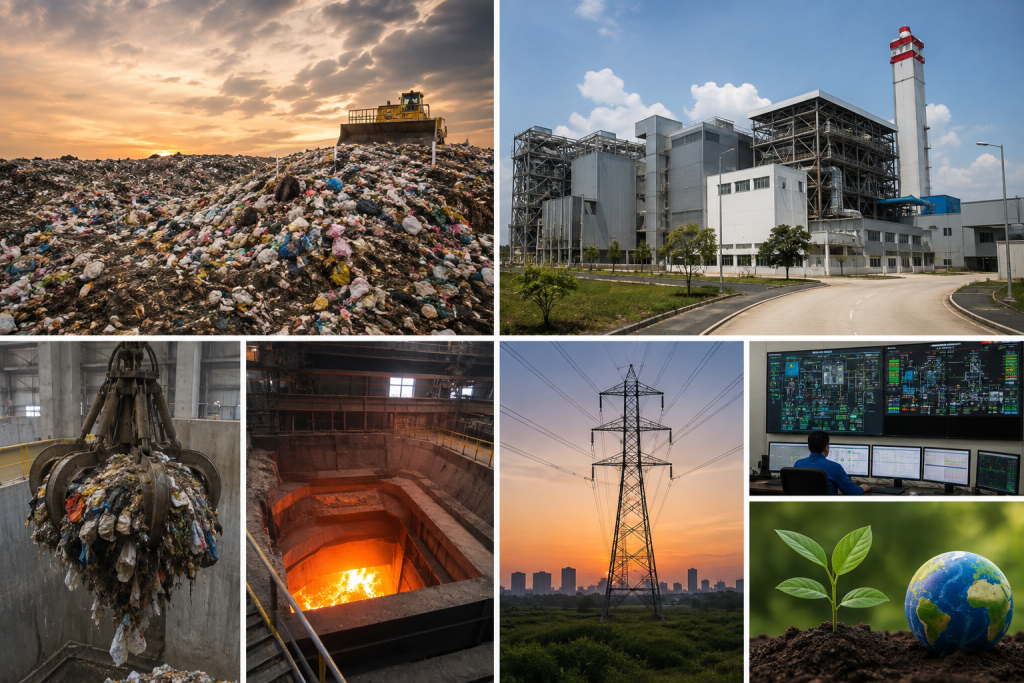
A proposed waste-to-energy project at the Aminbazar landfill in Dhaka has triggered a growing debate over the cost of electricity, environmental benefits and the long-term financial implications for Bangladesh. The project, being developed with China Machinery Engineering Corporation (CMEC), aims to process around 3,000 tonnes of waste every day and generate approximately 42.5 megawatts of electricity. The electricity is expected to be purchased by the Bangladesh Power Development Board (BPDB) at a reported price of Tk 25 per unit. While the government argues that the project should not be assessed solely on the basis of electricity prices, critics question whether such a high tariff can be justified. Government: The project will address Dhaka’s waste crisis After meeting the Chinese ambassador on 27 August, Local Government State Minister Mir Shahe Alam said the price may appear high, but the project should be considered in the broader context of Dhaka’s worsening waste-management problems. According to the government, the project will not only generate electricity but also process a significant amount of municipal waste. Organic fertilizer is expected to be produced from the waste, while the company will reportedly pay the city corporation a monthly fee for using the landfill. The government also says Bangladesh will not have to make a direct investment in the project. Officials argue that environmental benefits and potential carbon-credit revenues could provide additional economic value. Why is the electricity price so high? The reported Tk 25 per unit purchase price has become the central point of controversy. Critics argue that the price is considerably higher than figures previously cited for the country’s average electricity generation cost. They fear that purchasing electricity at such a rate over a long period could create a significant financial burden for the government. But there is another side to the calculation. Unlike a conventional power plant, the Aminbazar project is designed to perform two functions simultaneously: waste management and electricity generation. Supporters argue that the economic value of reducing landfill waste, pollution and associated public-health risks should therefore be included when assessing the project’s overall cost. The key question is whether those benefits have been transparently quantified and whether they justify the additional cost of electricity. Environmental benefits and concerns Waste-to-energy projects are often promoted as an alternative to conventional landfill disposal. Processing thousands of tonnes of waste each day could reduce pressure on the landfill and potentially decrease some of the environmental and public-health problems associated with unmanaged waste. However, environmental concerns remain. Previous policy discussions and environmental advocates have raised questions about greenhouse-gas emissions, ash disposal and the environmental consequences of waste incineration. For the Aminbazar project, therefore, important questions remain about how residual ash will be managed, what emissions-control technology will be used and whether an independent environmental assessment has adequately addressed the potential risks. Minister rejects comparison with quick-rental power Responding to criticism on social media on 30 August, State Minister for Expatriates’ Welfare Nurul Haque Nur argued that the Tk 25 electricity price should be considered alongside the health and environmental damage caused by Dhaka’s waste crisis. He rejected comparisons between the project and Bangladesh’s controversial rental and quick-rental power plants, arguing that the project should not be viewed as a similar form of financial exploitation. Still, questions about the project’s financial structure remain. A proper assessment would require public disclosure of the total project cost, electricity-purchase agreement, contract duration, tariff-adjustment mechanism, government obligations and environmental-management costs. No evidence of Jamuna Group involvement Another issue has emerged from social media discussions surrounding the project. Some online content has used headlines referring to a supposed “conspiracy” by a “Jamuna electricity company”. However, available information does not establish any connection between Jamuna Electricity, Jamuna Group and the Aminbazar waste-to-energy project. The Chinese company identified in connection with the project is China Machinery Engineering Corporation (CMEC). Linking other companies to the project without documentary evidence could therefore create public confusion. The 2 September agreement could provide answers A final tripartite agreement is reportedly scheduled to be signed in Beijing on 2 September 2026. The agreement could provide greater clarity on the project’s financial structure, electricity-purchase terms, responsibilities of the parties and environmental safeguards. The government aims to begin electricity generation within approximately 18 months, with the plant expected to be connected to the national grid around August–September 2028. The Aminbazar project is therefore about more than electricity. It sits at the intersection of Dhaka’s waste crisis, public health, environmental protection and public spending. Whether the project ultimately proves to be a cost-effective environmental solution or an expensive source of electricity will depend on what the final agreement reveals and whether the promised waste-management and environmental benefits materialize in practice.
Tax Amnesty: A Practical Solution or a Moral Compromise?

“Alas, in this world, those who have much, want more; It is the king’s hand that steals the wealth of the poor.” These timeless lines by Rabindranath Tagore perfectly reflect the harsh reality of the modern global economy. The creation of a “shadow economy” or “black money” comes from human greed and the desire to secretly hoard wealth. When massive amounts of hidden wealth are built up, threatening to choke the normal economy, governments sometimes have to make compromises to bring that money back into the open. Though it might seem unethical, this practical compromise is officially called the “black money whitening policy” or “Tax Amnesty.” It remains one of the most debated topics in the global economy today. The process of bringing black money or hidden wealth back into the regular economy is known worldwide as a Tax Amnesty or Voluntary Disclosure Program (VDP). Simply put, it is a government policy that gives people a limited timeframe to legalize their hidden or illegally earned money by paying a specific tax and a penalty. According to the International Monetary Fund (IMF) and the World Bank, the main goals of this policy are to boost government revenue, widen the tax net, and bring the shadow economy back into the formal financial system. This concept started being used in modern tax systems around the mid-20th century. In the 1950s, the United States tax authority (the IRS) first introduced a policy that let taxpayers confess their hidden wealth voluntarily to avoid criminal charges, which soon became a model for other countries. In neighboring India, a similar step was first taken in 1951, and later, more chances to legalize hidden wealth were given in 1975, 1997, and 2016. In Europe, Italy launched a major tax amnesty called “Scudo Fiscale” in 2001 to bring back huge amounts of money that had been secretly sent abroad. The actual process of whitening black money happens in a few clear steps. First, the taxpayer must voluntarily declare their hidden income and assets, whether they are kept inside the country or abroad, within a strict deadline. Next, the tax authorities check the market value of these declared assets and decide how much tax and penalty needs to be paid. After that, the taxpayer pays this amount. To encourage people to come forward, the penalty is usually kept lower than the standard punishment for tax evasion. Finally, once all conditions are met, the taxpayer is given legal immunity, meaning they will not face criminal or civil charges for their past tax offenses. Different countries have used this policy with varying levels of success. According to the OECD, Indonesia launched a massive tax amnesty program in 2016. People declared about $360 billion in hidden assets, and the government collected around $9.6 billion in taxes, making it one of the most successful programs in the world. That same year, Argentina brought about $116 billion of hidden wealth into its formal economy. In India, people declared around 65,250 crore rupees in hidden assets during the 2016 Income Declaration Scheme. Similarly, since 2009, the United States has successfully used its Offshore Voluntary Disclosure Program to bring back money hidden in foreign bank accounts, including those in Switzerland. Economists believe that tax amnesties have a two-sided effect. In the short term, they quickly increase government revenue, which helps during economic slowdowns or budget shortages, and they bring more cash into the banking system. However, in the long term, they create a “moral hazard.” Research shows that offering frequent tax amnesties makes people less likely to pay taxes regularly. Honest taxpayers feel cheated and discouraged when they see tax evaders getting away with just a small penalty. Because of this negative long-term impact on tax discipline, developed nations in the OECD and G-20 are now moving away from tax amnesties. Instead, they are focusing heavily on preventing tax evasion through automatic information exchange, international banking cooperation, and advanced digital tracking systems.
Bangladesh Turns to China and Malaysia in Push to Tackle Joblessness
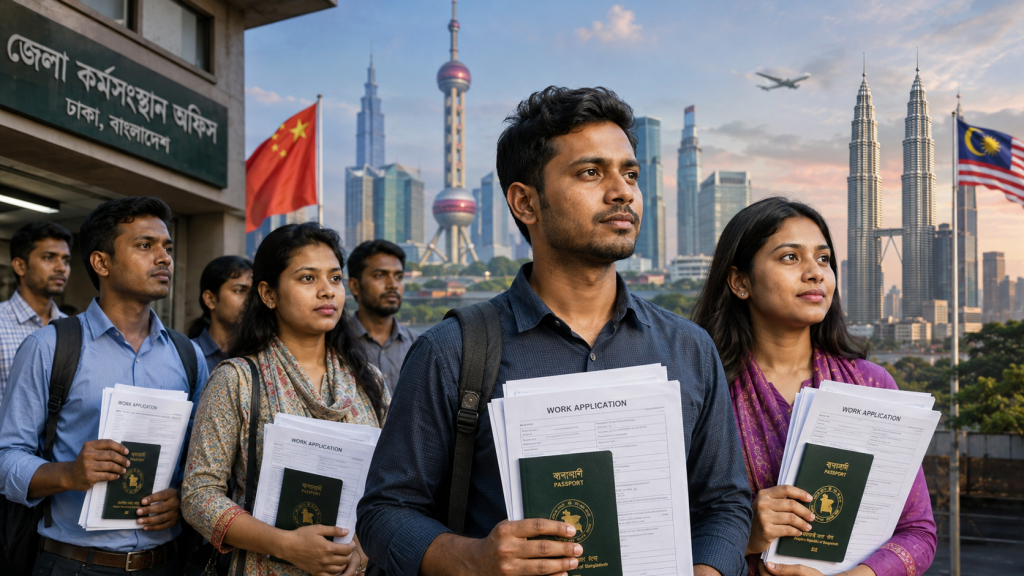
Bangladesh is set to use Prime Minister Tarique Rahman’s first overseas visit since taking office as a major step toward easing the country’s unemployment crisis, with investment and overseas jobs at the center of the agenda. During the six-day trip to Malaysia and China, Dhaka is expected to sign 15 to 17 bilateral agreements, Foreign Secretary Asad Alam Siam said on Saturday. Officials say the visit is not just about diplomacy, but about opening real economic doors for young job seekers at home and abroad. In China, Rahman is scheduled to meet Premier Li on June 25 and President Xi Jinping on June 26. The talks are expected to focus on investment, industrial cooperation, and the long-delayed Teesta River project. Bangladesh also hopes to deepen ties with one of its biggest trading partners and development financiers. A newly approved Chinese-backed industrial zone in Chittagong is already being seen as a major employment opportunity, with projections of around 100,000 jobs in its initial phase. The project is also expected to attract more than $500 million in foreign direct investment, offering hope to thousands of families looking for stable work. In Malaysia, the focus will shift to labour migration and recruitment of Bangladeshi workers. For many households, overseas employment remains a lifeline, sending back remittances that support daily life, education, and small businesses across the country. Analysts say the trip reflects a practical economic strategy. China is being courted for investment, while Malaysia is being approached as a key destination for workers. Together, the two visits could help Bangladesh create jobs, boost income, and ease pressure on its labour market. At a time when many young people are struggling to find work, the government is hoping this trip will turn foreign partnerships into something ordinary citizens can feel: more jobs, more opportunity, and a stronger path out of unemployment.
Islami Bank’s Real Challenge Isn’t Liquidity, It’s Rebuilding Trust

There is an old truth in banking: banks do not collapse when they run out of money; they collapse when they run out of trust. The withdrawal of more than Tk 3,500 crore from Islami Bank Bangladesh PLC, the country’s largest Shariah-based bank, within just five working days has once again brought that reality into focus. This is not merely a statistic about money leaving a bank. It is a signal about depositor confidence, the acceptance of leadership, and public trust in the banking system itself. Following the appointment of the new chairman, Md. Khurshid Alam, protests, demonstrations, and controversy surrounding the bank’s management began almost immediately. Protesters have been carrying out continuous programmes demanding the cancellation of his appointment. The situation escalated to such an extent that the chairman’s first board meeting was held online rather than in person. Then came another kind of vote, a silent vote. This vote was not cast in ballot boxes, but at bank counters. Without joining protest marches, customers began expressing their position by withdrawing their money. Approximately Tk 2,570 crore was withdrawn within four working days, followed by nearly Tk 1,000 crore more in a single day. The total amount withdrawn surpassed Tk 3,500 crore. Banking experts often say that when a depositor places money in a bank, they are depositing not only funds but also trust. And when that trust begins to crack, people instinctively seek to move their savings to what they perceive as a safer place. That psychology appears evident in the current developments surrounding Islami Bank. Neither Bangladesh Bank nor the bank’s management has so far expressed concern about the institution’s financial capacity. On the contrary, the central bank has stated that it is closely monitoring the situation and will provide liquidity support if necessary. In other words, the issue at present is not a shortage of money, but a shortage of confidence. What makes the situation even more significant is that Islami Bank had been experiencing strong deposit growth over the past year. Following the restructuring of its board, the bank’s total deposits reached approximately Tk 1.83 trillion in 2025. More than Tk 22,000 crore in new deposits were added within a single year. In other words, the same bank that had been attracting fresh deposits is now witnessing customers rapidly moving their money elsewhere. For that reason, viewing the withdrawal of Tk 3,500 crore merely as a financial event would be a mistake. This is, in reality, a confidence test. Do people trust the bank’s leadership? Do they believe their savings are secure? Do they have confidence that future decisions will be transparent? The answers to these questions will ultimately determine Islami Bank’s path forward. History shows that long queues at banks often begin with rumours. But when those rumours combine with a crisis of confidence, they can quickly evolve into the risk of a bank run. Although regulators and bank officials are reluctant to describe the current situation in those terms, the withdrawal of thousands of crores of taka within a matter of days has sent a powerful message to the market. In the end, one question remains .What is the bigger challenge facing Islami Bank today — a liquidity crisis, or the task of rebuilding trust? Because in the world of banking, lost money can often be recovered. But once trust is lost, rebuilding it can take years.
The Rise of Corporate Capital in Bangladesh’s Pharmacy Sector: Healthcare Modernization or a Threat to Small Businesses?

A quiet but significant transformation is underway in Bangladesh’s pharmacy sector. For decades, the industry has largely been dominated by small and medium-sized entrepreneurs. However, in recent years, large corporate groups have begun entering the market at an increasingly rapid pace. While some view this shift as a long-overdue modernization of healthcare services, others see it as the beginning of a new challenge for thousands of small business owners. According to market research firm IQVIA, Bangladesh’s pharmaceutical market is now valued at approximately Tk 32,000 crore, making it one of the country’s largest and fastest-growing sectors. The size and potential of this market have attracted the attention of major business conglomerates seeking to establish a foothold in pharmaceutical retail. One of the most notable examples is AKIJ Pharmacy, a venture of the Akij Group. The company has already launched outlets across the country and announced ambitious expansion plans for the coming years. According to reports, the company aims to invest around Tk 2,000 crore to build thousands of pharmacy outlets nationwide. AKS Pharmacy is also expanding rapidly. The company already operates more than 60 outlets and has successfully attracted foreign investment. Meanwhile, BRAC Healthcare has adopted a different model by integrating primary healthcare services, diagnostics, and pharmacy operations under a single platform. Adding to the competition, international pharmacy chain Aster Pharmacy has entered the Bangladeshi market. As a result, the country’s pharmacy industry is no longer facing competition solely from domestic players; it is increasingly becoming part of a broader global retail healthcare landscape. The aggressive expansion of corporate pharmacy chains is driven by significant financial strength. Large corporations possess substantial capital, advanced technology, efficient supply chain systems, skilled human resources, and extensive marketing capabilities. They can open hundreds of outlets simultaneously, operate with lower profit margins for extended periods, and continue investing heavily to strengthen their market position. In contrast, most local pharmacies operate with limited financial resources. In many cases, a single entrepreneur or family serves as the backbone of the business. Their ability to maintain large inventories, implement advanced software systems, hire registered pharmacists, or invest heavily in branding and promotion is often limited. As a result, competing directly with corporate chains may become increasingly difficult. However, the rise of corporate pharmacies is not driven solely by business ambitions. It is also linked to long-standing challenges within Bangladesh’s healthcare system. For years, concerns have existed regarding the shortage of registered pharmacists, inadequate medicine storage facilities, poor temperature control, and the circulation of counterfeit or substandard medicines. Corporate pharmacy chains have positioned themselves as a solution to these issues, promoting a model based on professional standards and quality assurance. Their marketing focuses on registered pharmacists, digital prescription records, cold-chain maintenance, direct procurement from pharmaceutical manufacturers, and strict quality control measures. In essence, they are not merely selling medicines; they are selling a new concept of organized, technology-driven pharmaceutical retail. This is where small businesses face their greatest challenge. The competition is no longer based solely on capital; it is increasingly a battle for consumer trust. If customers begin to perceive corporate pharmacy chains as the only reliable source of safe and authentic medicines, local pharmacies may gradually lose market share regardless of their long-standing presence in the community. Experiences from other countries suggest a similar pattern. Large pharmacy chains often attract customers through modern facilities, longer operating hours, digital services, and occasionally lower prices. While consumers may benefit in the short term, smaller independent pharmacies frequently struggle to survive. Over time, this can lead to market concentration, where a significant portion of the industry becomes controlled by a handful of dominant players. The same question is now emerging in Bangladesh. If major urban pharmacy markets eventually come under the control of a few corporate chains, what will happen to small entrepreneurs who have spent years building their businesses through personal savings, hard work, and local relationships? Will they be able to compete on equal terms? Employment is another important consideration. Thousands of small pharmacies across the country support a vast number of livelihoods directly and indirectly. Corporate expansion may create new jobs, but it could also generate uncertainty for many small business owners and employees. As economic power becomes concentrated in fewer hands, concerns about market balance and fair competition may intensify. Yet the story is not entirely one-sided. In rural and semi-urban Bangladesh, personal relationships, trust, and community-based service continue to play a vital role. Local pharmacies often provide medicines on credit, offer home delivery during emergencies, and maintain strong relationships with customers built over many years. This form of social capital cannot be easily replicated by corporate organizations. Ultimately, the central question facing Bangladesh’s pharmacy sector is not simply one of corporate versus small business. Rather, it is about how the country can ensure safe, modern, and high-quality healthcare services while preserving a fair and competitive environment for local entrepreneurs. The answer to that question will shape the future of the industry in the years ahead. Whether Bangladesh’s pharmacy sector evolves into a more efficient healthcare ecosystem or moves toward greater market concentration remains to be seen.