Tax Amnesty: A Practical Solution or a Moral Compromise?

“Alas, in this world, those who have much, want more; It is the king’s hand that steals the wealth of the poor.” These timeless lines by Rabindranath Tagore perfectly reflect the harsh reality of the modern global economy. The creation of a “shadow economy” or “black money” comes from human greed and the desire to secretly hoard wealth. When massive amounts of hidden wealth are built up, threatening to choke the normal economy, governments sometimes have to make compromises to bring that money back into the open. Though it might seem unethical, this practical compromise is officially called the “black money whitening policy” or “Tax Amnesty.” It remains one of the most debated topics in the global economy today. The process of bringing black money or hidden wealth back into the regular economy is known worldwide as a Tax Amnesty or Voluntary Disclosure Program (VDP). Simply put, it is a government policy that gives people a limited timeframe to legalize their hidden or illegally earned money by paying a specific tax and a penalty. According to the International Monetary Fund (IMF) and the World Bank, the main goals of this policy are to boost government revenue, widen the tax net, and bring the shadow economy back into the formal financial system. This concept started being used in modern tax systems around the mid-20th century. In the 1950s, the United States tax authority (the IRS) first introduced a policy that let taxpayers confess their hidden wealth voluntarily to avoid criminal charges, which soon became a model for other countries. In neighboring India, a similar step was first taken in 1951, and later, more chances to legalize hidden wealth were given in 1975, 1997, and 2016. In Europe, Italy launched a major tax amnesty called “Scudo Fiscale” in 2001 to bring back huge amounts of money that had been secretly sent abroad. The actual process of whitening black money happens in a few clear steps. First, the taxpayer must voluntarily declare their hidden income and assets, whether they are kept inside the country or abroad, within a strict deadline. Next, the tax authorities check the market value of these declared assets and decide how much tax and penalty needs to be paid. After that, the taxpayer pays this amount. To encourage people to come forward, the penalty is usually kept lower than the standard punishment for tax evasion. Finally, once all conditions are met, the taxpayer is given legal immunity, meaning they will not face criminal or civil charges for their past tax offenses. Different countries have used this policy with varying levels of success. According to the OECD, Indonesia launched a massive tax amnesty program in 2016. People declared about $360 billion in hidden assets, and the government collected around $9.6 billion in taxes, making it one of the most successful programs in the world. That same year, Argentina brought about $116 billion of hidden wealth into its formal economy. In India, people declared around 65,250 crore rupees in hidden assets during the 2016 Income Declaration Scheme. Similarly, since 2009, the United States has successfully used its Offshore Voluntary Disclosure Program to bring back money hidden in foreign bank accounts, including those in Switzerland. Economists believe that tax amnesties have a two-sided effect. In the short term, they quickly increase government revenue, which helps during economic slowdowns or budget shortages, and they bring more cash into the banking system. However, in the long term, they create a “moral hazard.” Research shows that offering frequent tax amnesties makes people less likely to pay taxes regularly. Honest taxpayers feel cheated and discouraged when they see tax evaders getting away with just a small penalty. Because of this negative long-term impact on tax discipline, developed nations in the OECD and G-20 are now moving away from tax amnesties. Instead, they are focusing heavily on preventing tax evasion through automatic information exchange, international banking cooperation, and advanced digital tracking systems.
A Critical Overview of Capitalism in Karl Marx’s Das Kapital
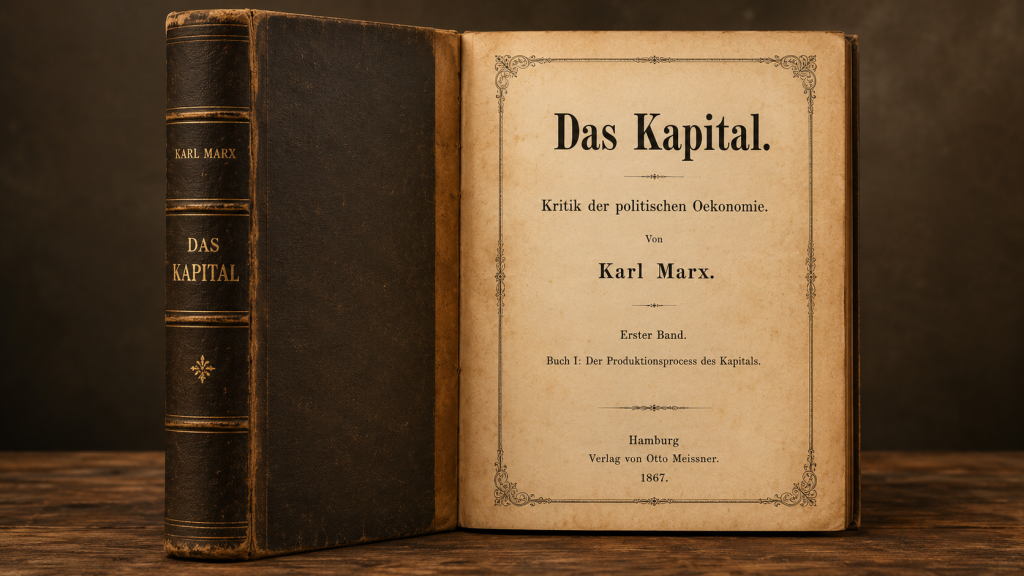
Karl Marx’s Das Kapital is one of the most important books about capitalism and economic society. In this work, Marx tries to explain how capitalism actually functions beneath its surface appearance. He argues that capitalism may look fair because workers receive wages and goods are exchanged through markets, but the system is built on an unequal relationship between workers and capitalists. Marx begins with the idea of commodities. A commodity is something produced to be sold in the market. Every commodity has a use value, meaning its practical usefulness, and an exchange value, meaning what it can be traded or sold for. Marx believes that the value of a commodity is closely connected to the labor used to produce it. Human labor, therefore, becomes central to understanding capitalism. The most important relationship in capitalism is between the worker and the capitalist. Workers usually do not own land, factories, machines, or other means of production. Because of this, they must sell their labor power in order to survive. Capitalists buy this labor power by paying wages. However, Marx argues that workers create more value through their labor than they receive in wages. The extra value produced by workers is called surplus value, and this surplus becomes the source of profit for the capitalist. This is where Marx sees exploitation. The worker is paid, so the system appears legal and fair. But in reality, the capitalist gains wealth from the unpaid portion of the worker’s labor. For Marx, this hidden exploitation is the foundation of capitalist profit. Marx also discusses how capitalism affects human life. Workers can become alienated from their work because they do not own what they produce. The product belongs to the capitalist, not to the worker. As a result, work becomes less creative and meaningful and more like a forced activity done only for survival. Another major idea in Das Kapital is accumulation. Capitalists are always pressured to make more profit, expand production, reduce costs, and compete with others. This can lead to technological progress and economic growth, but it also creates inequality, unemployment, and economic crises. Marx believed that capitalism contains internal contradictions because it depends on workers while also exploiting them. Overall, Das Kapital is a critical analysis of capitalism. Marx’s main argument is that capitalism creates wealth, but that wealth is produced by workers and controlled by capitalists. The book challenges readers to look beyond the surface of markets and wages and understand the power relations hidden inside the economic system.
Searching for Truth in the Flood of Information: Why Epistemology Matters More Than Ever

Rapid developments in information technology have made human life easier, but they have also created new challenges. Every day, we are exposed to vast amounts of news, opinions, videos, social media posts, and AI-generated content. In this overwhelming flow of information, it is becoming increasingly difficult to determine what is true, what is misleading, and what is completely false. In this context, an important branch of philosophy—epistemology has gained renewed attention. Epistemology is the study of knowledge and the questions surrounding it. It explores what knowledge is, how humans acquire it, what counts as justified belief, and where the limits of knowledge lie. In simple terms, epistemology explains how we know something is true and how reliable that knowledge is. Once mainly confined to philosophical and academic discussions, epistemology is now closely connected to everyday life. Whether we are viewing information on social media, reading news, or receiving answers from AI systems, we consciously or unconsciously evaluate the truthfulness of that information. This process of evaluation is deeply rooted in epistemological thinking. How is Knowledge Formed? Human beings acquire knowledge from multiple sources: personal experience, observation, reasoning, memory, and information from others. However, believing something and knowing something are not the same. According to philosophers, for a belief to qualify as knowledge, it must be true, justified, and supported by evidence. Simply believing something is not enough; it must be backed by sufficient grounds. This distinction is especially important in the digital age, where misinformation can spread as quickly as accurate information. Difference Between Belief and Knowledge People often believe many things without adequate evidence. Popularity, repetition, or alignment with personal views does not necessarily make something true. Epistemology clarifies this distinction. It shows that while belief can be personal, knowledge must be verifiable. Therefore, before accepting any information, it is essential to examine its sources, evidence, and logical foundation. This is particularly crucial in the context of social media, where misinformation spreads rapidly. The Importance of Skepticism and Critical Thinking A key concept in epistemology is skepticism. Skepticism does not mean rejecting everything; rather, it means verifying claims before accepting them. When we encounter information, we should ask basic questions: What is the source? What evidence supports it? How was it obtained? Such questions form the foundation of critical thinking. This approach is essential in fields such as journalism, science, law, and research, where credibility depends on accuracy and evidence. Artificial Intelligence and the New Epistemological Reality The rapid advancement of artificial intelligence has added a new dimension to epistemology. AI systems can answer questions, write articles, and analyze complex data. However, there is no guarantee that all AI-generated information is accurate. At times, AI may present incorrect information confidently. Therefore, users must not only consume information but also verify its truthfulness. This necessity has further increased the importance of epistemological awareness. Impact on Education Modern education systems increasingly emphasize critical thinking, media literacy, and research-based learning. These skills are grounded in epistemological principles. Students are taught how to verify information, choose reliable sources, and identify logical errors. As a result, they move beyond memorization toward analysis and evaluation of knowledge. Is Knowledge Absolute and Unchanging? Another important lesson of epistemology is that human knowledge is always evolving. Memory can be flawed, perception can be misleading, and new evidence can change established ideas. History of science provides many examples where theories once considered absolute truths were later revised or replaced based on new evidence. Thus, knowledge is not static but a continuously evolving process. For this reason, epistemology is not merely a theoretical branch of philosophy. It is an essential intellectual tool for seeking truth in a modern information-rich society.
Bangladesh Turns to China and Malaysia in Push to Tackle Joblessness

Bangladesh is set to use Prime Minister Tarique Rahman’s first overseas visit since taking office as a major step toward easing the country’s unemployment crisis, with investment and overseas jobs at the center of the agenda. During the six-day trip to Malaysia and China, Dhaka is expected to sign 15 to 17 bilateral agreements, Foreign Secretary Asad Alam Siam said on Saturday. Officials say the visit is not just about diplomacy, but about opening real economic doors for young job seekers at home and abroad. In China, Rahman is scheduled to meet Premier Li on June 25 and President Xi Jinping on June 26. The talks are expected to focus on investment, industrial cooperation, and the long-delayed Teesta River project. Bangladesh also hopes to deepen ties with one of its biggest trading partners and development financiers. A newly approved Chinese-backed industrial zone in Chittagong is already being seen as a major employment opportunity, with projections of around 100,000 jobs in its initial phase. The project is also expected to attract more than $500 million in foreign direct investment, offering hope to thousands of families looking for stable work. In Malaysia, the focus will shift to labour migration and recruitment of Bangladeshi workers. For many households, overseas employment remains a lifeline, sending back remittances that support daily life, education, and small businesses across the country. Analysts say the trip reflects a practical economic strategy. China is being courted for investment, while Malaysia is being approached as a key destination for workers. Together, the two visits could help Bangladesh create jobs, boost income, and ease pressure on its labour market. At a time when many young people are struggling to find work, the government is hoping this trip will turn foreign partnerships into something ordinary citizens can feel: more jobs, more opportunity, and a stronger path out of unemployment.
The Stolen Star: How FIFA and Rizzoli Robbed Argentina in the Maracanã

For Argentina, July 13, 2014, was not just another football match. It was the night a nation stood one step away from history at the Maracanã, in Brazil, against Germany, with Lionel Messi carrying the dream of a third World Cup star. But for many Argentine supporters, the final is remembered not only for Germany’s 1-0 victory. It is remembered for refereeing decisions that, even years later, remain deeply controversial. The biggest flashpoint came in the 57th minute. Gonzalo Higuaín chased a ball inside the German penalty area as goalkeeper Manuel Neuer rushed out to challenge him. Neuer reached the ball first, but his follow-through was violent. His knee crashed into Higuaín’s head, leaving the Argentine striker on the ground. For many fans, this was not a normal football collision. It was dangerous play. In most matches, such contact would immediately raise questions of a penalty, a card, or even a sending off. Instead, referee Nicola Rizzoli gave a foul against Higuaín. That decision still shocks Argentine supporters. Winning the ball should not give a goalkeeper permission to endanger an opponent. The contact was high, forceful, and reckless. Yet Germany escaped punishment. The Neuer incident was not the only controversial moment. Earlier in the match, Benedikt Höwedes made a studs-up challenge on Pablo Zabaleta. The tackle was late and dangerous, but Höwedes received only a yellow card. Many Argentina fans believe it should have been a red. These decisions shaped the feeling of the match. Germany were allowed to play physically and aggressively, while Argentina’s attacking players struggled to receive the same level of protection. Messi, Lavezzi, Agüero, and Higuaín all faced heavy pressure, but the referee rarely took strong action. Germany eventually survived into extra time, where Mario Götze scored the winning goal. Officially, Germany became world champion. But for Argentina, the pain went beyond defeat. To millions of Argentine fans, the 2014 final was not simply lost. It was a match filled with missed chances, harsh calls, and decisions that still feel impossible to accept. The trophy went to Germany, but the controversy never left Argentina.
Italy’s Long ‘Exile’ and a Sustained Footballing Tragedy

The night of July 9, 2006, at the Berlin Olympic Stadium remains a polarizing memory in football history. The iconic image of Zinedine Zidane’s infamous ‘headbutt’ and Italy’s subsequent World Cup triumph remains etched in the minds of football fans forever. However, beneath the jubilation of that victory lay a long-standing “curse” that has become increasingly evident two decades later. Since that glorious crowning moment, the four-time World Cup champions have lost their rhythm on the global stage. Having been absent from the main stage of the World Cup for twelve consecutive years, Italy’s current plight is not merely a matter of statistics, but a profound tragedy in football history. Following the pinnacle of 2006, Italy’s performance witnessed a catastrophic decline. The group-stage exits in 2010 and 2014 were only the beginning of a downward spiral. The situation grew even more dire when Italy failed to even qualify for the 2018 and 2022 World Cups. For a four-time champion to fall against teams like Sweden and North Macedonia during qualification was a humiliating ordeal. While football pundits attribute this to a “lack of new talent” or “structural weaknesses within Serie A,” a segment of Italian supporters views it through the lens of a supernatural destiny. They strongly believe that an ominous shadow has loomed over Italian football ever since that controversial final where they secured victory after Zidane’s exit. Beneath this prolonged downfall lie deep-rooted tactical issues. A lack of development for young Italian talent, a slow transition from traditional defensive football to a modern, attacking style, and an inability to manage the intense pressure of major tournaments have been the primary drivers of the Azzurri’s decline. Once the impenetrable fortress of world football, Italy now finds itself lost. The dominance of foreign players in Serie A and limited opportunities for local talent have severely hampered the depth of the national team. While that victory at Zidane’s farewell might have been their peak, the performance of the last two decades suggests that Italy has largely abandoned its traditional discipline and tactical philosophy. Despite Italy’s history of rising from the ashes, they currently appear to be a fading force in world football. Fans today deeply miss the artistic defensive battles and the relentless fighting spirit that once defined the Italian side. Can Italy move beyond the glorious memories of Berlin and craft a new vision? Will the new generation of players be able to break the old “curse” and usher in a new dawn for the Azzurri? That remains the question on the minds of millions of fans worldwide, as the absence of such a historic team continues to leave the World Cup stage feeling somewhat hollow. For Italy, it is time to move past the myths and face the harsh reality to chart a path forward.
The Comprehensive Guide to Data Science: Transforming the Digital World

Data science is a multifaceted, interdisciplinary academic field that uses scientific methods, statistics, scientific computing, algorithms, and systems to extract knowledge and insights from data. It is often described as the “fourth paradigm” of science following empirical, theoretical, and computational research because it is purely data-driven. In our modern world, everyday activities like social media scrolling, online shopping, and sensor use generate millions of terabytes of data each day. Data science turns this “chaotic mix” of signals into meaningful information for smart decision-making. The History and Evolution of Data Science The journey of data science is rooted in the convergence of statistics and computer science. 1962: John Tukey described “data analysis” as an empirical science focused on deriving meaning rather than just theoretical math. 1974: Peter Naur proposed the term “data science” as a better alternative to “computer science” to reflect an emphasis on data-driven methods. 1985–1997: C.F. Jeff Wu suggested statistics be renamed “data science” to help the field shed old stereotypes of being limited to simple accounting. 2001: William S. Cleveland outlined a vision for an independent discipline that integrated machine learning and computing. 2008–2012: The title “Data Scientist” was formalized by DJ Patil and Jeff Hammerbacher. Soon after, it was famously declared the “Sexiest Job of the 21st Century”. The Data Science Life Cycle Turning raw data into intelligence follows a structured cycle where each phase builds on the last: Obtaining Data: Gathering relevant raw data from databases, sensors, IoT devices, APIs, and online platforms. Cleaning Data (Data Wrangling): Formatting data and handling missing values, duplicates, and errors. Data scientists often spend the majority of their time here to ensure reliability. Exploring Data (EDA): Using statistics and visualization to identify underlying structures, patterns, and anomalies. Modeling Data: Applying machine learning algorithms to predict outcomes or explain relationships (e.g., forecasting future sales). Interpreting Results: Communicating findings clearly to stakeholders using visualization and storytelling to aid decision-making. Core Techniques of Analysis Data science uses four primary analytical approaches depending on the goal: Descriptive Analysis: Summarizing what happened using averages and frequencies (e.g., average customer spending). Diagnostic Analysis: Investigating why something happened (e.g., why hospital readmission rates are high). Predictive Analysis: Estimating what is likely to happen in the future using historical patterns and models. Prescriptive Analysis: Recommending specific actions to take based on insights. A Deep Dive into Machine Learning (ML) Machine learning is the “brain” of data science, training computers to learn from data. It is categorized into several main types: Supervised Learning The computer learns from labeled data, where the correct answer is already known. Key algorithms include: Decision Trees: Intuitive models that partition data into binary decisions. They are easy to interpret but prone to overfitting. Support Vector Machines (SVM): Powerful classifiers effective in high-dimensional spaces and robust to noise. Neural Networks: Inspired by the human brain, these consist of interconnected neurons that perform nonlinear transformations. Deep Neural Networks (DNNs) are capable of learning complex patterns from raw data but require massive computing resources. Unsupervised Learning The computer finds hidden patterns in unlabeled data. Clustering: Grouping similar items (e.g., k-means). Dimensionality Reduction: Simplifying data while keeping its main features (e.g., Principal Component Analysis or PCA). Reinforcement Learning An agent learns by interacting with its environment, receiving rewards or punishments based on its actions. This is highly effective for robotics, autonomous navigation, and game playing. Advanced Methods Ensemble Learning: Combining multiple models to improve accuracy. This includes Bagging (Random Forests), Boosting (AdaBoost, GBM), and Stacking. Deep Learning Specialized Architectures: CNNs (for images), RNNs (for sequential data like stock prices), and Transformers (for natural language tasks like translation). Time Series Analysis: Using historical observations to forecast the future (e.g., ARIMA, Exponential Smoothing, or LSTM networks). Technical Infrastructure and Tools Data science relies on a robust set of tools and scalable architectures: Programming Languages: Python (valued for versatility and simplicity), R (excellent for statistical research), and SQL (essential for querying structured data). Big Data & Cloud: Platforms like Apache Spark, Hadoop, and Databricks allow for parallel processing of massive datasets. Cloud platforms like AWS, Google Cloud, and Azure provide the necessary storage and power. Scalability: Systems can scale horizontally (adding more computers) or vertically (adding more power to a single computer) to handle growing data volumes. Notebooks: Platforms like Anaconda Notebooks allow users to code in the browser instantly with pre-installed libraries like Pandas and Scikit-learn. Real-World Applications Data science is transformative across diverse sectors: Healthcare: Used for disease diagnosis, medical imaging (X-rays/MRIs), medication development, and personalized treatment. Human Well-being & Mental Health: Artificial Emotional Intelligence (AEI) helps technology understand human emotions. One major project uses mobile apps to provide collaborative care for cancer patients with depression by tracking moods and helping social workers intervene at the right time. Finance: Algorithms detect fraud in real-time, perform algorithmic trading, and assess creditworthiness. Retail & Marketing: Predicting stock needs for festivals, providing personalized recommendations (like Netflix or Amazon), and analyzing customer sentiment. Cybersecurity: Enhancing digital security through smart, automated decision-making to flag unusual transaction patterns. Environment: Climate change modeling, resource management, and tracking biodiversity. Career Paths and Success Strategies The field is open to those from non-technical backgrounds, such as biology or publishing, provided they upskill. Roles: Data Analysts interpret history, Data Scientists predict the future, ML Engineers build production systems, Data Engineers build the infrastructure. Technical Skills: Mastery of Python, SQL, statistics, and linear algebra is essential. Soft Skills: The ability to speak the “language of business” rather than just technical jargon is critical. Data scientists must be able to tell a story with data to show how it drives business value. Expert Advice: The best way to learn is to do data science. Building a portfolio of real-world projects is often more valuable than certifications alone for proving your skills to employers. Challenges, Ethics, and the Future As the field advances, it faces significant hurdles: Privacy & Bias: Protecting sensitive data and ensuring algorithms do not perpetuate human prejudices found in historical data. Ethics: Professionals must develop ethical
Why Didn’t ‘Roid’ Become a Film for the Mass Audience?

Roid is the second feature film by Mezbaur Rahman Sumon. The lead role in the film is played by Nazifa Tushi. Interestingly, her character does not have a personal name in the film. Throughout the entire story, she is identified simply as “Sadhu’s Wife,” and even after the film’s release, many viewers have continued to refer to her by that title. However, Roid is significantly different from conventional Bangladeshi cinema. Films of this nature have rarely been produced in Bangladesh. As a result, critics, analysts, and audiences have responded to it from diverse perspectives. Some have even categorized Roid as an art film. But what exactly is art? Throughout history, countless thinkers and artists have attempted to define art in different ways. There is no universally accepted standard for what constitutes art; rather, people derive its meaning through their own interpretations of its aesthetics, narratives, and emotions. The director of Roid himself has suggested that the film carries its own distinct meaning and narrative, leaving much of its interpretation to the audience. A broader understanding of art cinema can be drawn from the views of film critics and artists. According to American writer and film critic Jonathan Rosenbaum, “Cinema is connected to the world; it is not an alternative to it. Art films do not offer escapist entertainment but instead compel viewers to see their familiar world through new eyes.” Similarly, Pulitzer Prize-winning American film critic and screenwriter Roger Ebert viewed art films as “movies built upon the close observation of human behavior, requiring intelligence and empathy from the audience.” After watching Roid, many viewers commented that its narrative was difficult to follow. Some felt that director Mezbaur Rahman Sumon relied excessively on symbolism and metaphor in certain parts of the film, creating ambiguity and distancing ordinary viewers from the core story. In response, actor Mostafizur Noor Imran, who plays the film’s central character, attributed some viewers’ inability to fully grasp the film to a lack of cultural engagement. He stated: “The truth is that our audience has not yet developed the level of intellectual cultivation needed to understand everything. The absence of cultural practice over the last 30 to 32 years has damaged many aspects of our education and culture. However, Roid has established a new trend, one that others may follow in the future.” The story of Roid is told entirely through the director’s own perspective. Rather than providing direct answers, the film often leaves key questions open to interpretation. There are no action sequences, item songs, fight scenes, or exaggerated emotional moments—elements that audiences in this region are generally accustomed to seeing in cinema. These features are typically associated with mainstream commercial films. Among Bangladesh’s highest-grossing films, titles such as Borbaad, Toofan, Priyotoma, Tandob, and Rajkumar all contain familiar commercial ingredients: action, combat, star power, glamour, romance, musical spectacles, and heightened emotional drama. Against that backdrop, Roid stands out as a film of a very different nature. Its willingness to challenge conventions and spark discussions across various circles has been widely appreciated. One reason many ordinary viewers may struggle to fully understand Roid is that the film draws upon a broad range of cultural, artistic, and religious references that are not equally familiar to everyone. These include The Creation of Adam, the stories of Eve and Lilith, the Garden of Eden, the Buddhist concept of Samsara, the rural imagery found in the works of S. M. Sultan, and Noah’s Ark. Despite these challenges, audiences have almost unanimously praised the film’s sound design, cinematography, shot composition, visual effects, and overall aesthetic quality. At its core, Roid attempts to revisit some of humanity’s oldest stories through multiple layers of interpretation and reimagine them within a Bangladeshi context. For instance, the film replaces the biblical forbidden fruit with the locally familiar palm fruit (“tal”), grounding its themes within the lived experiences and cultural realities of this region. Another important aspect of Roid is its refusal to provide a conventional conclusion. While most films offer a clear resolution, Roid does the opposite. Instead of answering questions, it generates more of them. It leaves viewers to search for their own meanings and interpretations. The film also employs numerous biblical metaphors, not as decorative elements but as essential components of its storytelling. For viewers who can identify and engage with these metaphors, the seemingly complex narrative may reveal a surprisingly straightforward and rewarding story beneath its symbolic layers. Ultimately, despite being an unconventional film, Roid has remained relevant in cineplexes and theaters, demonstrating that its message and artistic vision are gradually finding their audience. Its light may not have reached everyone at once, but it appears to be reaching more viewers over time.
Which is Easier, Becoming an Entrepreneur or an Employee?
People often ask a deceptively simple question: Which is easier, becoming an entrepreneur or an employee? At first glance, the answer appears obvious. Employees enjoy structured career paths, defined responsibilities, and a relatively predictable income. Entrepreneurs, on the other hand, face uncertainty, financial risk, and the constant challenge of building something from nothing. Yet the more closely we examine both paths, the more complicated the question becomes.Behind every successful entrepreneur lies a story of risk, sacrifice, and resilience. Behind every accomplished employee lies years of discipline, expertise, and consistent performance. Both journeys demand hard work. Both require persistence. And neither offers a guaranteed route to success. The answer, therefore, is neither. The real difference lies in the type of risk each path asks you to accept. As an employee, your greatest asset is competence. If you perform well, opportunities generally follow. The organization provides structure, resources, training, and a relatively clear definition of success. Your income may rise or fall, but the rules of the game are visible. Entrepreneurship is different. The entrepreneur begins with uncertainty and spends much of their journey trying to reduce it. There is no guaranteed salary, no established roadmap, and often no one to absorb the consequences of failure. Every major decision hiring, pricing, fundraising, or expansion carries financial and emotional weight. In economic terms, employees are paid for managing tasks. Entrepreneurs are rewarded for absorbing uncertainty. That distinction is critical. Research on entrepreneurship consistently shows that starting a business is not the hardest part; keeping it alive is. Many people launch businesses, but far fewer succeed in building organizations that survive long enough to become stable, job-creating enterprises. This reality exposes one of the biggest myths surrounding entrepreneurship. We celebrate founders because we see the winners. We rarely see the thousands of entrepreneurs who spend years navigating cash-flow shortages, failed products, changing markets, and personal financial risk. Yet entrepreneurship offers something uniquely powerful: leverage. An employee can create value through effort. An entrepreneur can create systems that continue generating value even when they are not present. That possibility explains why entrepreneurship continues to attract ambitious people despite its risks. But there is another misconception worth challenging. Modern culture often portrays entrepreneurship as superior to employment. Social media celebrates founders, investors, and startup success stories while treating employment as a less ambitious choice. This is a false comparison. Every successful company depends on exceptional employees. Apple needed engineers. Goldman Sachs needs analysts. Tesla needs designers. Microsoft needs managers. Even the most visionary entrepreneur ultimately succeeds by building a team of talented people. Without great employees, entrepreneurship remains an idea. Without entrepreneurs, employees have fewer opportunities. The two are not rivals. They are interdependent. Perhaps the better question is not whether entrepreneurship or employment is easier. Instead, ask yourself: Which type of difficulty suits you best? Do you prefer the challenge of mastering an existing system? Or do you prefer the challenge of creating one from scratch? One path rewards specialization and execution. The other rewards risk tolerance and resilience. One offers stability in exchange for limited control. The other offers control in exchange for constant uncertainty. Neither is inherently better. Neither is inherently easier. Both require sacrifice. Both require courage. Both demand years of learning and adaptation. Success is rarely determined by whether you become an entrepreneur or an employee. It is determined by whether you understand the trade-offs of your chosen path and are willing to pay the price that comes with it. Because every meaningful career is difficult. The only question is whether the difficulty you choose is one you can live with.
AI and the Alienation of Work: Echoes of Marx in the Age of Automation

The Industrial Revolution transformed labor through machines and factories, prompting Karl Marx to develop his theory of alienation. Today, artificial intelligence is driving a parallel transformation. As AI automates tasks, reshapes workflows, and redefines human roles, Marx’s warnings about workers becoming estranged from their labor feel strikingly relevant. Marx’s Four Dimensions of Alienation In his ‘Economic and Philosophic Manuscripts of 1844’, Marx outlined alienation as a profound disconnection under capitalism. Workers experience: Alienation from the product of labor: The things workers create belong to the capitalist, not the producer, turning the output into an alien, opposing force. Alienation from the process of production: Labor feels external and coerced rather than a fulfilling expression of human creativity. Work becomes drudgery rather than self-realization. Alienation from species-being (human potential): Repetitive, fragmented tasks stifle creativity, social connection, and personal development, reducing people to animal-like survival mode. Alienation from fellow humans: Competitive structures and division of labor foster isolation instead of cooperative relationships. These were not mere complaints about bad jobs. Marx saw alienation as a systemic feature of capitalist production that dehumanizes workers. AI’s New Forms of Alienation Modern workplaces already show parallels. AI-powered tools in call centers, content moderation, logistics, coding, and creative fields often position humans as supervisors or data labelers rather than autonomous creators. Workers monitor algorithms, provide inputs, or handle edge cases, but they lose control over the core creative or decision-making process. This creates fresh risks: Deskilling and loss of agency: Routine cognitive work—once a source of skill and pride—gets automated. Remaining tasks can feel like “feeding the machine,” leaving employees reactive rather than proactive. Surveillance and data-driven control: Platforms track every keystroke, metric, and interaction. This intensifies the sense that labor serves external powers (algorithms and distant owners) rather than personal or collective goals. Gig and platform economies: Delivery drivers, ride-share workers, and content creators often face algorithm-mediated relationships with customers and pay. Autonomy erodes as ratings, route optimization, and recommendation systems dictate the pace and nature of work. Emotional and creative hollowing: Even in knowledge work, over-reliance on generative AI for writing, design, or analysis can make outputs feel less personal. Workers may question the value of their own contributions when AI produces similar results faster. Studies and analyses of digital labor highlight “epistemic alienation” (loss of knowledge and understanding of one’s own work processes) and “affective alienation” (emotional disconnection from tasks). Not All Doom: Opportunities for Re-humanization AI need not deepen alienation. By automating drudgery data entry, repetitive analysis, dangerous physical tasks it could free humans for higher-order work involving creativity, empathy, strategy, and interpersonal connection. Promising paths forward include: Human-in-the-loop design: Involve workers in developing and governing AI systems so they retain meaningful control and ownership. Reskilling with purpose: Invest in education that emphasizes uniquely human strengths—critical thinking, ethical judgment, emotional intelligence—rather than narrow technical compliance. Policy safeguards: Universal basic services, shorter workweeks, profit-sharing from AI productivity gains, and regulations on algorithmic transparency can mitigate displacement and insecurity. Organizational culture: Prioritize well-being metrics alongside efficiency. Companies that treat employees as partners in AI adoption report higher engagement. Examples from informal sectors in developing economies show that preserving autonomy (flexible hours, direct customer relationships) can buffer against alienation, even amid economic precarity. AI should enhance rather than erode this. A Human-Centered Future Marx critiqued technology not because he opposed progress, but because he saw it deployed in ways that concentrated power and estranged people from their labor. In 2026, we face a choice: Allow AI to amplify 19th-century dynamics of control and fragmentation, or harness it to create more meaningful work. The technology itself is neutral. The outcomes depend on values embedded in its design, ownership structures, and supporting policies. If we center human flourishing, creativity, connection, and autonomy, we can move beyond alienation toward work that affirms rather than diminishes our humanity. The Industrial Revolution ultimately raised living standards despite its costs. The AI revolution can do the same, but only if we learn from history and refuse to repeat its psychological and social failures.