Islami Bank’s Real Challenge Isn’t Liquidity, It’s Rebuilding Trust

There is an old truth in banking: banks do not collapse when they run out of money; they collapse when they run out of trust. The withdrawal of more than Tk 3,500 crore from Islami Bank Bangladesh PLC, the country’s largest Shariah-based bank, within just five working days has once again brought that reality into focus. This is not merely a statistic about money leaving a bank. It is a signal about depositor confidence, the acceptance of leadership, and public trust in the banking system itself. Following the appointment of the new chairman, Md. Khurshid Alam, protests, demonstrations, and controversy surrounding the bank’s management began almost immediately. Protesters have been carrying out continuous programmes demanding the cancellation of his appointment. The situation escalated to such an extent that the chairman’s first board meeting was held online rather than in person. Then came another kind of vote, a silent vote. This vote was not cast in ballot boxes, but at bank counters. Without joining protest marches, customers began expressing their position by withdrawing their money. Approximately Tk 2,570 crore was withdrawn within four working days, followed by nearly Tk 1,000 crore more in a single day. The total amount withdrawn surpassed Tk 3,500 crore. Banking experts often say that when a depositor places money in a bank, they are depositing not only funds but also trust. And when that trust begins to crack, people instinctively seek to move their savings to what they perceive as a safer place. That psychology appears evident in the current developments surrounding Islami Bank. Neither Bangladesh Bank nor the bank’s management has so far expressed concern about the institution’s financial capacity. On the contrary, the central bank has stated that it is closely monitoring the situation and will provide liquidity support if necessary. In other words, the issue at present is not a shortage of money, but a shortage of confidence. What makes the situation even more significant is that Islami Bank had been experiencing strong deposit growth over the past year. Following the restructuring of its board, the bank’s total deposits reached approximately Tk 1.83 trillion in 2025. More than Tk 22,000 crore in new deposits were added within a single year. In other words, the same bank that had been attracting fresh deposits is now witnessing customers rapidly moving their money elsewhere. For that reason, viewing the withdrawal of Tk 3,500 crore merely as a financial event would be a mistake. This is, in reality, a confidence test. Do people trust the bank’s leadership? Do they believe their savings are secure? Do they have confidence that future decisions will be transparent? The answers to these questions will ultimately determine Islami Bank’s path forward. History shows that long queues at banks often begin with rumours. But when those rumours combine with a crisis of confidence, they can quickly evolve into the risk of a bank run. Although regulators and bank officials are reluctant to describe the current situation in those terms, the withdrawal of thousands of crores of taka within a matter of days has sent a powerful message to the market. In the end, one question remains .What is the bigger challenge facing Islami Bank today — a liquidity crisis, or the task of rebuilding trust? Because in the world of banking, lost money can often be recovered. But once trust is lost, rebuilding it can take years.
No woman has been executed in the history of Bangladesh

Throughout Bangladesh’s history, more than a hundred women have been sentenced to death for serious crimes. Many have spent years, sometimes decades, inside condemned cells, awaiting the outcome of appeals or a presidential clemency decision. Yet one remarkable fact remains unchanged: since the country’s independence in 1971, not a single woman has been executed in Bangladesh. This stands in stark contrast to the numerous male death-row inmates whose sentences have been carried out over the same period. The question, therefore, is unavoidable: Is there a legal barrier preventing the execution of women, or does the answer lie elsewhere within the country’s justice system? Legal Myth vs. Reality A common misconception persists among the public that Bangladeshi law does not permit the execution of women. Legal experts, however, say this belief is entirely unfounded. Under Bangladesh’s Penal Code and criminal justice system, men and women are subject to the same punishments. Courts may impose the death penalty on female defendants convicted of murder, terrorism, war crimes, or other capital offenses. In fact, numerous women have received death sentences over the years. The distinction lies not in the law itself, but in what happens after a death sentence is handed down. From Death Row to Life Imprisonment In Bangladesh, every death sentence issued by a lower court is automatically reviewed by the High Court Division. Convicted individuals also retain the right to appeal to the Appellate Division of the Supreme Court. It is during this lengthy judicial review process that many death sentences imposed on women are ultimately commuted to life imprisonment or imprisonment for the remainder of their natural lives. One of the most prominent examples is Oishee Rahman, who was sentenced to death in 2015 for the murder of her parents. The High Court later reduced her sentence to life imprisonment after considering factors such as her age, mental condition, personal circumstances, and subsequent surrender to authorities. Similarly, Sharifa Begum spent nearly 24 years under a death sentence before the Appellate Division commuted her punishment to life imprisonment in 2024. Legal practitioners note that courts often take into account social, familial, and humanitarian considerations when reviewing cases involving female defendants, factors that can significantly influence the outcome. The Long Road Through the Appeals Process Before a death sentence can be carried out in Bangladesh, a case must pass through several layers of judicial scrutiny. These generally include: High Court confirmation of the death sentence (Death Reference) Appeal before the Appellate Division Review petition Presidential clemency application Completing these stages can take anywhere from ten to twenty years or even longer. Research on Bangladesh’s death penalty system has found that the average time required for final disposal of death sentence cases often exceeds a decade. As a result, many condemned prisoners remain on death row for years without a final resolution. A notable example is Ayesha Siddika Minni, convicted in the widely publicized Rifat Sharif murder case. Since receiving a death sentence in 2020, she has remained at Kashimpur Women’s Central Jail while her appeal continues through the courts. For many female death-row inmates, the prolonged legal process itself has become a defining feature of their imprisonment. Death Row Inmates, But No Gallows Perhaps one of the most striking aspects of Bangladesh’s prison history is that the country’s largest women’s correctional facility, Kashimpur Women’s Central Jail, was reportedly built without a dedicated execution platform. Prison officials have previously indicated that, because no woman had ever been executed in independent Bangladesh, authorities did not consider such infrastructure a necessity when the facility was established. Today, a significant portion of the country’s female death-row population is housed within that same prison. How Many Women Are on Death Row? According to recent prison statistics, 96 women are currently among Bangladesh’s 2,594 condemned prisoners.(Kaler Kantho) The largest concentration of female death-row inmates is held at Kashimpur Women’s Central Jail in Gazipur. Most were convicted in cases involving murder, family disputes, child killings, or other serious criminal offenses. Several high-profile names have recently been added to the list. Swapna Swapna was sentenced to death in the widely discussed rape and murder case of child victim Ramisa in Savar. The verdict was delivered in what was described as one of the country’s fastest criminal trials. Sheikh Hasina Former Prime Minister Sheikh Hasina has also become one of the most prominent names on the list of female death-row convicts following a verdict delivered by the International Crimes Tribunal. What History Tells Us Archived prison records and media reports indicate that while hundreds of executions have been carried out in Bangladesh since independence, all of those executed have been men. Reports published over the years have consistently noted that although dozens of women were sentenced to death, none ultimately faced execution. As a result, Bangladesh continues to maintain a unique and largely overlooked record: for more than five decades, no woman has been sent to the gallows. Will the Record Be Broken? For now, the answer remains uncertain. On one hand, courts continue to impose death sentences on female offenders in cases deemed exceptionally grave. On the other hand, judicial review, lengthy appeals, humanitarian considerations, and evolving legal standards frequently result in those sentences being reduced or overturned before reaching the stage of execution. Consequently, the extraordinary record remains intact. Fifty-five years after independence, Bangladesh has never executed a woman. Whether that record survives the years ahead or eventually becomes history itself will depend on the decisions of the courts, the state, and the evolving direction of the country’s justice system.
Zidane’s Headbutt: The Defining Moment That Changed a World Cup Final
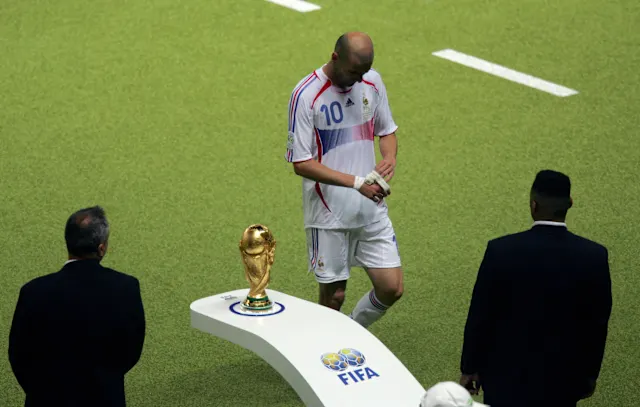
Few moments in football history have generated as much debate, emotion, and enduring fascination as the incident involving French captain Zinedine Zidane and Italian defender Marco Materazzi during the 2006 FIFA World Cup final. On July 9, 2006, inside Berlin’s Olympiastadion, the football world gathered to witness what was expected to be the crowning moment of one of the sport’s greatest players. Instead, the match produced an image that would become one of the most iconic and controversial scenes in World Cup history. France and Italy were locked at 1–1 deep into extra time. With penalties looming, tensions were high, and every action carried enormous significance. Then came the moment that stunned millions. Without warning, Zidane turned toward Materazzi and drove his head into the Italian defender’s chest. Materazzi collapsed to the ground, and confusion spread throughout the stadium. Moments later, after consultation among the officiating team, Zidane was shown a red card. It was the final match of his illustrious career. As Zidane slowly walked past the World Cup trophy on his way to the dressing room, football witnessed one of its most powerful and symbolic images: a legendary player leaving the game’s grandest stage not in celebration, but in controversy. For years, speculation surrounded what had been said between the two players in the moments before the headbutt. Subsequent accounts from both men helped clarify the situation. Materazzi later acknowledged that he had made comments involving Zidane’s sister during an exchange between the pair. While he described the remarks as “stupid,” he maintained that they did not justify a physical response. Zidane, however, offered a different perspective. The French icon explained that insults directed toward his family, particularly his mother and sister, crossed a deeply personal line. He stated that such remarks affected him more profoundly than physical challenges on the pitch. His explanation transformed public discussion of the incident from a purely sporting controversy into a broader conversation about respect, dignity, and emotional limits. From a footballing perspective, the dismissal proved costly. Zidane had already scored France’s opening goal from the penalty spot and remained the team’s most influential figure. His absence during the closing stages of extra time deprived France of its leader, most experienced penalty taker, and emotional focal point. The match eventually proceeded to a penalty shootout, where Italy prevailed 5–3 to secure its fourth World Cup title. Many analysts have since argued that Zidane’s presence during the shootout could have altered the outcome. While such scenarios remain speculative, there is little disagreement that France lost a critical advantage when their captain was sent off. Nearly two decades later, opinions remain divided. Critics view the incident as a momentary loss of composure that overshadowed an extraordinary career. They argue that, regardless of provocation, a player of Zidane’s stature had a responsibility to maintain discipline during the most important match in world football. Others interpret the episode differently. For them, the headbutt was not merely an act of frustration but an emotional response to comments perceived as deeply offensive toward family members. In this view, the incident reflects the complex reality that elite athletes, despite their achievements and fame, remain human beings capable of reaching emotional breaking points. The debate persists because the event exists at the intersection of two competing ideals: professional responsibility and personal conviction. The 2006 World Cup final is remembered not only because Italy lifted the trophy, but because it revealed the intensely human side of elite sport. Zidane’s final act as a professional footballer was neither a winning goal nor a championship celebration. Instead, it was a moment of emotion that continues to provoke discussion across generations of football supporters. Whether viewed as an unforgivable mistake or an understandable reaction to personal insult, the incident remains one of football’s most enduring stories. Nearly twenty years later, the image still resonates: Zidane walking past the World Cup trophy after receiving a red card, leaving behind a legacy defined not only by brilliance and success, but also by one unforgettable moment that demonstrated how personal values, human emotion, and professional competition can collide on football’s biggest stage.
The Rise of Corporate Capital in Bangladesh’s Pharmacy Sector: Healthcare Modernization or a Threat to Small Businesses?

A quiet but significant transformation is underway in Bangladesh’s pharmacy sector. For decades, the industry has largely been dominated by small and medium-sized entrepreneurs. However, in recent years, large corporate groups have begun entering the market at an increasingly rapid pace. While some view this shift as a long-overdue modernization of healthcare services, others see it as the beginning of a new challenge for thousands of small business owners. According to market research firm IQVIA, Bangladesh’s pharmaceutical market is now valued at approximately Tk 32,000 crore, making it one of the country’s largest and fastest-growing sectors. The size and potential of this market have attracted the attention of major business conglomerates seeking to establish a foothold in pharmaceutical retail. One of the most notable examples is AKIJ Pharmacy, a venture of the Akij Group. The company has already launched outlets across the country and announced ambitious expansion plans for the coming years. According to reports, the company aims to invest around Tk 2,000 crore to build thousands of pharmacy outlets nationwide. AKS Pharmacy is also expanding rapidly. The company already operates more than 60 outlets and has successfully attracted foreign investment. Meanwhile, BRAC Healthcare has adopted a different model by integrating primary healthcare services, diagnostics, and pharmacy operations under a single platform. Adding to the competition, international pharmacy chain Aster Pharmacy has entered the Bangladeshi market. As a result, the country’s pharmacy industry is no longer facing competition solely from domestic players; it is increasingly becoming part of a broader global retail healthcare landscape. The aggressive expansion of corporate pharmacy chains is driven by significant financial strength. Large corporations possess substantial capital, advanced technology, efficient supply chain systems, skilled human resources, and extensive marketing capabilities. They can open hundreds of outlets simultaneously, operate with lower profit margins for extended periods, and continue investing heavily to strengthen their market position. In contrast, most local pharmacies operate with limited financial resources. In many cases, a single entrepreneur or family serves as the backbone of the business. Their ability to maintain large inventories, implement advanced software systems, hire registered pharmacists, or invest heavily in branding and promotion is often limited. As a result, competing directly with corporate chains may become increasingly difficult. However, the rise of corporate pharmacies is not driven solely by business ambitions. It is also linked to long-standing challenges within Bangladesh’s healthcare system. For years, concerns have existed regarding the shortage of registered pharmacists, inadequate medicine storage facilities, poor temperature control, and the circulation of counterfeit or substandard medicines. Corporate pharmacy chains have positioned themselves as a solution to these issues, promoting a model based on professional standards and quality assurance. Their marketing focuses on registered pharmacists, digital prescription records, cold-chain maintenance, direct procurement from pharmaceutical manufacturers, and strict quality control measures. In essence, they are not merely selling medicines; they are selling a new concept of organized, technology-driven pharmaceutical retail. This is where small businesses face their greatest challenge. The competition is no longer based solely on capital; it is increasingly a battle for consumer trust. If customers begin to perceive corporate pharmacy chains as the only reliable source of safe and authentic medicines, local pharmacies may gradually lose market share regardless of their long-standing presence in the community. Experiences from other countries suggest a similar pattern. Large pharmacy chains often attract customers through modern facilities, longer operating hours, digital services, and occasionally lower prices. While consumers may benefit in the short term, smaller independent pharmacies frequently struggle to survive. Over time, this can lead to market concentration, where a significant portion of the industry becomes controlled by a handful of dominant players. The same question is now emerging in Bangladesh. If major urban pharmacy markets eventually come under the control of a few corporate chains, what will happen to small entrepreneurs who have spent years building their businesses through personal savings, hard work, and local relationships? Will they be able to compete on equal terms? Employment is another important consideration. Thousands of small pharmacies across the country support a vast number of livelihoods directly and indirectly. Corporate expansion may create new jobs, but it could also generate uncertainty for many small business owners and employees. As economic power becomes concentrated in fewer hands, concerns about market balance and fair competition may intensify. Yet the story is not entirely one-sided. In rural and semi-urban Bangladesh, personal relationships, trust, and community-based service continue to play a vital role. Local pharmacies often provide medicines on credit, offer home delivery during emergencies, and maintain strong relationships with customers built over many years. This form of social capital cannot be easily replicated by corporate organizations. Ultimately, the central question facing Bangladesh’s pharmacy sector is not simply one of corporate versus small business. Rather, it is about how the country can ensure safe, modern, and high-quality healthcare services while preserving a fair and competitive environment for local entrepreneurs. The answer to that question will shape the future of the industry in the years ahead. Whether Bangladesh’s pharmacy sector evolves into a more efficient healthcare ecosystem or moves toward greater market concentration remains to be seen.
The Jobs AI Can Never Replace in Bangladesh
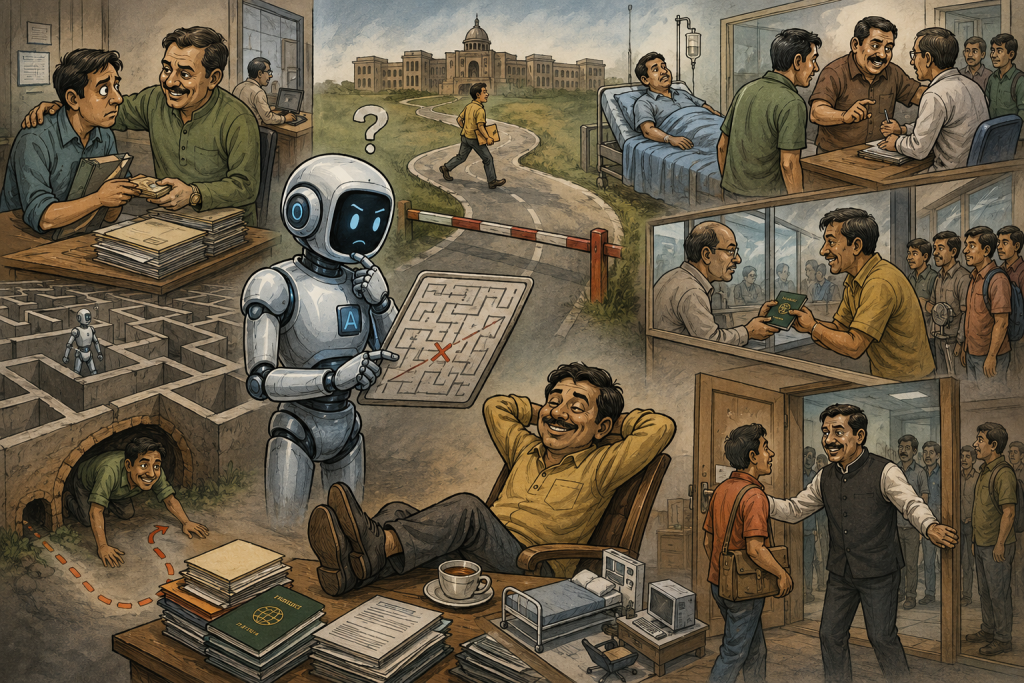
These days, everyone is talking about Artificial Intelligence. Some say AI will replace doctors. Others say lawyers, teachers, journalists, and programmers should start worrying. And honestly, they have a point. AI can already write articles, generate images, create software, and even have conversations that sound surprisingly human. But whenever I look at Bangladesh, I feel there are some jobs AI will never be able to take. Because these jobs are not built on knowledge alone. They are not built on logic, data, or technical skills. They are built on relationships, informal networks, and a deep understanding of how the system really works. Take the divorce office broker, for example. AI can explain the law. It can tell you which documents you need. It can even fill out the forms for you. But AI can never become that friendly man standing outside the office who says, “Brother, first time here? Give everything to me. I’ll manage it.” That is not a technical skill. That is a social skill. It is the ability to recognize confusion, fear, and uncertainty and then turn them into a business opportunity. The same applies to passport office brokers. In an ideal world, AI should be enough. Online applications, digital verification, automated processing everything can be done through technology. But in Bangladesh, many people still ask a very important question: “Brother, is there any shortcut?” And that’s where AI has a problem. AI follows rules. Many of our systems survive because people know how to work around those rules. Think about hospital brokers. When a patient’s family is stressed, worried, and desperate, AI can provide information. But AI cannot become part of that invisible network that knows which doctor to see, which cabin to get, which test center to visit, and who needs a phone call. AI understands algorithms. It does not understand “arranging things.” And that might be its biggest weakness in South Asia. The funny thing is that as technology becomes smarter, we are discovering that many human activities are not technological at all. They are social. In many situations, relationships matter more than qualifications. Connections matter more than procedures. And knowing someone matters more than knowing something. So yes, one day AI may drive our cars, diagnose diseases, write reports, and analyze court documents. But some professions in Bangladesh still look surprisingly safe. Because they are not really jobs. They are parallel institutions. And perhaps the world’s most powerful AI still cannot learn how to put a hand on someone’s shoulder and confidently say: “Brother, don’t worry. I have a connection.”
THE COMPANY THAT ACCIDENTALLY BECAME THE INTERNET’S ENGINE ROOM

NVIDIA set out to make graphics cards for gamers. Three decades later, it quietly ended up owning the hardware that runs modern artificial intelligence and, with it, an uncomfortable amount of leverage over the entire tech world. There is a strange kind of power that comes not from being the biggest, the loudest, or the most aggressive, but from being the thing everything else quietly depends on. NVIDIA has that kind of power. It is infrastructure power. The kind that makes itself felt not in press releases or keynote speeches but in the cold arithmetic of what breaks if you take it away. Think about what runs a modern AI model. Not the software. Not the algorithm written by some PhD who drinks too much coffee. The actual computation, the billions of matrix multiplications per second that translate a text prompt into a coherent paragraph or a chest X-ray scan into a diagnosis. That computation, in an overwhelming share of cases, happens on NVIDIA hardware. Specifically on chips branded H100 or A100, cooled by industrial fans in data centers the size of aircraft hangars, owned by Amazon or Microsoft or Google, and quietly rented out by the second to thousands of companies and researchers around the world. NVIDIA did not plan any of this. Or at least, not all of it. Jensen Huang, who co-founded the company in a Denny’s diner in California in 1993, wanted to build graphics processors. The GPU was a product aimed squarely at gamers who wanted smoother frame rates and more realistic explosions. For most of the 1990s and 2000s, that is exactly what NVIDIA was: a very good, very focused graphics chip company, locked in a fierce rivalry with ATI (later absorbed by AMD) over who could render more polygons per second. CUDA: THE BET THAT CHANGED EVERYTHING The real turning point was not a product. It was a software decision that, at the time, looked to most observers like a strange and expensive vanity project. In 2006, NVIDIA released CUDA, Compute Unified Device Architecture. The idea was simple but radical: let developers program GPUs not just for graphics, but for any highly parallel computation. GPUs, it turns out, are structurally different from CPUs. Where a CPU has a handful of very powerful cores optimized for sequential tasks, a GPU has thousands of smaller cores that can all run simultaneously. For graphics, this made sense. Rendering pixels is embarrassingly parallel work. But it also made GPUs extraordinarily well suited for anything that required doing many similar calculations at once. Things like simulating physics. Doing financial modeling. And, as it turned out, training neural networks. The machine learning community noticed. A landmark 2012 paper by Geoffrey Hinton’s team at the University of Toronto, the famous AlexNet, used NVIDIA GPUs to train a deep neural network that blew past everything else in an image recognition competition. The speedup compared to CPU-based training was not marginal. It was transformative. Suddenly every serious AI researcher wanted NVIDIA hardware, and more importantly, they wanted CUDA, because years of libraries and tools had already been built on top of it. This is the part of the story that is easy to miss. The GPUs themselves are impressive hardware, but hardware can theoretically be replicated. What is harder to replicate is the software ecosystem. CUDA has had a twenty-year head start. Frameworks like TensorFlow and PyTorch are built around it. Research papers assume it. PhD students learn on it. When a new AI startup spins up and needs to train a model, they do not re-evaluate the chip ecosystem from first principles. They reach for what the entire field already knows how to use. That network effect is NVIDIA’s real moat, and it is deeper than most people outside the industry appreciate. THE DATA CENTER BECOMES THE PRODUCT For most of NVIDIA’s history, gaming was its bread and butter. GeForce graphics cards were what kept the lights on, and the company’s data center revenue was a smaller, growing, but secondary line of business. That changed with breathtaking speed. The arrival of large language models, GPT-3 in 2020, then the explosion of ChatGPT in late 2022, created demand for compute that the world had simply never seen before. Training a large language model requires not a single GPU but thousands of them, running in parallel for weeks or months at enormous cost. OpenAI’s GPT-4 training reportedly cost over $100 million in compute alone. The models that came after it were larger still. Every major tech company- Google, Meta, Amazon, Microsoft- embarked on their own AI infrastructure buildouts simultaneously. What followed was the GPU shortage that defined the AI industry’s awkward adolescence. Companies that had been planning to build AI products suddenly found themselves unable to get the hardware they needed. H100 chips that nominally cost around $30,000 were trading on secondary markets for two or three times that. Cloud access to GPU clusters was oversubscribed for months. Venture capitalists, in a genuinely surreal turn, began treating “GPU allocation” as a competitive advantage in due diligence conversations. Not code quality, not team pedigree, but raw access to NVIDIA chips. NVIDIA’s revenue figures tell the story numerically, but they do not fully capture the structural shift they represent. This is no longer a company whose primary customers are teenagers buying graphics cards. It is a company whose primary customers are the largest corporations on earth, purchasing infrastructure to build products that will define the next decade of the internet. WHAT THIS MEANS FOR THE REST OF THE INDUSTRY There is a paradox sitting at the heart of the relationship between NVIDIA and the major cloud providers. AWS, Google Cloud, and Microsoft Azure are simultaneously NVIDIA’s biggest customers and among its most motivated potential rivals. They buy NVIDIA GPUs in quantities that beggar belief, then rent access to those GPUs as one of their most profitable cloud services. Every time someone uses a cloud AI API, there is a reasonable chance an NVIDIA chip is involved, and a percentage
Bangladesh Football Set for Landmark European Debut Against San Marino

Bangladesh is set to make football history as the national team prepares to play its first-ever international match on European soil. The historic fixture will take place on June 5, 2026, when Bangladesh faces San Marino in an international friendly at the San Marino Stadium in Serravalle. The match marks a significant milestone for Bangladeshi football, which has never before played an international fixture in Europe. It will also be the first-ever meeting between Bangladesh and a European national team, making the occasion a landmark event for the country’s footballing journey. The Bangladesh squad and coaching staff have already arrived in San Marino ahead of the match. Preparations are underway as the team looks to make the most of this unique opportunity and deliver a memorable performance on a new continental stage. While the match is a friendly, its historical significance extends far beyond the result. For Bangladesh, the fixture represents growing international engagement and an opportunity to gain valuable experience against European opposition. Football supporters across Bangladesh have expressed excitement ahead of the encounter. Many see the match as a symbol of the sport’s gradual development in the country and a chance for the national team to showcase its progress to a wider audience. The fixture comes as Bangladesh continues its efforts to strengthen its position in international football. Playing in Europe for the first time is expected to provide players with exposure to different footballing environments and competitive standards. Regardless of the outcome, June 5 is expected to be remembered as a milestone date in the history of Bangladeshi football. As the national team takes the field in Serravalle, it will open a new chapter for the sport, carrying the hopes of millions of supporters back home.
Tofail Ahmed’s Political Push, Zia’s Support, and Osmani’s Ultimatum: How Cadet Colleges Survived a National Crisis
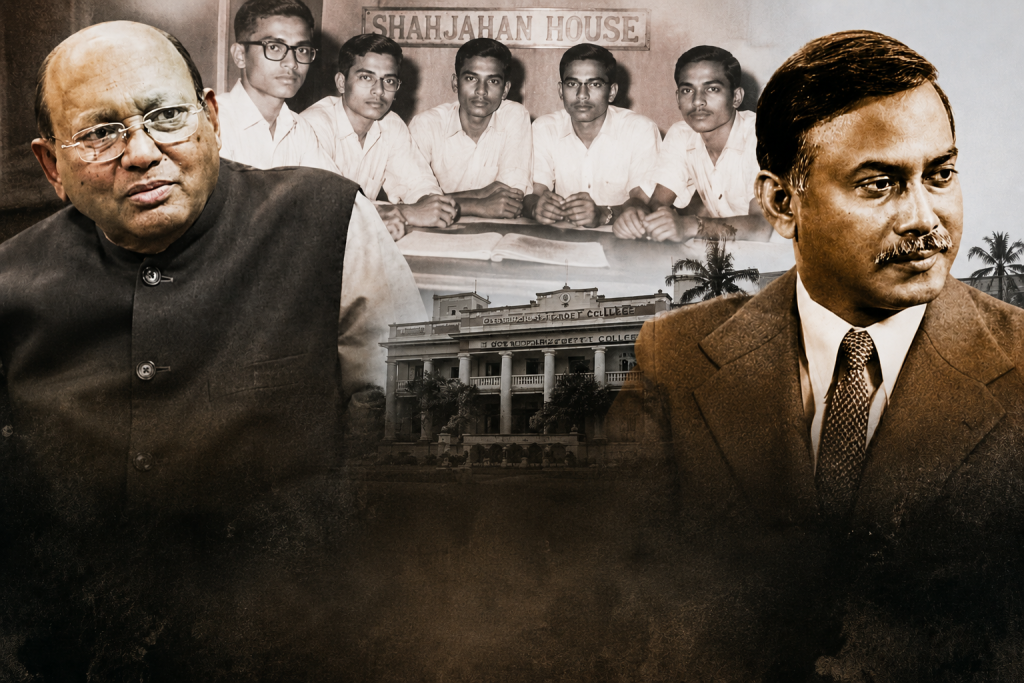
A meeting. Only five cadets. And one decision: student politics would not be allowed to enter cadet colleges. After that decision in 1972, a chain of events began that eventually pushed the very existence of all cadet colleges in the country into crisis. Later, the initiative of the cadets, the support of military officers, and the firm stance of General M A G Osmani brought a new turn to that history. Bangabandhu’s political assistant, Mr. Tofail Ahmed, visited the Faujdarhat Cadet College in 1972 with the aim of creating a political wing for students. At that time, five cadets led by Anwarul Haque gathered in a meeting at “Shahjahan House.” Along with Anwarul Haque, the meeting was attended by the late Kayyumul Huda, M A Tarek, Minu Khadem, and M Nurur Rahman. There, it was decided that student politics must not be allowed to enter the cadet colleges under any circumstances. For this reason, everyone agreed to tell others not to attend Tofail Ahmed’s political meeting. Not only that, but they also decided to persuade everyone not to go to the auditorium that day. The result was significant. Tofail Ahmed had to return empty-handed. He became angry with all cadet colleges. Just 10 days later, news came through radio, television, and newspapers that the then four cadet colleges Faujdarhat, Jhenidah, Mirzapur, and Rajshahi had been declared abolished. In a “Presidential Ordinance” (PO) signed by Bangabandhu, the abolition of cadet colleges was announced. It was stated there that from then on these institutions would be treated as general government colleges under the Ministry of Education. After this announcement, the same five people again held a meeting at “Shahjahan House.” The subject of the meeting was: “What should we do, and what must we do, to preserve cadet colleges in Bangladesh?” It was decided there that opinions would be collected from cadets of all batches in all colleges in favor of keeping cadet colleges alive. This initiative was named the “Keep Cadet Colleges Campaign.” Every cadet at that time supported the campaign. The senior cadets in charge of the campaign later came to Dhaka and met Colonel Chowdhury M Mohsin, an ex-cadet of Faujdarhat and an officer in the armed forces. He advised them to meet Brigadier Ziaur Rahman for consultation and guidance. Following his advice, an appointment was made with Ziaur Rahman. One evening, they went to his residence at Dhaka Cantonment regarding the matter. There, Brigadier Ziaur Rahman spoke over the phone with General M A G Osmani about the future and necessity of cadet colleges. Ziaur Rahman then remarked, “If General Osmani cannot do it, no one in Bangladesh can stop the abolition of cadet colleges.” Although he was a cabinet member, General Osmani knew nothing about the government’s decision to abolish cadet colleges. After learning about it, he expressed strong anger and concern. He said that he would speak to Bangabandhu about it that very day. Later, he contacted Bangabandhu through the red phone. He asked Bangabandhu, “Who advised him to abolish the cadet colleges, and how was such a move made without my knowledge?” While speaking with Bangabandhu in both Bangla and English, his anger and concern were clearly evident. He emphasized the importance of cadet colleges in the country’s education system and said that the PO abolishing cadet colleges should be revoked. At one point in that discussion, Osmani made his position clear. His final words were: “Cadet colleges will stay, I will stay; otherwise, I will resign.” “If cadet colleges stay, I stay; otherwise, I resign.” Due to Tofail Ahmed’s frustration in 1972–73 over not being able to form the student league committee, or because of the politicization of educational institutions, the country’s renowned cadet colleges would otherwise have been destroyed today by internal factionalism.
From Dishwasher to Architect of the AI Age
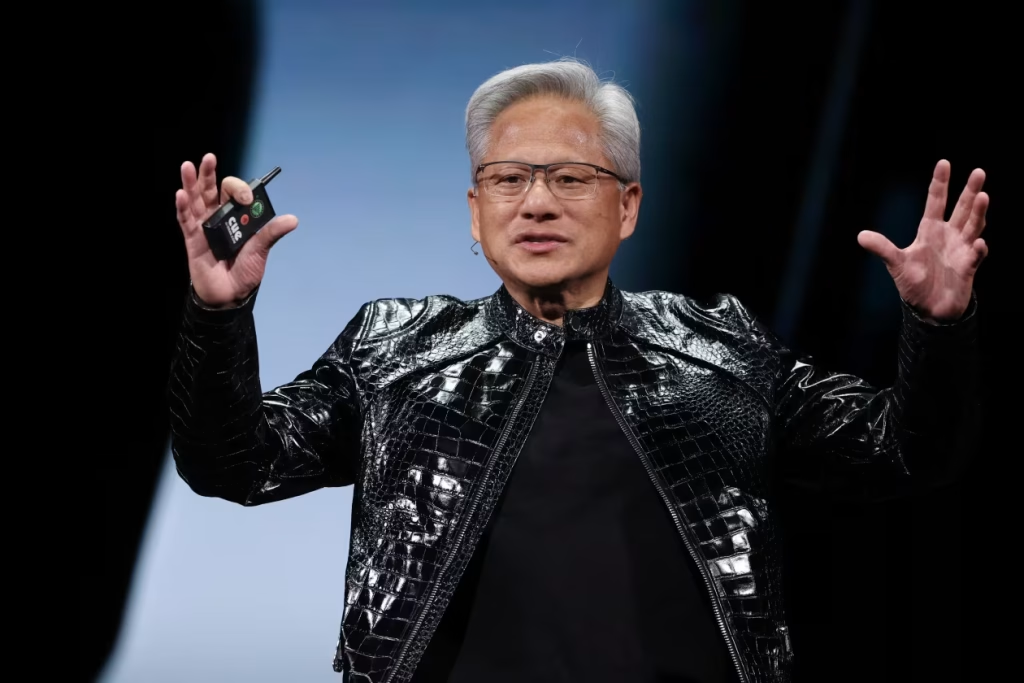
Some individuals in the history of technology possess a vision so profound that it not only transforms the destiny of a company but also shapes the course of an entire era. Jensen Huang is one of those rare figures, as the co-founder and Chief Executive Officer of NVIDIA. He is widely recognized as one of the principal architects of the modern Artificial Intelligence (AI) revolution. In his own words, “Curiosity is the most powerful force behind progress. Never stop asking questions and seeking answers.” Born in Taipei, Taiwan, in 1963, Jensen Huang spent part of his childhood there before immigrating to the United States with his family. Life in a new country was far from easy. Alongside his studies, he worked various part-time jobs to support himself, including serving as a busboy and cleaning tables in restaurants. These early struggles taught him the true value of hard work, discipline, and perseverance. As Huang often says, Never think any job is beneath you. Every experience becomes the foundation for your future.” He earned a bachelor’s degree in Electrical Engineering from Oregon State University and later completed a master’s degree in the same field at Stanford University. Early in his career, he worked at AMD and LSI Logic, gaining valuable experience in the semiconductor industry. In 1993, at the age of just 30, Huang co-founded NVIDIA with two friends. Initially, the company’s focus was on developing Graphics Processing Units (GPUs) for gaming. However, Huang quickly recognized that the potential of GPUs extended far beyond gaming applications. His visionary leadership gradually transformed NVIDIA into a global powerhouse in artificial intelligence, data centers, robotics, scientific research, and supercomputing. Today, much of the world’s advanced AI infrastructure depends on NVIDIA’s GPU technology. As a result, technology analysts often refer to him as one of the architects of the AI era. According to Huang, “AI won’t directly take your job. Someone using AI effectively will.” One of the most inspiring and human aspects of Jensen Huang’s story is his personal life. While studying at Oregon State University, he met Lori Mills. Working together as laboratory partners, they developed a friendship that eventually blossomed into a romantic relationship. According to a popular story, Jensen once told Lori, “If you study with me, you’ll get an A.” After nearly five years together, they married in 1984. More than four decades later, their marriage remains remarkably strong and enduring. Huang has repeatedly acknowledged that Lori’s support has been one of his greatest sources of strength during challenging periods of his life. Reflecting on success and resilience, Huang has observed, “People with high expectations often have less patience and tolerance. Yet those qualities are essential foundations for long-term success.” As a leader, Jensen Huang firmly believes that no success is ever final. Complacency gradually weakens organizations, which is why he consistently emphasizes continuous learning, adaptation, and innovation as the only path forward. Another defining feature of Huang’s public image is his iconic black leather jacket, which has become almost synonymous with NVIDIA itself. He is frequently seen wearing it during major technology announcements and industry events, reflecting his simple yet confident personality. In 2007, Jensen and Lori Huang established the Jen-Hsun & Lori Huang Foundation, which has contributed significantly to education, science, healthcare, and technology research. In recognition of his extraordinary contributions, Huang has received numerous prestigious honors, including the IEEE Medal of Honor, IEEE Founders Medal, Robert N. Noyce Award, imec Lifetime of Innovation Award, Ernst & Young Entrepreneur of the Year, and honorary doctorates from several universities. Another of his powerful beliefs is, “The greatest risk is taking no risk at all.” From washing dishes and working in restaurants to leading one of the world’s most influential technology companies, Jensen Huang’s journey is far more than a success story. It is a remarkable testament to perseverance, curiosity, vision, and the power of meaningful human relationships. Jensen Huang has demonstrated that limited opportunities never have to stand in the way of ambitious dreams, provided one possesses the right mindset, relentless determination, and an unwavering commitment to learning. Perhaps no quote captures the essence of his life better than this, “If you are afraid of failure, you will never accomplish anything truly great.”
Even Stars Like Tofail Ahmed Must One Day Fade
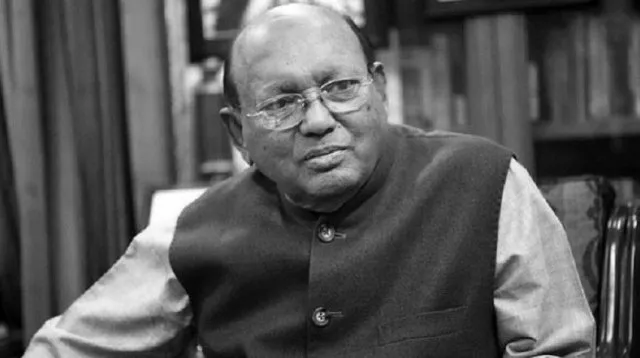
“History is not an accidental occurrence; history is the sum of the finest deeds performed by the most capable people.” February 23, 1969. The Racecourse Maidan reverberated with the thunderous slogans of hundreds of thousands of people. Standing on the stage, a vibrant 26-year-old student leader, in a voice resonating with conviction, announced a historic title: “Bangabandhu.” That young man was none other than Tofail Ahmed. The voice that conferred the title “Bangabandhu” upon Sheikh Mujibur Rahman has now fallen silent forever. On June 1, 2026, at the age of 82, he breathed his last at Square Hospital in Dhaka. With his passing, the curtain fell on a towering political epic spanning more than five decades. a one-man army who helped shape the political history of Bangladesh. Born on October 22, 1943, in Koralia village of Bhola, Tofail Ahmed’s political rise began early. A brilliant student of Soil Science at the University of Dhaka, he served as Vice President of DUCSU from 1967 to 1969. As one of the principal architects of the Mass Uprising of 1969, he shook the foundations of Ayub Khan’s regime. When the final struggle for Bangladesh’s independence began in 1971, Tofail Ahmed emerged as a frontline warrior of the liberation movement. The famous Roman poet Ovid’s quote perfectly fits him – “The mind, not the body, makes the champion.” He was a champion not only in intellect but also in strength and determination. As the commander of the western zone of the Mujib Bahini, one of the key driving forces of the Liberation War, he carried the responsibility of a vast region including Barisal, Khulna, and Faridpur. In 1970, at just 27 years of age, he was elected to Pakistan’s National Assembly with the Boat symbol and later became one of the signatories to the Constitution Drafting Committee of independent Bangladesh. As the Political Secretary to Bangabandhu Sheikh Mujibur Rahman, Tofail Ahmed remained at the center of power until the events of 1975. But after the national tragedy of that year, his life took a dramatic turn. He endured 33 months of imprisonment and severe torture. When the Awami League returned to power in 1996, he was entrusted with the responsibilities of Minister of Industries and later Minister of Commerce. Yet, there is a famous quote by the French philosopher Voltaire – “In politics, there are no permanent friends or enemies.” During the military-backed caretaker government of 2007, Tofail Ahmed supported a change in party leadership. As a result, an invisible distance gradually emerged between him and his longtime political ally, Sheikh Hasina. Despite being elected to Parliament nine times with the Boat symbol and remaining an MP until January 2024, he spent more than a decade of his later life politically marginalized within his own party. Having once stood at the pinnacle of power, he suffered from profound loneliness and disappointment in his final years. Yet until his death, he never deviated even an inch from the ideals of Bangabandhu. Amid the turbulent ocean of politics, Tofail Ahmed’s family life resembled a peaceful island. In 1964, he married Anwara Begum, the eldest daughter of Alhaj Mofizul Haque Talukdar of Donia. After six decades of a happy married life, Anwara Begum passed away in 2025, a loss that deeply affected him emotionally. The couple’s only daughter, Taslima Ahmed Zaman Munni, is a physician by profession. His son-in-law, Touhiduzzaman Tuhin, is also a renowned cardiologist at Square Hospital. Perhaps the most emotional chapter of Tofail Ahmed’s family life was his relationship with his adopted son, Mainul Hossain Biplob. After the death of his elder brother, he took his younger nephew Biplob under his care and loved him even more than his own child. Everywhere, he introduced him as his son. Tofail Ahmed carried a deep sense of guilt throughout his life, believing that his political involvement and commitments had indirectly contributed to the political murder of his non-political elder brother. It was from that profound remorse that he showered his brother’s son with extraordinary affection and care. Just as the moon has its blemishes, Tofail Ahmed’s long political career was not without controversy. In August 1969, during tensions surrounding the Education Commission issue, an attack allegedly carried out under his leadership on Islamic student leader Abdul Malek became one of the darker chapters in the history of Bangladesh’s student politics. Abdul Malek later died as a consequence of that incident. As political circumstances changed, the veteran leader also found himself facing legal battles in the final phase of his life. In May 2026, a court formally framed charges against him over allegations of embezzlement and abuse of power. During his final days, when his body had already been weakened by the ailments of old age, court proceedings and legal notices only deepened the tragedy of his twilight years. One is reminded of the famous lines of the American poet Robert Frost – “The woods are lovely, dark and deep, but I have promises to keep…” Tofail Ahmed, too, had some unfulfilled promises and final dreams—a Bhola-Barisal bridge, a public university in Bhola, and an international-standard cricket stadium for the district. On June 1, 2026, all those dreams came to an end as he departed for the land of no return. He belonged to a generation of politicians who spent less time reading history and more time creating it.