Waste-to-Energy Project at Aminbazar Sparks Debate Over 25 Taka Power Price
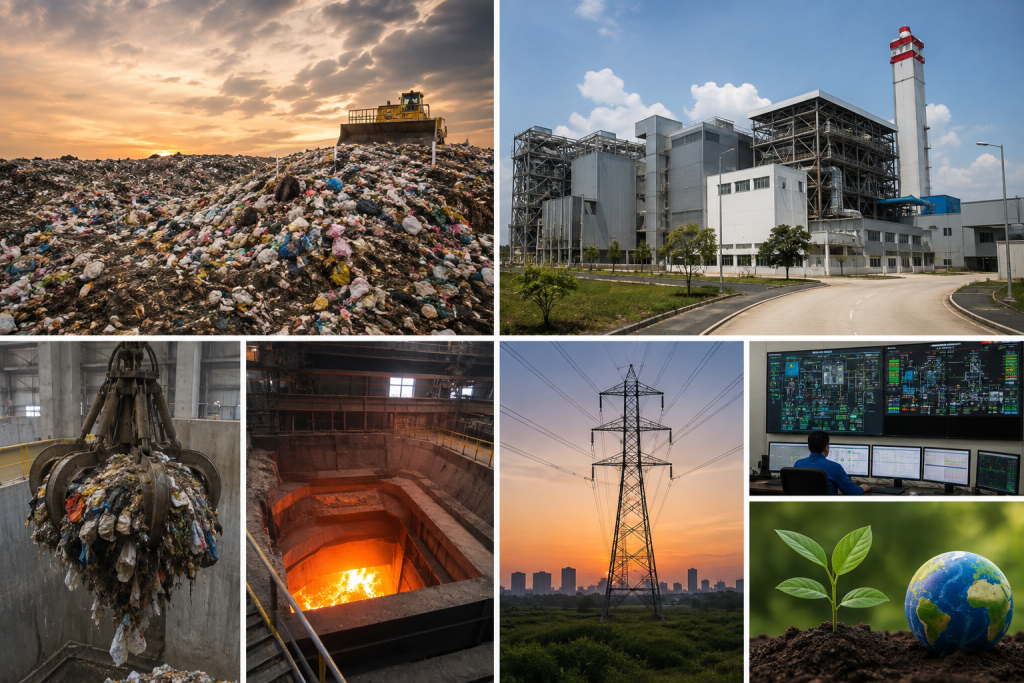
A proposed waste-to-energy project at the Aminbazar landfill in Dhaka has triggered a growing debate over the cost of electricity, environmental benefits and the long-term financial implications for Bangladesh. The project, being developed with China Machinery Engineering Corporation (CMEC), aims to process around 3,000 tonnes of waste every day and generate approximately 42.5 megawatts of electricity. The electricity is expected to be purchased by the Bangladesh Power Development Board (BPDB) at a reported price of Tk 25 per unit. While the government argues that the project should not be assessed solely on the basis of electricity prices, critics question whether such a high tariff can be justified. Government: The project will address Dhaka’s waste crisis After meeting the Chinese ambassador on 27 August, Local Government State Minister Mir Shahe Alam said the price may appear high, but the project should be considered in the broader context of Dhaka’s worsening waste-management problems. According to the government, the project will not only generate electricity but also process a significant amount of municipal waste. Organic fertilizer is expected to be produced from the waste, while the company will reportedly pay the city corporation a monthly fee for using the landfill. The government also says Bangladesh will not have to make a direct investment in the project. Officials argue that environmental benefits and potential carbon-credit revenues could provide additional economic value. Why is the electricity price so high? The reported Tk 25 per unit purchase price has become the central point of controversy. Critics argue that the price is considerably higher than figures previously cited for the country’s average electricity generation cost. They fear that purchasing electricity at such a rate over a long period could create a significant financial burden for the government. But there is another side to the calculation. Unlike a conventional power plant, the Aminbazar project is designed to perform two functions simultaneously: waste management and electricity generation. Supporters argue that the economic value of reducing landfill waste, pollution and associated public-health risks should therefore be included when assessing the project’s overall cost. The key question is whether those benefits have been transparently quantified and whether they justify the additional cost of electricity. Environmental benefits and concerns Waste-to-energy projects are often promoted as an alternative to conventional landfill disposal. Processing thousands of tonnes of waste each day could reduce pressure on the landfill and potentially decrease some of the environmental and public-health problems associated with unmanaged waste. However, environmental concerns remain. Previous policy discussions and environmental advocates have raised questions about greenhouse-gas emissions, ash disposal and the environmental consequences of waste incineration. For the Aminbazar project, therefore, important questions remain about how residual ash will be managed, what emissions-control technology will be used and whether an independent environmental assessment has adequately addressed the potential risks. Minister rejects comparison with quick-rental power Responding to criticism on social media on 30 August, State Minister for Expatriates’ Welfare Nurul Haque Nur argued that the Tk 25 electricity price should be considered alongside the health and environmental damage caused by Dhaka’s waste crisis. He rejected comparisons between the project and Bangladesh’s controversial rental and quick-rental power plants, arguing that the project should not be viewed as a similar form of financial exploitation. Still, questions about the project’s financial structure remain. A proper assessment would require public disclosure of the total project cost, electricity-purchase agreement, contract duration, tariff-adjustment mechanism, government obligations and environmental-management costs. No evidence of Jamuna Group involvement Another issue has emerged from social media discussions surrounding the project. Some online content has used headlines referring to a supposed “conspiracy” by a “Jamuna electricity company”. However, available information does not establish any connection between Jamuna Electricity, Jamuna Group and the Aminbazar waste-to-energy project. The Chinese company identified in connection with the project is China Machinery Engineering Corporation (CMEC). Linking other companies to the project without documentary evidence could therefore create public confusion. The 2 September agreement could provide answers A final tripartite agreement is reportedly scheduled to be signed in Beijing on 2 September 2026. The agreement could provide greater clarity on the project’s financial structure, electricity-purchase terms, responsibilities of the parties and environmental safeguards. The government aims to begin electricity generation within approximately 18 months, with the plant expected to be connected to the national grid around August–September 2028. The Aminbazar project is therefore about more than electricity. It sits at the intersection of Dhaka’s waste crisis, public health, environmental protection and public spending. Whether the project ultimately proves to be a cost-effective environmental solution or an expensive source of electricity will depend on what the final agreement reveals and whether the promised waste-management and environmental benefits materialize in practice.
ICT Syndicate Remains Unchanged Despite Power Shift: Is the New Center of Power Trapped in the Political Net of the Hasina-Joy and Palak-Sami Axis?

Although the government of Sheikh Hasina fell following the historic student-people mass uprising of July-August, the roots of the sinister force occupying the country’s Information and Communication Technology (ICT) and startup sectors have not yet been uprooted. The former Minister of State for ICT, Zunaid Ahmed Palak, and the controversial former Managing Director (MD) of Startup Bangladesh Limited, Sami Ahmed, were the main implementers of the “Smart Bangladesh” agenda of former Prime Minister Sheikh Hasina and her former ICT advisor, Sajeeb Wazed Joy. There are allegations that under the direct patronage of this Joy-Palak-Sami political triangle, state funds worth hundreds of crores of Taka, project tenders, and international exposure within the ICT sector were funneled into the pockets of a specific beneficiary syndicate. At the center of this beneficiary axis were a few platforms like ShareTrip, Anchorless Bangladesh, Agroshift, Chaldal, ShopUp, and GoZayaan. The primary objective of the “Digital and Smart Bangladesh” created by Sajeeb Wazed Joy and Palak was to polish their political image and build a personal venture network. Sami Ahmed was placed in the top position of Startup Bangladesh primarily due to his personal closeness to Joy and Palak. Despite managing public funds, he focused on protecting the political interests of the Awami government and granting funds to specific companies instead of remaining neutral. A chilling picture emerges when analyzing how the large startups sheltered under this sphere swallowed the entire ecosystem. ShareTrip was showcased at almost every national and international ICT event, alongside receiving crores of Taka in government equity investment. Chaldal received follow-on funding multiple times despite already dominating the market. ShopUp and GoZayaan secured an almost exclusive presence in Palak’s policy-making forums. Agroshift and Anchorless Bangladesh received special privileges in state grants and international roadshows. Policy advantages and prized tenders always went to this syndicate. As a result, promising independent startups were pushed out of funding and market competition. Even during the bloody student-people movement, Palak and Sami Ahmed tried to save the government’s image by organizing a “Startup Summit.” Although Palak and Sami Ahmed were removed after Sheikh Hasina fled, the core funding platforms of the sphere they built are now attempting to shed their skins in the new political reality. Crowding around the new centers of power, they are seeking to cover up their past misdeeds and scheming to grab state benefits once again. The tech community says that if this “ICT crony capitalism” created by the Hasina-Joy-Palak axis is not completely uprooted, merit will not be evaluated in the new Bangladesh achieved through the blood of the youth. Demands are immediately arising to publicly release audit reports of all venture investments, ICT tenders, and events conducted over the past 15 years.
How Artificial Intelligence Changed the Way I Learn

We live in a world where everything is moving fast. As a student, I always felt overwhelmed by the sheer amount of syllabi, assignments, and exams. I used to spend hours reading pages after pages, yet I struggled to remember things during exams. It felt like I was working hard, but not working smart. Then, everything changed when I started using AI for my studies. Honestly, at first, I thought AI was just for tech geniuses or computer scientists. But once I actually gave it a try, I realized it is the ultimate tool for “smart study.” It completely transformed my daily learning routine. Here is how AI helped me study smarter, not harder, and how it can help you too. My Personal, 24/7 Home Tutor In the past, whenever I got stuck on a difficult math problem or a confusing science concept late at night, I had to wait until the next day to ask a teacher or a friend. Sometimes, I even forgot what my doubt was! With AI, that problem is gone. Now, I can just type my question into an AI tool, and it explains the topic to me instantly. The best part? I can say to it, “Explain this to me like I am a ten-year-old.” It breaks down complex topics into simple sentences without using any hard vocabulary. It never gets tired or annoyed, no matter how many times I ask the same question. No More Boring Summaries Reading a 50-page chapter just to understand one core concept used to take me hours. Now, I use AI to get the main points. I upload the text or paste the article and ask the AI to give me a bullet-point summary of the most important ideas. This saves me a huge amount of time. Instead of wasting energy on reading fluff, I can focus my energy on understanding and memorizing the core information. Making Custom Quizzes We all know that just reading a book is not enough to pass an exam. You need to test yourself. Before AI, I had to look for old question papers or buy extra practice books. Now, I just tell the AI, “Create a 10-question multiple-choice quiz based on this chapter.” Boom! In five seconds, I have a personalized test ready. It helps me find out exactly which parts of the chapter I am weak in, so I can study those parts again. Planning My Day I used to be terrible at time management. I would make a study routine, but it was always too unrealistic to follow. Now, I tell the AI my schedule. For example, I say, “I have an exam in two weeks, and I can study for two hours every day. Create a simple study plan for me.” The AI creates a perfect daily schedule that breaks down my syllabus into small, achievable tasks. It takes away all the stress of planning. A Important Lesson I Learned While AI is amazing, I learned one big lesson from my own experience: AI is a helper, not a replacement for your brain. In the beginning, I made the mistake of letting AI write an entire assignment for me. When my teacher asked me questions about it the next day, I had no answers. I felt so embarrassed. That is when I realized that copying and pasting is not “Smart Study.” Smart study means using AI to understand the topic, and then writing it down in your own words. Use AI to generate ideas, to brainstorm, and to clear your doubts. Don’t let it do all your thinking for you. AI has made studying feel less like a burden and more like a game. It helped me save time, reduce my exam stress, and actually enjoy learning new things. If you are still studying the old-fashioned way, you are missing out. Give AI a try today, change your habits, and start studying smart!
Artificial Intelligence in Education: a Tool, Not a Replacement

Artificial Intelligence (AI) is the simulation of human intelligence processed by machines, particularly computer systems. AI refers to the ability of machines (software or hardware) to perform tasks that typically require human intelligence, such as learning, reasoning, perception, problem-solving, and creativity. The rapid advancement of AI is transforming nearly every sector, and education is no exception. From personalized tutoring systems to automated grading and intelligent content recommendations, AI promises to make learning more effective, accessible, and efficient. However, as schools, universities, and edtech companies rush to integrate these tools, a critical principle must guide their adoption: AI should be a powerful tool to enhance teaching and learning, not a replacement for human educators or irreplaceable human elements of education. AI is one of the powerful drivers that brought a revolutionary change in education by offering transformative opportunities for the education system. It improves the effectiveness and ensures quality. It gives the teaching and learning services at a minimal amount of cost or cost-free. In most countries, some educational resources, such as AI text generators, AI tools, etc., are commonly used by the teachers and students in the classroom. As the AI (GenAI) tools are generally available and outgoing, the govt. is failing to create rules for them. This leaves our private data unprotected and schools unprepared to safely check or use these tools. This humanistic guidance calls for AI regulations like strong data privacy protection and age limits for kids’ independent AI chats while promoting human-centered, age-appropriate ethical use in education and research. We can have personalized learning, instant feedback, 24/7 learning assistance, translations, data analysis, etc. benefits from AI. Treating AI as a substitute risks undermining the relational, creative, and ethical dimensions that define good education. Though AI can answer within seconds, it cannot be replaced with teachers. Teachers can understand emotions, give motivations, build confidence, encourage and guide teamwork, and teach ethics and values, which AI can’t. We have to remember that a teacher is a human being, so he can understand a student well, but AI is nothing but a generated computer. So, it lacks empathy and real-life experience. For years, AI quietly helped with grading and tests in schools, but most people didn’t notice. Then generative AI suddenly arrived on students’ and teachers’ devices, which has changed everything. These AI-generated tools can write essays, solve problems, and do tasks for us. They weren’t meant for learning. This sparked big worries about cheating and grades, such as students making fake results, admitting cards, and cheating in exams. Also, students are not using their brains. Rather, they are getting completely dependent on AI. Sometimes, AI can make mistakes, but students are using the information blindly without judging it. Also, their critical thinking capacity is getting reduced day by day. As AI is transforming education by making learning more individualized, effective, and accessible, we can use it as a guideline, not a replacement. We also have to verify the facts using reliable sources. Teachers also should integrate AI lessons responsibly. Education is fundamentally a human process based on communication, empathy, creativity, and mentorship. The future of education lies not in replacing teachers with artificial intelligence, but in empowering teachers and students to use AI responsibly as a tool for better learning.
Global Inflation Stalls as War and Oil Prices Collide With a Tech-Driven Boom

The global economy finds itself pulled in two directions at once. On one side, an ongoing conflict in the Middle East is pushing oil prices higher and unsettling energy-dependent economies. On the other, a surge in artificial intelligence investment is powering unexpected growth in countries plugged into the technology supply chain. The result, according to the International Monetary Fund’s latest World Economic Outlook Update released this month, is a lopsided global recovery that defies easy forecasting. The IMF projects global growth of 3.0 percent for 2026, holding roughly steady from earlier estimates, before climbing to 3.4 percent in 2027. But that headline number masks sharp divergences beneath the surface. Economies reliant on imported energy, particularly those with limited exposure to the AI-driven technology boom, are bearing the brunt of the war’s economic fallout. Meanwhile, nations integrated into global tech supply chains are seeing demand-driven momentum that is cushioning, or even offsetting, the drag from higher energy costs. Perhaps the more troubling signal for policymakers is on inflation. The steady disinflation that took hold globally since early 2024 has effectively stalled. Global headline inflation has been revised upward, driven largely by volatile oil prices tied to tensions around the Strait of Hormuz, a critical corridor for global crude shipments. Brent crude has traded near $85 a barrel in recent sessions, a level that ripples through transportation costs, manufacturing input prices, and ultimately household budgets worldwide. Emerging markets are feeling this unevenness most acutely. In Latin America, the effects are a case study in contrast. Mexico’s inflation has actually eased to its lowest level since 2020, opening room for its central bank to consider rate cuts. Yet the peso has been whipsawed by renewed geopolitical anxiety, a reminder that domestic progress on inflation can be undone quickly by external shocks. Brazil faces a tighter bind: retail sales are softening even as policymakers hold interest rates at a restrictive level, wary that another oil-driven price shock could force them to pause any easing plans. In South Asia, Bangladesh exemplifies the severe strain on developing nations caught on the wrong side of this global divide. The IMF recently projected the country’s economic growth to slow to just 3.5 percent for the 2026-27 fiscal year, warning it could slip below 3.0 percent over the medium term in the absence of decisive fiscal and banking sector reforms. Already grappling with domestic financial stress and limited fiscal space, Bangladesh has seen its challenges compounded directly by the Middle East conflict. Higher global commodity prices have inflated import and subsidy costs, renewing domestic inflationary pressures and prompting the government to negotiate a new, expanded reform program with the IMF to stabilize its economy. For major economies, the divergence is just as stark. China’s growth is expected to slow this year, weighed down by higher oil costs and structural headwinds, while India continues to post some of the strongest growth among major economies, buoyed by resilient consumer spending and a robust services sector. What emerges from this outlook is not a single global story but several running in parallel: a war economy for energy importers, a boom economy for technology exporters, and a policy dilemma for everyone caught between the two. Central banks that spent years fighting inflation now face a harder question whether to hold firm against a shock they cannot control or risk letting price pressures become entrenched again just as they appeared to be tamed. The International Monetary Fund’s latest World Economic Outlook Update released this month is a lopsided global recovery that defies easy forecasting. The IMF projects global growth of 3.0 percent for 2026, holding roughly steady from earlier estimates, before climbing to 3.4 percent in 2027. But that headline number masks sharp divergences beneath the surface. Economies reliant on imported energy, particularly those with limited exposure to the AI-driven technology boom, are bearing the brunt of the war’s economic fallout. Meanwhile, nations integrated into global tech supply chains are seeing demand-driven momentum that is cushioning, or even offsetting, the drag from higher energy costs. Perhaps the more troubling signal for policymakers is on inflation. The steady disinflation that took hold globally since early 2024 has effectively stalled. Global headline inflation has been revised upward, driven largely by volatile oil prices tied to tensions around the Strait of Hormuz, a critical corridor for global crude shipments. Brent crude has traded near $85 a barrel in recent sessions, a level that ripples through transportation costs, manufacturing input prices, and ultimately household budgets worldwide. Emerging markets are feeling this unevenness most acutely. In Latin America, the effects are a case study in contrast. Mexico’s inflation has actually eased to its lowest level since 2020, opening room for its central bank to consider rate cuts. Yet the peso has been whipsawed by renewed geopolitical anxiety, a reminder that domestic progress on inflation can be undone quickly by external shocks. Brazil faces a tighter bind: retail sales are softening even as policymakers hold interest rates at a restrictive level, wary that another oil-driven price shock could force them to pause any easing plans. For major economies, the divergence is just as stark. China’s growth is expected to slow this year, weighed down by higher oil costs and structural headwinds, while India continues to post some of the strongest growth among major economies, buoyed by resilient consumer spending and a robust services sector. What emerges from this outlook is not a single global story but several running in parallel: a war economy for energy importers, a boom economy for technology exporters, and a policy dilemma for everyone caught between the two. Central banks that spent years fighting inflation now face a harder question whether to hold firm against a shock they cannot control or risk letting price pressures become entrenched again just as they appeared to be tamed.
Why Bangladesh Should Introduce Complementary Military Training in Its Education System

Education is not only about acquiring academic knowledge; it is also about developing responsible, disciplined, and capable citizens. In Bangladesh, the education system has traditionally focused on theoretical learning while giving limited attention to practical skills, leadership, discipline, and emergency preparedness. Introducing Complementary Military Training (CMT) as an educational component for intermediate and university students could help bridge this gap by equipping young people with essential life skills without replacing their academic education. One of the major challenges of Bangladesh’s education system is its limited emphasis on practical learning. Although students spend years completing their education, many graduate without acquiring sufficient leadership experience, teamwork skills, crisis management abilities, or practical communication skills. As a result, many struggle to adapt to professional environments where discipline, collaboration, and decision-making are essential. Complementary Military Training can address these shortcomings by providing structured training that develops physical fitness, mental resilience, leadership, teamwork, communication, and problem-solving abilities. The program would also contribute to character building. Military-based training emphasizes values such as integrity, honesty, responsibility, respect, patriotism, courage, and self-discipline. These values are essential not only for military service but also for building responsible citizens who contribute positively to society. Through practical exercises, ethical discussions, and leadership activities, students can develop a stronger sense of civic responsibility and national commitment. Another important benefit is national preparedness. Bangladesh is one of the world’s most disaster-prone countries, frequently facing floods, cyclones, and other natural disasters. Students who receive basic military-oriented training in first aid, disaster response, emergency communication, evacuation procedures, and crisis management would be better prepared to support their communities during emergencies. Such training would strengthen community resilience while complementing the efforts of law enforcement agencies, disaster management authorities, and emergency responders. International experience demonstrates that structured military or national service programs can contribute to national development. South Korea requires most able-bodied male citizens to complete compulsory military service followed by reserve training. Beyond strengthening national defense, the system has contributed to discipline, teamwork, civic responsibility, and national preparedness among young citizens (Military Manpower Administration, n.d.). Likewise, Switzerland maintains a militia-based defense system in which citizens receive military training and remain part of the reserve force, ensuring a highly prepared population during national emergencies (Swiss Confederation, 2026). Although Bangladesh has a different political, economic, and social context, these examples demonstrate that well-designed military training can complement formal education without preventing students from pursuing higher education or professional careers. Complementary Military Training would also improve students’ communication and interpersonal skills. Modern education increasingly requires students to work with individuals from different backgrounds, solve problems collaboratively, and communicate effectively under pressure. Military training naturally develops these competencies through team-based exercises, leadership tasks, and real-life simulations. Such experiences prepare graduates not only for national service but also for careers in business, public administration, research, journalism, healthcare, and entrepreneurship. Furthermore, Complementary Military Training promotes lifelong learning and adaptability. Today’s rapidly changing world demands continuous skill development, critical thinking, ethical judgement, technological awareness, and resilience. Military training encourages individuals to remain physically active, mentally prepared, and committed to continuous improvement throughout their lives. These qualities are increasingly valuable in both public and private sectors. Importantly, Complementary Military Training should not be viewed as the militarization of education. Instead, it should be designed as a short-term, educational, and skill-oriented program integrated into the national curriculum. The objective is not to produce soldiers but to develop disciplined, responsible, resilient, and socially conscious citizens who are capable of responding effectively during emergencies while contributing positively to national development. In conclusion, Bangladesh should seriously consider introducing Complementary Military Training as part of its education system. Such a program would strengthen practical skills, leadership, discipline, civic responsibility, disaster preparedness, and national resilience among young people. By learning from successful international examples while adapting the program to Bangladesh’s own needs, the country can prepare a generation that is not only academically qualified but also physically capable, mentally resilient, ethically responsible, and ready to serve society whenever needed.
How Bangladeshi Freelancers Are Secretly Building the AI Revolution

When you type a question into an AI chatbot and get a perfect, smart answer in seconds, it feels like magic. We often think that Artificial Intelligence is a super-smart machine that learns everything by itself. But that is a big misunderstanding. The truth is, AI cannot learn on its own. Behind every smart, accurate, and safe answer given by an AI, there is a real human being working hard behind a computer screen. These workers are called Data Annotators. They are the ones who clean up the AI’s mistakes, fix its messy language, and block it from saying harmful things. What is even more amazing is that Bangladesh has become a global superpower in this industry. Today, Bangladeshi freelancers make up about 15% of the entire global freelancing market on websites like Upwork and Fiverr. They are the invisible army shaping the future of technology. The Secret Life of a Data Annotator To understand why this is such a big deal, we have to look at what these freelancers actually do every day. An AI model starts out like a blank notebook. It does not know the difference between right and wrong, or between a cat and a dog. Tech companies need humans to teach the AI, and this is where Bangladeshi freelancers come in. One of their most important jobs is something called “Red-Teaming.” This sounds like a military term, and in a way, it is. Freelancers act like hackers or testers who intentionally try to break the AI. They ask the chatbot tricky questions, try to make it angry, or trick it into giving illegal advice. When the AI fails, the freelancer marks the mistake so the engineers can fix it. This keeps the AI safe for the public. Apart from that, they do a massive amount of data labeling and tagging. If an AI needs to recognize cars on the road for self-driving technology, thousands of photos of roads must be manually tagged. A human has to draw a box around every car, traffic light, and pedestrian in a photo so the AI can learn what they look like. Bangladeshi freelancers spend hours doing this detailed work, along with listening to audio clips to type them out for voice-recognition AI. Why Global Companies Love Bangladeshi Freelancers It is not an accident that 15% of the world’s online marketplace is filled with workers from Bangladesh. International companies actively look for Bangladeshi talent for a few major reasons. First of all, the youth of Bangladesh are incredibly quick learners. As the world shifted from simple data entry to complex AI training, Bangladeshi freelancers upgraded their skills almost overnight. They learned how to talk to AI, how to grade its logic, and how to spot bias in machine learning. Second, Bangladesh offers high-quality work at a very competitive price. Because the cost of living in Bangladesh is much lower than in countries like the USA, UK, or Australia, local freelancers can afford to charge rates that are highly attractive to global tech giants. This affordability makes them the top choice for companies that need thousands of hours of data work done without breaking the bank. A Massive Financial Blessing for Bangladesh This massive wave of freelancing is doing wonders for the country’s economy. These are not just young people earning a little bit of pocket money. This is a massive professional industry that brings huge amounts of foreign currency directly into the country. During the 2024-25 financial year, Bangladeshi freelancers brought in a staggering $725 million in remittances. In local currency, that is around 8,500 Crore BDT. When a freelancer gets paid in US dollars, that money enters the Bangladeshi banking system and helps the entire nation’s economy grow stronger. It creates jobs, powers local businesses, and gives thousands of families a better standard of living. The Road Ahead for the Digital Nation The AI industry is growing faster than almost any other industry in human history. As tech giants build bigger and more complex AI systems, they will need even more humans to test, train, and fix those systems. For Bangladesh, this is a golden ticket to the future. By focusing more on teaching young people good English communication skills and basic computer literacy, Bangladesh can easily grow its share from 15% to an even higher number. The hardworking youth of the country have already proven that they can compete with the best in the world, and they are just getting started.
Sci-Hub and Alexandra Elbakyan

Science grows through sharing. Every discovery is built on previous research, and researchers depend on academic papers to understand existing knowledge and develop new ideas. However, for many years, access to scientific literature has not been equal. A large number of research articles are published in expensive academic journals, where access often requires costly subscriptions. While universities in developed countries can usually afford these subscriptions, many students and researchers from less-funded institutions struggle to obtain important scientific information. It was in this situation that Alexandra Elbakyan, a young programmer from Kazakhstan, created Sci-Hub in 2011. Her work created a global debate about one fundamental question: Should scientific knowledge be restricted by financial barriers, or should it be freely available to everyone? Alexandra Elbakyan: The Mind Behind Sci-Hub Alexandra Elbakyan was born in Kazakhstan in 1988. From an early age, she showed strong interest in computer science and technology. During her academic studies, she experienced a common problem faced by many researchers around the world—the difficulty of accessing scientific papers because of expensive journal fees. Many important research articles were available only through paid academic databases. For students and researchers without institutional support, obtaining these papers could be difficult or sometimes impossible. This experience influenced Elbakyan’s decision to create a platform that would provide easier access to scientific literature. In 2011, she launched Sci-Hub with the idea that scientific knowledge should be accessible to people regardless of their financial situation. According to her viewpoint, research created for the advancement of humanity should not remain locked behind expensive paywalls. The Growth of Sci-Hub: A New Approach to Research Access After its creation, Sci-Hub quickly gained popularity among researchers, students, and academics worldwide. The platform became known for providing access to millions of scientific articles from different disciplines, including engineering, medicine, biology, physics, and social sciences. For many researchers, especially those from developing countries, Sci-Hub became an important source of academic information. A student working at a university with limited library resources could access research papers that were otherwise unavailable due to subscription costs. The popularity of Sci-Hub revealed a major weakness in the traditional academic publishing system. Scientific research is produced to expand human understanding, but many people who want to learn from that research cannot access it because of financial restrictions. Why Did Researchers Support Sci-Hub? One of the main reasons behind Sci-Hub’s popularity was its role in reducing inequality in scientific access. A researcher at a wealthy university may have access to thousands of journals through institutional subscriptions. However, a researcher from a small university or a developing country may face serious difficulties accessing the same information. This difference creates an unequal research environment. Supporters of Sci-Hub argue that knowledge should not be available only to those who can afford it. They believe that scientific progress becomes stronger when researchers from all parts of the world can participate equally. Another reason for its popularity was convenience. Instead of spending time searching for available versions of papers or requesting articles from other researchers, users could obtain scientific literature more easily. The Controversy: Innovation or Copyright Violation? Although Sci-Hub gained support from many researchers, it also faced strong criticism. The biggest controversy surrounding Sci-Hub is related to copyright law. Academic publishers argue that research articles are protected intellectual property, and distributing them without permission violates legal rights. Publishers also claim that maintaining academic journals requires significant investment in peer review, editing, digital infrastructure, and distribution. From this perspective, Sci-Hub creates challenges for the traditional publishing model. However, supporters present a different argument. They point out that many scientific studies are funded by governments, universities, and public institutions. Therefore, they believe the results of such research should be available to society rather than restricted behind expensive payment systems. The debate is therefore not simply about a website—it is about the relationship between knowledge, ownership, and public access. Sci-Hub and the Future of Scientific Publishing The rise of Sci-Hub contributed to wider discussions about the Open Access movement, which promotes free and legal access to academic research. Open Access supporters believe that scientific findings should be available to everyone, especially when research is supported by public funding. Many universities, researchers, and organizations are now exploring alternative publishing models that allow wider access while still protecting academic quality. Although Sci-Hub itself has faced legal challenges and is different from formal open access initiatives, it highlighted a problem that the academic world could no longer ignore: the need for a more accessible research system. Alexandra Elbakyan: A Symbol of a Larger Debate Alexandra Elbakyan has become a highly debated figure in modern science. To some people, she is a pioneer who challenged an expensive and unequal publishing system. They see her as someone who tried to make knowledge more democratic. To others, she represents a challenge to copyright laws and the economic structure that supports academic publishing. Regardless of personal opinions about her actions, her influence is undeniable. She forced researchers, publishers, and institutions to discuss an important issue: how can society balance the rights of creators with the need for wider access to knowledge? The Unfinished Story of Knowledge Access The story of Sci-Hub and Alexandra Elbakyan reflects a larger transformation in the way the world thinks about scientific information. It is not only a story about a website; it is a story about access, equality, technology, and the future of research. Sci-Hub exposed the limitations of a system where important scientific knowledge can remain inaccessible because of financial barriers. At the same time, it raised serious questions about copyright protection and the sustainability of academic publishing. Whether Alexandra Elbakyan is viewed as a revolutionary or a rule breaker, her contribution to the discussion about scientific accessibility cannot be ignored. Her work has encouraged the global academic community to rethink how knowledge should be shared in the digital age. The future challenge is to create a system where researchers are fairly recognized and supported, while scientific knowledge becomes accessible to those who need it
An Important Website for Researcher Awareness

n the world of research, publication is extremely important. A researcher’s work gains wider recognition when it is published in a credible journal. However, some low-quality or fake journals take advantage of this system by charging researchers publication fees without maintaining proper academic standards. These journals often do not conduct proper peer review, lack editorial transparency, and sometimes use fake impact factors or misleading indexing claims to attract authors. In response to this problem, Beall’s List became an important warning tool for researchers. Beall’s List is mainly a list of potentially predatory journals and publishers. It was originally created by Jeffrey Beall, a librarian at the University of Colorado Denver. He identified open-access publishers and journals that appeared to charge publication fees without ensuring proper editorial quality or genuine peer review. The current version of the website presents itself as an archived version of Beall’s original list and continues to preserve the list while updating links and notes. The most important purpose of this website is to help researchers stay alert. Before submitting a paper to a journal, researchers can search the name of the journal or publisher on Beall’s List. If a publisher appears on the list, it may be considered potentially predatory. The website also includes separate sections for publishers, standalone journals, hijacked journals, and misleading metrics, which can be especially useful for early-career researchers. However, Beall’s List should be used carefully. It is not a final judgment; rather, it should be treated as a warning point or starting point for further checking. If a journal appears on the list, it does not always mean that it is completely fake. Similarly, if a journal is not on the list, that does not automatically mean it is safe. Researchers should also check Scopus, Web of Science, DOAJ, the journal’s official website, editorial board, peer-review policy, publication fees, and publisher reputation before making a decision. Beall’s List has also been a subject of debate. In 2017, Jeffrey Beall shut down his original website. This created discussion in the academic community because many researchers used the list as a tool to identify predatory publishing practices. Although the original site was closed, archived versions and related resources are still used by many researchers as a reference point. Today, this website has become even more relevant because online publishing has grown rapidly. Many young researchers, especially from developing countries, face pressure to publish quickly. Predatory journals often take advantage of this pressure by sending attractive emails, promising quick acceptance, and offering fast publication. Researchers who do not know how to verify a journal may easily fall into this trap. Therefore, Beall’s List is not just a website; it is a warning signal about research ethics. It reminds researchers that publication is not only about numbers. Quality, credibility, transparency, and academic honesty matter more. Choosing the right journal is essential for protecting a researcher’s academic reputation. In conclusion, Beall’s List is a useful awareness platform for researchers. However, it should not be used as the only source for deciding whether a journal is trustworthy. A careful researcher should verify a journal’s indexing, publisher reputation, editorial board, peer-review process, and publication policy before submitting a paper. Good research deserves not just publication, but publication in a credible and trustworthy journal.
The End of an Era? Why OpenAI’s New ‘Jalapeño’ Chip is a Direct Strike at Nvidia’s AI Throne

The artificial intelligence industry recently witnessed a seismic paradigm shift. OpenAI, a company globally renowned for defining the modern AI software era with ChatGPT, has officially crossed the Rubicon into custom hardware. Its weapon of choice is a proprietary, custom-designed silicon chip codenamed Jalapeño. This move into silicon is far more than an experimental side project; it is an aggressive, calculated offensive designed to break OpenAI’s structural and financial reliance on Nvidia. The announcement instantly sent shockwaves through Wall Street and Silicon Valley alike. Fear of a shifting status quo triggered a massive selloff in semiconductor stocks. Industry titans Nvidia, AMD, and Micron all watched their share prices tumble as investors suddenly faced a reality they had not seriously considered for years: the potential erosion of Nvidia’s absolute market dominance. The Birth of Jalapeño: A Speed Record in Silicon To bring Jalapeño to life, OpenAI bypassed the traditional, agonizingly slow hardware development cycles by forming a tight strategic alliance with Broadcom. Jalapeño is an Application-Specific Integrated Circuit (ASIC). Unlike general-purpose graphics processing units (GPUs), which are built to handle a wide variety of computational tasks, an ASIC is laser-focused. Jalapeño was engineered from the substrate up for a singular, high-stakes mission: AI inference. While training is the resource-heavy process of teaching an AI model using massive datasets, inference is the operational phase. It occurs every time a user types a prompt into ChatGPT and the model processes that data to generate a real-time response. Inference represents the day-to-day operational cost of running AI at a global scale. What has left hardware engineers astonished is the sheer velocity of Jalapeño’s development. Under normal circumstances, a cutting-edge AI chip requires three to five years to progress from architectural concepts to a final manufacturing “tape-out” the point where the design is sent to a foundry like TSMC for production. Jalapeño completed this entire journey in just nine months. OpenAI achieved this unprecedented timeline by turning its own technology inward. Engineers used advanced, proprietary large language models to automate and optimize the chip’s microarchitecture, verify circuits, and route complex physical layouts. This has initiated a profound, recursive loop where current-generation AI software is actively designing the next-generation hardware required to run future AI. By compressing the development timeline by years, OpenAI has fundamentally rewritten the rules of silicon engineering. Why This is a Direct Threat to Nvidia’s Business For the past several years, Nvidia has enjoyed what amounted to a sovereign monopoly over the AI ecosystem. Its hardware has been the gold standard, allowing the company to command staggering 75% gross margins and dictate premium pricing to desperate tech giants. OpenAI’s Jalapeño is designed to completely shatter that pricing power across three critical fronts. First, running inference for hundreds of millions of active users is a massive financial burden for OpenAI. However, Broadcom CEO Hock Tan recently revealed that early testing of Jalapeño yielded jaw-dropping results: the ASIC delivers a roughly 50% cost savings compared to equivalent Nvidia architectures when running specialized inference workloads. For a company spending billions annually on compute, cutting operational hardware costs in half is an existential victory. Second, by designing its own silicon, OpenAI drastically reduces its vulnerability to Nvidia’s notorious supply chain bottlenecks. OpenAI no longer has to wait in line or pay a premium for hardware allocations. Furthermore, because Jalapeño is bespoke, OpenAI can fine-tune the silicon specifically to optimize the underlying transformer architectures of models like ChatGPT, Sora, and Codex. This results in an ecosystem where software and hardware are perfectly tuned to each other, resulting in blindingly fast user response times at a fraction of the power consumption. Third, in a maneuver that directly bleeds Nvidia’s sales pipeline, Microsoft OpenAI’s primary cloud partner and one of Nvidia’s single largest customers has reportedly stepped in with a massive commitment. Microsoft has agreed to absorb 40% of the initial Jalapeño chip output. These chips will be deployed directly into Azure data centers to power Microsoft’s Copilot and Azure AI services, pulling a massive amount of capital right out of Nvidia’s revenue stream. The “Inference” vs. “Training” Battleground To properly evaluate this hardware war, one must understand the distinct dichotomy between the two phases of artificial intelligence compute. Jalapeño is explicitly an inference-only chip, built to process live user prompts rather than train models from scratch. For the immediate future, Nvidia’s crown jewel remains secure. OpenAI will continue to purchase and utilize Nvidia’s ultra-powerful GPU architectures to train its cutting-edge frontier models. Training a model requires processing chaotic, petabyte-scale datasets, demanding a level of architectural flexibility and raw brute force that only Nvidia’s general-purpose processors can currently provide. However, Nvidia cannot afford to be complacent. OpenAI has openly confirmed that Jalapeño is merely Phase 1 of a broader hardware roadmap. The company is already actively exploring an expansion of its custom silicon initiative into model training chips. If OpenAI successfully replicates its nine-month development miracle for a training ASIC, it will land a devastating, direct strike to Nvidia’s primary profit engine. Can Nvidia Maintain Its Moat? Despite the Wall Street panic, many hardware purists and market analysts argue that Nvidia remains in an entirely different league. It will take years for any competitor even one backed by OpenAI and Microsoft to truly dethrone the king, thanks to several structural advantages. Nvidia routinely pulls in more data center revenue in a single quarter ($75.2 billion) than Broadcom expects to generate from its entire AI chip portfolio across a whole fiscal year. Nvidia’s financial war chest allows it to out-invest any competitor on earth in research and development. Furthermore, Nvidia’s true secret weapon isn’t its silicon; it’s CUDA (Compute Unified Device Architecture). For over fifteen years, global developers have built their AI software libraries on top of Nvidia’s proprietary CUDA ecosystem. Custom chips like Jalapeño cannot natively run CUDA software. Breaking this developer lock-in requires a monumental shifting of industry-wide software standards. Finally, the global demand for AI compute is growing exponentially. Even if OpenAI completely replaces Nvidia chips