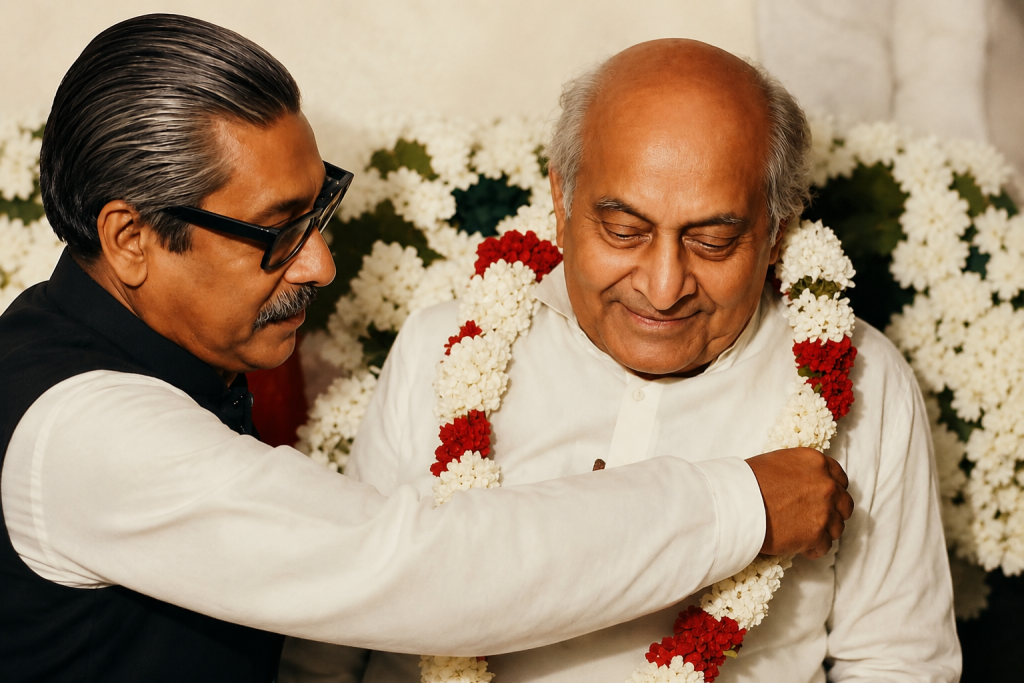


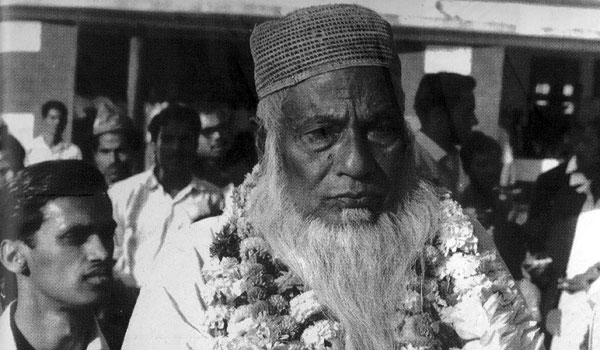
Maulana Abdul Hamid Khan Bhashani was one of the most influential political leaders in the history of the Indian subcontinent. Known as the “Leader of the Oppressed” (Majlum Jananeta), he dedicated his entire life to fighting injustice, inequality, and exploitation. Born in 1880 in Dhangara village of Sirajganj district, Bhashani received only limited formal education in schools and madrasas. His professional life began in 1909 as a teacher at Kagmari School in Tangail. Later, he received political inspiration from renowned anti-British nationalist leader Chittaranjan Das.
Bhashani entered politics not for personal gain or family legacy, but to serve ordinary people. Throughout his life, he stood beside farmers, laborers, and marginalized communities. During the 1950s, he had already realized that East Bengal could never achieve true freedom and justice within the political structure of Pakistan. His political foresight was later proven correct by history.
One of the most significant events of his political career was the historic Long March toward the Farakka Barrage on May 16, 1976. Bhashani believed that the Farakka Barrage would severely damage the rivers, agriculture, and environment of Bangladesh. In protest, he organized a mass movement and led thousands of people in resistance. His fearless leadership made him even more respected among the common people.
Maulana Bhashani also played a crucial role in Bangladesh’s independence movement and Liberation War. Alongside Sheikh Mujibur Rahman, he was one of the strongest voices advocating for the freedom of East Pakistan. On March 9, 1971, at Paltan Maidan in Dhaka, he delivered a historic speech urging the people to prepare for armed resistance. From January until March 25, he traveled across the country, inspiring people to join the struggle for independence.
After the Liberation War began, the Pakistani military attempted to arrest or assassinate him. They reportedly referred to him as “Kafir Bhashani” while searching for him. Unable to find him, Pakistani forces burned down his house. Eventually, Bhashani managed to escape to India through various secret routes and strategies.
Upon arriving in India, his appeal for support for Bangladesh’s freedom struggle received wide attention in Indian newspapers. He actively sought international support for Bangladesh by sending letters and telegrams to the United Nations, leaders of Muslim countries, democratic governments, and world leaders. He strongly protested against the support given to Pakistan by China and the United States, openly criticizing their role during the war.
Throughout the Liberation War, Maulana Bhashani traveled across different parts of India while continuing diplomatic efforts for Bangladesh. Using his international influence, he appealed to governments around the world, including the Soviet Union, China, and members of the United Nations, to support the Bengali people. During the time when Sheikh Mujibur Rahman was imprisoned in Pakistan, Bhashani also served as the chairman of the all-party advisory committee that assisted in guiding the Liberation War effort.
Even after Bangladesh achieved independence on December 16, 1971, Maulana Bhashani did not immediately return home. He came back to Bangladesh on January 22, 1972 — twelve days after Sheikh Mujibur Rahman returned from Pakistani imprisonment. Upon his return, his first major demand was the withdrawal of Indian troops from Bangladeshi soil, demonstrating his strong commitment to national sovereignty and independence.
Bhashani was widely respected for his courage and straightforward political stance. During the political deadlock of 1971, while negotiations over the transfer of power were ongoing, he famously advised Sheikh Mujibur Rahman by saying, “Nothing will come from discussions; just say goodbye to them.” This statement reflected his deep distrust of the Pakistani ruling establishment and his clear understanding of the political reality.
He also maintained an important relationship with Indian Prime Minister Indira Gandhi. While expressing gratitude for India’s support during the Liberation War and for sheltering millions of refugees, he simultaneously emphasized the importance of recognizing Bangladesh’s independence. One of his memorable statements was: “I want India’s support and cooperation, but I do not want to become dependent on them.”
Maulana Bhashani lived until the age of 96. He died at PG Hospital in Dhaka and was buried in Tangail. He was one of the founders of Awami League, yet over time, his immense contribution to Bangladesh’s political history has often been overlooked.
The history of Bangladesh was not built by a single individual alone. It was shaped through the sacrifices and contributions of countless leaders, activists, freedom fighters, and martyrs. Alongside Sheikh Mujibur Rahman, figures such as Maulana Bhashani, Tajuddin Ahmad, the National Four Leaders, Comrade Moni Singh, General Osmani, Colonel Taher, Khaled Mosharraf, and the seven Bir Sreshthas all played vital roles in the creation of Bangladesh. Remembering and honoring all of them is essential to preserving the true spirit of the nation.