Bangladeshi Cinema: Crisis, Decline, and the Hope for Revival

Cinema is one of the most powerful branches of art, where literature, music, acting, painting, lighting, and technology merge into a single creative expression. This unique combination is why cinema is often described as “larger than life.” Through light and shadow, films possess the extraordinary ability to reflect human emotions, society, love, suffering, resistance, and dreams in ways few other art forms can achieve. Making a film is not simply a matter of money; it requires creativity, sensitivity, and the collective effort of many talented individuals. A successful film depends on a visionary director, a thoughtful storyteller, skilled actors, and dedicated technicians. While audiences only see the performers on screen, countless people work tirelessly behind the scenes to bring a story to life. There was a time when Bengali cinema reflected the realities of society and human life. Films inspired people to think, protest, dream, and empathize. Each film felt like a school of thought or a living library. However, when comparing the cinema of post-independence Bangladesh with much of today’s mainstream industry, disappointment becomes unavoidable. Excessive violence, unrealistic fight scenes, bloodshed, and distorted portrayals of love and conflict have become common in many films. Such trends not only weaken artistic quality but also negatively affect social and cultural values. Since the 1990s, Bangladeshi cinema has gradually lost audiences due to obscenity, poor storytelling, and declining artistic standards. Yet Bengali cinema once achieved global recognition through legendary filmmakers such as Satyajit Ray, Ritwik Ghatak, Mrinal Sen, and Goutam Ghose. Bangladesh itself also produced remarkable filmmakers like Khan Ataur Rahman, Zahir Raihan, Alamgir Kabir, and Subhash Dutta, who treated cinema as a meaningful form of artistic and social expression. Today, the Bangladeshi film industry faces multiple crises. Even conflicts surrounding artists’ associations have reached the courts, reflecting deep divisions within the cultural sphere. If artists themselves fail to uphold artistic integrity and moral responsibility, audiences naturally lose trust in the films they create. One of the major reasons behind the decline of Bangladeshi cinema is the growing influence of black money and profit-driven producers. Many producers prioritize commercial success over artistic excellence, turning films into mere business products. At the same time, ethical decline among some film personalities has disappointed audiences who once admired them as cultural icons. Despite these challenges, hope for revival still exists. Filmmakers such as Tareque Masud and Humayun Ahmed once attempted to bring new life to Bangladeshi cinema. Films like Matir Moina, Muktir Gaan, and Aguner Poroshmoni proved that meaningful, artistic cinema could also achieve popular success. In recent years, a new generation of educated and creative young filmmakers has emerged. Many of their works have received appreciation both nationally and internationally. Films such as Nonajoler Kabbo demonstrate that cinema can still succeed artistically and commercially at the same time. Cinema is not merely a source of entertainment; it is also a powerful tool for social transformation. If filmmakers are not inspired by society, politics, culture, and the realities of ordinary people, cinema loses its purpose and becomes nothing more than a commercial product. In a country like Bangladesh, with a massive population and rich cultural heritage, there is enormous potential for creating meaningful and globally respected films. What is needed is sincerity, artistic vision, and the leadership of genuine film lovers. Bangladeshi cinema is undoubtedly passing through a difficult period, but decline does not have to be permanent. If the industry can free itself from obscenity, poor-quality productions, and the influence of unethical business interests, Bengali cinema can once again reclaim its lost glory. Cinema can become a powerful cultural weapon against ignorance, extremism, and social decay. The revival of meaningful cinema may ultimately help shape a more thoughtful, humane, and enlightened society.
Maulana Bhashani: The Voice of the Oppressed and a Forgotten Architect of Bangladesh’s Freedom
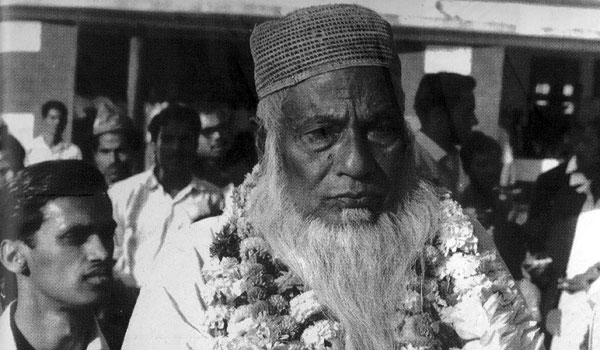
Maulana Abdul Hamid Khan Bhashani was one of the most influential political leaders in the history of the Indian subcontinent. Known as the “Leader of the Oppressed” (Majlum Jananeta), he dedicated his entire life to fighting injustice, inequality, and exploitation. Born in 1880 in Dhangara village of Sirajganj district, Bhashani received only limited formal education in schools and madrasas. His professional life began in 1909 as a teacher at Kagmari School in Tangail. Later, he received political inspiration from renowned anti-British nationalist leader Chittaranjan Das. Bhashani entered politics not for personal gain or family legacy, but to serve ordinary people. Throughout his life, he stood beside farmers, laborers, and marginalized communities. During the 1950s, he had already realized that East Bengal could never achieve true freedom and justice within the political structure of Pakistan. His political foresight was later proven correct by history. One of the most significant events of his political career was the historic Long March toward the Farakka Barrage on May 16, 1976. Bhashani believed that the Farakka Barrage would severely damage the rivers, agriculture, and environment of Bangladesh. In protest, he organized a mass movement and led thousands of people in resistance. His fearless leadership made him even more respected among the common people. Maulana Bhashani also played a crucial role in Bangladesh’s independence movement and Liberation War. Alongside Sheikh Mujibur Rahman, he was one of the strongest voices advocating for the freedom of East Pakistan. On March 9, 1971, at Paltan Maidan in Dhaka, he delivered a historic speech urging the people to prepare for armed resistance. From January until March 25, he traveled across the country, inspiring people to join the struggle for independence. After the Liberation War began, the Pakistani military attempted to arrest or assassinate him. They reportedly referred to him as “Kafir Bhashani” while searching for him. Unable to find him, Pakistani forces burned down his house. Eventually, Bhashani managed to escape to India through various secret routes and strategies. Upon arriving in India, his appeal for support for Bangladesh’s freedom struggle received wide attention in Indian newspapers. He actively sought international support for Bangladesh by sending letters and telegrams to the United Nations, leaders of Muslim countries, democratic governments, and world leaders. He strongly protested against the support given to Pakistan by China and the United States, openly criticizing their role during the war. Throughout the Liberation War, Maulana Bhashani traveled across different parts of India while continuing diplomatic efforts for Bangladesh. Using his international influence, he appealed to governments around the world, including the Soviet Union, China, and members of the United Nations, to support the Bengali people. During the time when Sheikh Mujibur Rahman was imprisoned in Pakistan, Bhashani also served as the chairman of the all-party advisory committee that assisted in guiding the Liberation War effort. Even after Bangladesh achieved independence on December 16, 1971, Maulana Bhashani did not immediately return home. He came back to Bangladesh on January 22, 1972 — twelve days after Sheikh Mujibur Rahman returned from Pakistani imprisonment. Upon his return, his first major demand was the withdrawal of Indian troops from Bangladeshi soil, demonstrating his strong commitment to national sovereignty and independence. Bhashani was widely respected for his courage and straightforward political stance. During the political deadlock of 1971, while negotiations over the transfer of power were ongoing, he famously advised Sheikh Mujibur Rahman by saying, “Nothing will come from discussions; just say goodbye to them.” This statement reflected his deep distrust of the Pakistani ruling establishment and his clear understanding of the political reality. He also maintained an important relationship with Indian Prime Minister Indira Gandhi. While expressing gratitude for India’s support during the Liberation War and for sheltering millions of refugees, he simultaneously emphasized the importance of recognizing Bangladesh’s independence. One of his memorable statements was: “I want India’s support and cooperation, but I do not want to become dependent on them.” Maulana Bhashani lived until the age of 96. He died at PG Hospital in Dhaka and was buried in Tangail. He was one of the founders of Awami League, yet over time, his immense contribution to Bangladesh’s political history has often been overlooked. The history of Bangladesh was not built by a single individual alone. It was shaped through the sacrifices and contributions of countless leaders, activists, freedom fighters, and martyrs. Alongside Sheikh Mujibur Rahman, figures such as Maulana Bhashani, Tajuddin Ahmad, the National Four Leaders, Comrade Moni Singh, General Osmani, Colonel Taher, Khaled Mosharraf, and the seven Bir Sreshthas all played vital roles in the creation of Bangladesh. Remembering and honoring all of them is essential to preserving the true spirit of the nation.