


From Waste to Welfare: How the Gausia Committee Changed Qurbani Hide Management in Bangladesh
For years, the scene after Eid al-Adha was almost the same across Bangladesh. Roadsides and dustbins would be filled with discarded sacrificial animal hides. Many people, frustrated by low prices and market syndicates, would simply throw them away. What should have been a valuable national resource often ended up as waste.
But in recent years, that picture has changed dramatically.
Today, Qurbani hides are no longer being abandoned in large numbers. Instead, they are becoming a source of support for orphanages, madrasas, and underprivileged students across the country. Behind this transformation is the organized effort of Gausia Committee Bangladesh, a non-political voluntary organization that has quietly reshaped the country’s hide management system.
The Crisis That Once Existed
Only a few years ago, the hide collection system was deeply unorganized. Local collectors often spent hours under the hot sun, only to sell hides for as little as 50 to 100 taka. Due to the influence of syndicates and middlemen, fair prices were rarely ensured.
As a result, many people lost interest in preserving hides altogether. Large quantities were dumped on streets, causing both environmental damage and economic loss. At the same time, orphanages and madrasa institutions that traditionally depended on hide sales for funding were deprived of much-needed income.
A New System Begins
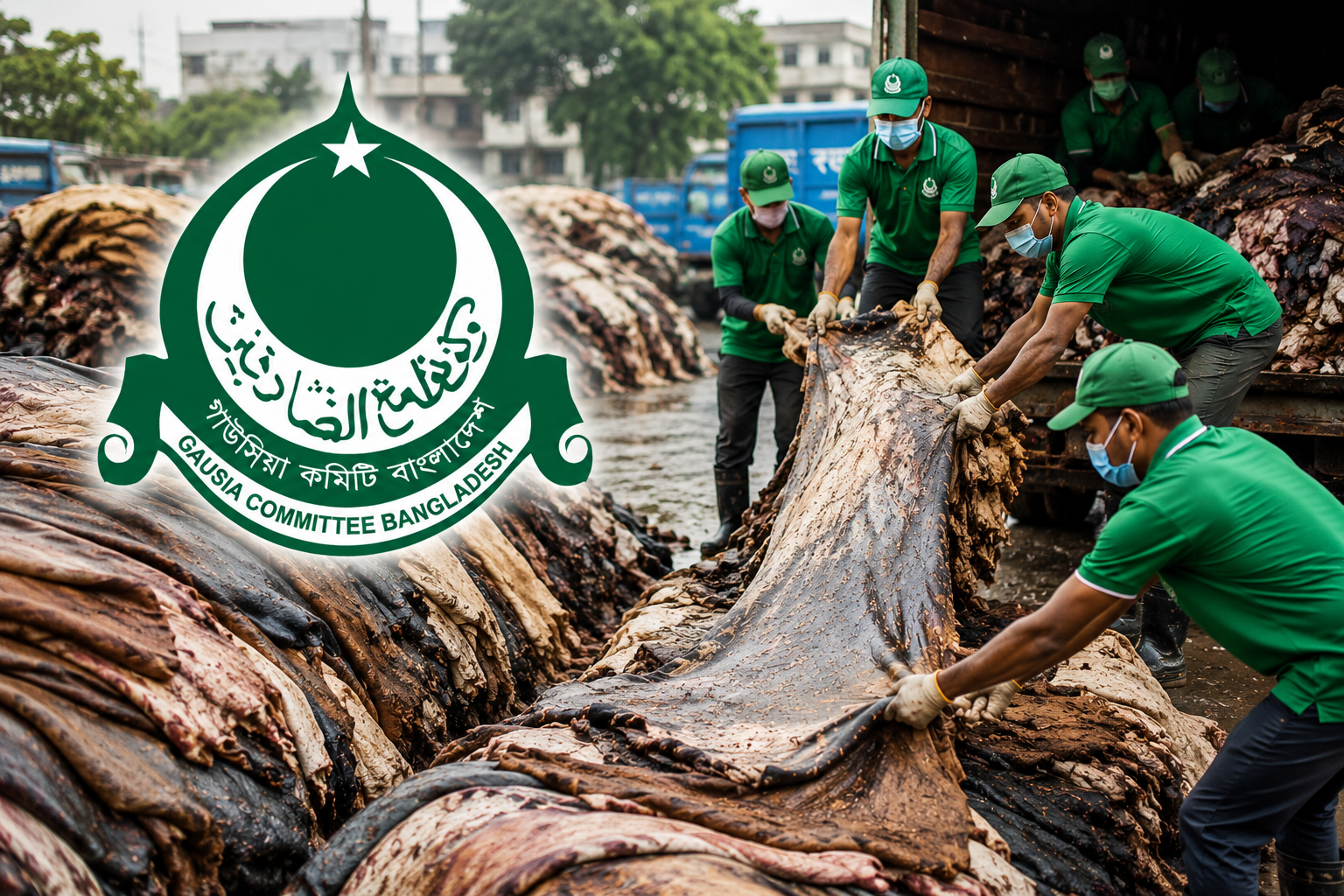
A major turning point came in 2022 when the Gausia Committee Bangladesh stepped in with a more structured approach. The organization introduced organized collection, transportation, and preservation systems aimed at reducing wastage and weakening the control of syndicates.
Every Eid, the organization now manages and preserves massive quantities of hides at the Jamea Ahmadia Sunnia Alia Kamil Madrasa in Chattogram. Their network has expanded far beyond the city, helping more than 250 madrasas and educational institutions throughout Bangladesh benefit from hide sales.
The Volunteers Behind the Effort
One of the biggest strengths of the initiative is its volunteer force. Around seven thousand volunteers work during Eid-ul-Adha to collect hides directly from communities, transport them properly, and ensure preservation. Their coordinated efforts have significantly reduced spoilage and helped stabilize prices in the market.
More Than Just Hide Collection
The impact of this initiative goes beyond logistics.
According to those involved, organized hide management has created real social benefits. Institutions that once received only minimal income from hides are now earning enough to support food, educational materials, and other essential expenses for students and orphans.
The system has also reduced the dominance of dishonest middlemen. Since volunteers collect hides directly from donors, many of the irregularities that previously existed in the market have decreased.
A Shift in Public Mindset
Perhaps the biggest change has been in public confidence.
People who once threw hides away in frustration are now donating them willingly, knowing that the proceeds are helping vulnerable communities. For many, the act of Qurbani has become not only a religious obligation but also a meaningful form of social contribution.
What was once seen as a chaotic post-Eid problem is gradually turning into an organized social movement, one driven largely by volunteers working quietly behind the scenes.