Shakib Al Hasan: Hero, Villain, and the Tragedy of Bangladesh’s Greatest Cricketer

“You are the biggest cricket star Bangladesh has ever produced. Even your critics acknowledge your contribution to the game. Yet today, it seems that seven months of politics have overshadowed everything you achieved on the field, and you are paying the price for it. How unexpected is that?” For a few seconds, there was silence on the other end of the phone. Then came the voice of Shakib Al Hasan: – “Not just unexpected—it’s unacceptable to me. But what more can I say about it? You’re talking about seven months of politics. Some people even say my current situation is because I didn’t post a single Facebook status. What a situation this is!” Perhaps those four words—“What a situation”—capture the essence of Shakib Al Hasan’s entire life. As the saying goes: “People are not born heroes or villains; they are born people, and the world decides what to call them.” Few lives embody that idea as perfectly as Shakib’s. Once celebrated as a cricketing miracle, he has also been labeled arrogant, controversial, selfish, rebellious, and, by many, the greatest cricketer in Bangladesh’s history. He has been both hero and villain, often at the same time. And that is precisely what makes his story unique. There has never been another talent quite like him in Bangladeshi cricket. The sport has produced countless all-rounders, but very few have dominated all three formats of the game with the consistency required to become the world’s number-one all-rounder. Shakib was one of those rare exceptions. A player capable of being his team’s best batter, best bowler, and coolest head in the same match. He once said: “By Bangladesh’s standards, I’ve achieved many things before their time.” To some, that sounded like arrogance. In reality, Shakib was among the first Bangladeshi cricketers to normalize ideas such as franchise cricket, personal branding, and professional independence. Concepts that are commonplace today once earned him accusations of being unpatriotic. From Faisal of Magura to Shakib Al Hasan The story of Shakib Al Hasan is almost cinematic. Born on March 23, 1987, in Magura, he was obsessed with sports from childhood. His talent stood out so dramatically that local teams often hired him to play in village tournaments. During one such match, an impressed umpire arranged for him to train at Islampur Para Club in Magura. There, bowling with a proper cricket ball for the first time in his life, Shakib took a wicket with his very first delivery. The tape-tennis boy quickly began showcasing his abilities with both bat and ball. A brief period of training at BKSP, opportunities with Khulna Division, and an early call-up to Bangladesh’s Under-19 team soon followed. In the 2005 Under-19 Tri-Nation Tournament final, he scored a century off just 86 balls and took three wickets, announcing himself as a future star of Bangladeshi cricket. French novelist Victor Hugo once wrote: “Nothing is more powerful than an idea whose time has come.” Shakib’s time had arrived. Although his formal training at BKSP lasted only six months, it sharpened the extraordinary talent already within him. He made an immediate impact at every level. His Under-17 debut produced three wickets. In 2005, he scored 82 against England Under-19s and followed it with a century and three wickets in the tournament final. Across 18 Youth ODIs, he accumulated 563 runs and 22 wickets. At just 17, he made his first-class debut for Khulna and later claimed five wickets against Zimbabwe A in 2005. Looking back at those early years, one is reminded of T.S. Eliot’s famous words: “Home is where one starts from.” Shakib’s domestic foundation was built so solidly that conquering the world seemed only a matter of time. A Global Cricketing Nomad Shakib Al Hasan became one of cricket’s great globetrotters. Despite occasionally missing tournaments due to No Objection Certificate (NOC) complications, he remained a sought-after player across franchise leagues. In the 2023 Lanka Premier League, representing Galle Marvels, he scored 30 runs off 21 balls and claimed two wickets in a vintage all-round performance. After returning from his ICC suspension, he created history during the 2020 Bangabandhu T20 Cup, becoming only the third cricketer in the world to complete the remarkable double of 5,000 T20 runs and 300 wickets. He continued to deliver match-winning performances in domestic competitions, including the 2022 Swadhinata Cup. Controversies, criticism, and off-field storms never seemed capable of suppressing the cricketer within him. Like the mythical Phoenix, Shakib repeatedly rose from the ashes, proving that reinvention was one of his greatest gifts. Beyond the Boundary Shakib never confined himself to the 22-yard pitch. After obtaining a U.S. Green Card in 2018, his life became increasingly global. He served as a UNICEF Goodwill Ambassador, worked with anti-corruption campaigns, and collaborated with international brands such as Huawei. He ventured into business as Chairman of Monarch Holdings and later entered the gold trading sector through Burak Commodities. Yet the bouncers he faced outside cricket proved far more difficult to handle than those he encountered on the field. The Biggest Gamble: Politics Perhaps the greatest gamble of Shakib’s life was politics. In Bangladesh’s 2024 general election, he was elected as a Member of Parliament from Magura-1 under the Awami League banner. But fate had other plans. Only seven months later, the mass uprising of August led to the dissolution of Parliament, bringing his political career to an abrupt halt. Later, when BNP candidate Munawar Hossain Khan won the constituency in the 2026 election, the curtain effectively fell on Shakib’s political chapter. George Bernard Shaw once wrote: “Politics is the last refuge of the scoundrel.” Whether or not that applies here, Shakib undoubtedly encountered the harsh realities of political life. Reflecting on Bangladesh’s changing political landscape, he remarked: “There was a time when it seemed everyone supported the Awami League. Now it seems nobody does. That’s the situation.” When asked why he entered politics during his playing career, the confident and often combative cricketer suddenly sounded like the humble boy from Magura. “I was
How Royal Challengers Bengaluru Transformed from IPL’s Biggest Meme to a Championship Dynasty
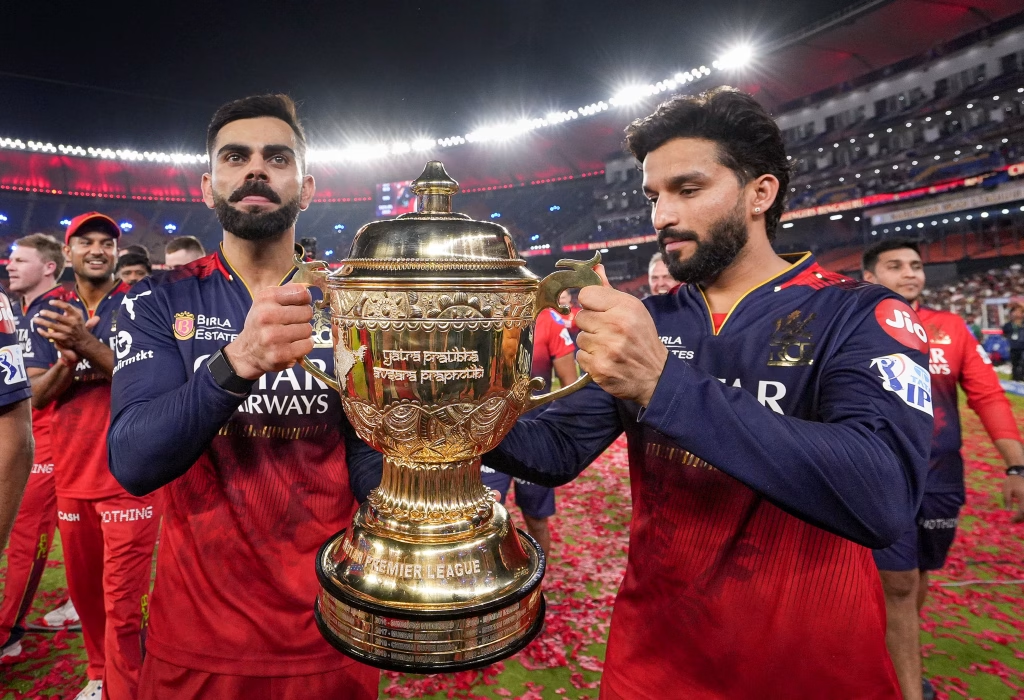
For nearly two decades, supporting Royal Challengers Bengaluru (RCB) was never merely about cricket. It was an emotional commitment, a journey defined by hope, heartbreak, and unwavering loyalty. Every IPL season began with dreams. Every season seemed to end with disappointment. Yet millions of supporters continued to believe. Through final defeats, dramatic collapses, relentless trolling, and countless memes, one slogan remained alive in the hearts of fans: “Ee Sala Cup Namde” — This year, the cup is ours. For seventeen long seasons, it wasn’t. Then, history changed. In 2025, Royal Challengers Bengaluru finally achieved what generations of supporters had been waiting for. By defeating the Punjab Kings in the IPL final, they lifted their maiden trophy and ended one of the longest title droughts in franchise cricket. Many believed that victory was the perfect conclusion to a story filled with suffering and perseverance. Instead, it became the beginning of a new chapter. Just a year later, RCB successfully defended their title, defeating Gujarat Titans in the 2026 IPL Final and establishing themselves as one of the league’s elite franchises. The team that had once been cricket’s most famous underachiever had transformed into a champion dynasty. The Long Road to Glory When the IPL was launched in 2008, RCB immediately became one of its most glamorous franchises. Backed by Vijay Mallya and featuring icons such as Rahul Dravid, Anil Kumble, Jacques Kallis, and Mark Boucher, expectations were enormous. However, the inaugural season exposed a fundamental problem. While other teams adapted quickly to the fast-paced nature of T20 cricket, RCB struggled with a more traditional approach and finished seventh out of eight teams. Yet the disappointing start did little to weaken the bond between the franchise and the city of Bengaluru. The fanbase continued to grow, laying the foundation for one of cricket’s most loyal supporter cultures. Years of Near Misses The heartbreak truly began in 2009 when Anil Kumble led RCB to their first IPL final. Despite a brilliant bowling performance from the legendary captain, the team fell agonizingly short against the Deccan Chargers. More disappointment followed in 2011. Powered by the explosive arrival of Chris Gayle and the emergence of Virat Kohli, RCB reached another final only to be outclassed by Chennai Super Kings. The years that followed produced some of the most entertaining cricket ever witnessed in the IPL. Gayle’s six-hitting heroics, AB de Villiers’ extraordinary innovation, and Kohli’s relentless consistency turned RCB into a global phenomenon. Yet trophies remained elusive. The Pain of 2016 For many supporters, no season was more painful than 2016. Virat Kohli delivered arguably the greatest individual campaign in IPL history, scoring 973 runs and smashing four centuries. Alongside AB de Villiers, he carried RCB into the final against Sunrisers Hyderabad. Everything appeared perfectly scripted. Playing at home in Bengaluru, chasing a challenging target, with Kohli in the form of his life, RCB seemed destined to create history. Instead, they suffered another heartbreaking defeat. For fans, it felt like the cruelest chapter of all. From Mockery to Mastery The years between 2017 and 2019 marked the franchise’s darkest period. The infamous 49 all-out against the Kolkata Knight Riders became a symbol of RCB’s struggles. Social media mockery intensified, and “Ee Sala Cup Namde” became one of cricket’s most ridiculed slogans. However, beneath the criticism, the franchise began to learn valuable lessons. RCB gradually shifted away from relying solely on superstar names and focused on building a balanced squad. Better recruitment, improved bowling resources, stronger domestic talent development, and a clearer strategic vision began to reshape the organization. The Championship Era The breakthrough finally arrived in 2025. This RCB team looked different. More mature. More balanced. More composed. In a tense final against the Punjab Kings, they held their nerve and secured a memorable victory, bringing an 18-year wait to an end. For Virat Kohli, who had devoted the prime years of his career to the franchise, it was a deeply emotional moment. One year later, RCB proved their success was no accident. By successfully defending the IPL title in 2026, they silenced the remaining doubters and completed one of the greatest redemption stories in sports history. Virat Kohli: The Heart of the Journey No figure embodies the RCB story more than Virat Kohli. He experienced every setback, every criticism, every final defeat, and every failed campaign. Yet he remained loyal to the franchise throughout. When RCB finally lifted the trophy in 2025, it was more than a championship victory. It was the completion of a journey nearly two decades in the making. The successful title defense in 2026 elevated that journey into legend. More Than a Cricket Story RCB’s transformation is about far more than winning trophies. It is a story of resilience in the face of failure. It is a story of supporters who never stopped believing. It is a story of a franchise that endured years of disappointment before finally reaching the summit. From heartbreak to history, from memes to medals, from underachievers to champions, Royal Challengers Bengaluru have authored one of the greatest redemption arcs in IPL history. And for millions of fans who waited nearly two decades to witness it, the slogan that once represented hope has finally become reality. “Ee Sala Cup Namde.”
One Word, Two Narratives: How ‘Partition’ Became Bengal’s New Political Weapon
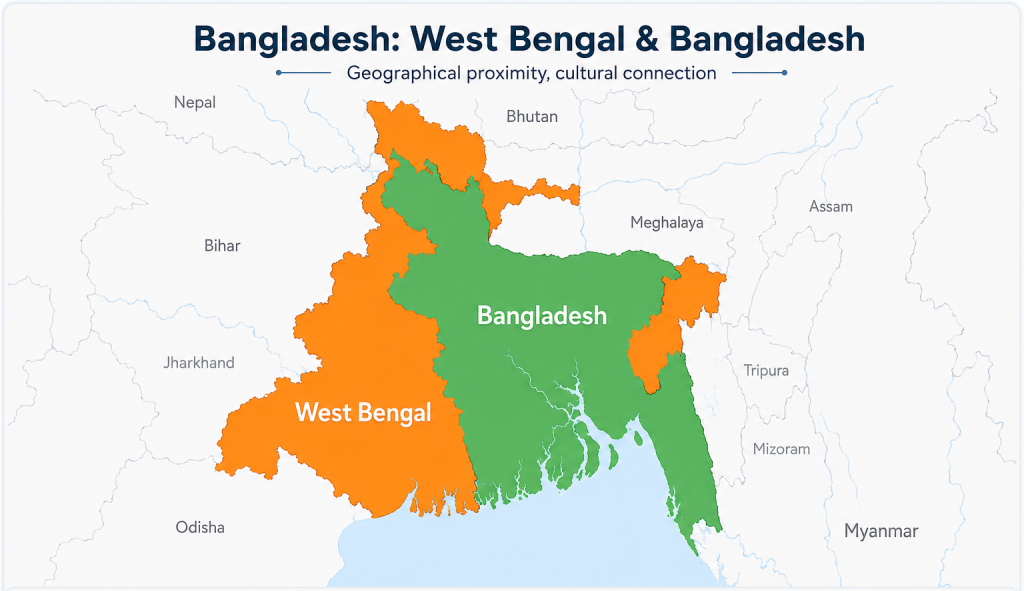
Nearly 80 years after the Partition of 1947, that old word from history seems to be returning in a new form. However, this time it is not through refugee-packed trains, barbed-wire borders, or bloody separation, but through Facebook posts, viral videos, political slogans, and heated social debates surrounding Eid-ul-Adha. Recently, the West Bengal government issued strict guidelines regarding animal slaughter and Qurbani (Eid sacrifice), which the Calcutta High Court also upheld. According to the new rules, animal slaughter without administrative permission, open public sacrifice, and slaughter activities without proper certification are prohibited. The government claims that these measures are intended to ensure law and order, public health, and environmental protection. However, critics argue that although administrative permission is mentioned, obtaining it in practice has become difficult in many areas, or delays in the approval process make it impossible to complete procedures on time. As a result, uncertainty and confusion have emerged regarding religious practices, further increasing public dissatisfaction. The situation became so sensitive that even the Imam of Kolkata’s historic Nakhoda Mosque urged Muslims to refrain from sacrificing cattle. This statement further intensified the debate on social media. A wave of posts, videos, and live discussions quickly spread anger, frustration, religious sentiment, and political arguments. A major factor fueling this controversy is the algorithm-driven nature of social media platforms. On Facebook, YouTube, X (Twitter), and Reddit, numerous pages and political accounts interpret events in line with their own ideologies. Short video clips, interviews of distressed farmers, confrontations with police, and even old footage are often circulated with new claims, spreading rapidly within minutes. As a result, real events, exaggerations, and misinformation blend, creating a highly charged digital environment. However, this crisis is not purely religious; it is also deeply connected to economic and political factors. Many farmers and traders in the cattle markets have suffered financial losses due to reduced sales during the Eid season. Not only Muslims but also many Hindu cattle farmers have reportedly been affected economically. Traders claim that reduced cattle supply from border areas, transportation difficulties, and increased administrative monitoring have also impacted the market. Consequently, the issue has gradually shifted from a religious debate to a broader discussion on social and economic instability. According to political analysts, religious polarization in West Bengal has intensified since the rise of the Bharatiya Janata Party. On one side is the expansion of Hindu nationalist politics, while on the other is a counter-political stance centered around the Muslim vote bank. In this conflict, even the religious sentiments of ordinary people are increasingly being used as political tools. Various social media posts claim that Muslims are facing growing social and administrative pressure. On the other hand, hardline Hindu nationalist groups use terms like “West Bengal” to mock the Muslim population and political landscape of West Bengal. Some also use the term “Muslim Bengal” as a symbol of demographic change and cultural transformation. Thus, the same words carry completely different meanings for different groups. This debate is not limited to West Bengal alone—it has also triggered strong reactions across the broader Bengali-speaking online community, including Bangladesh. Users from both sides interpret the issue from different perspectives: some view it as an example of religious rights being restricted, while others see it as a matter of law enforcement and social regulation. Interestingly, both sides are now using the term “Partition” in their own ways. One side argues that Muslim rights are being restricted, while the other claims that the identity of West Bengal is changing. In other words, the same word that once physically divided people in 1947 is now, in 2026, dividing them mentally, culturally, and politically. However, the reality is that not all information circulating on social media is true. Several videos, images, and claims have already been proven misleading or false. Old footage from past riots has been circulated as recent events, videos from other countries have been presented as if they were from West Bengal, and edited clips have been used to create emotional tension. Yet in the politics of emotion, feelings often spread faster than facts. For this reason, “Partition” is no longer just a chapter of history; it has once again become a political symbol, a social anxiety, and a slogan in a new age of online conflict.
From Sacrificial List to National Zoo: The Crazy Story of Bangladesh’s “Donald Trump” Buffalo
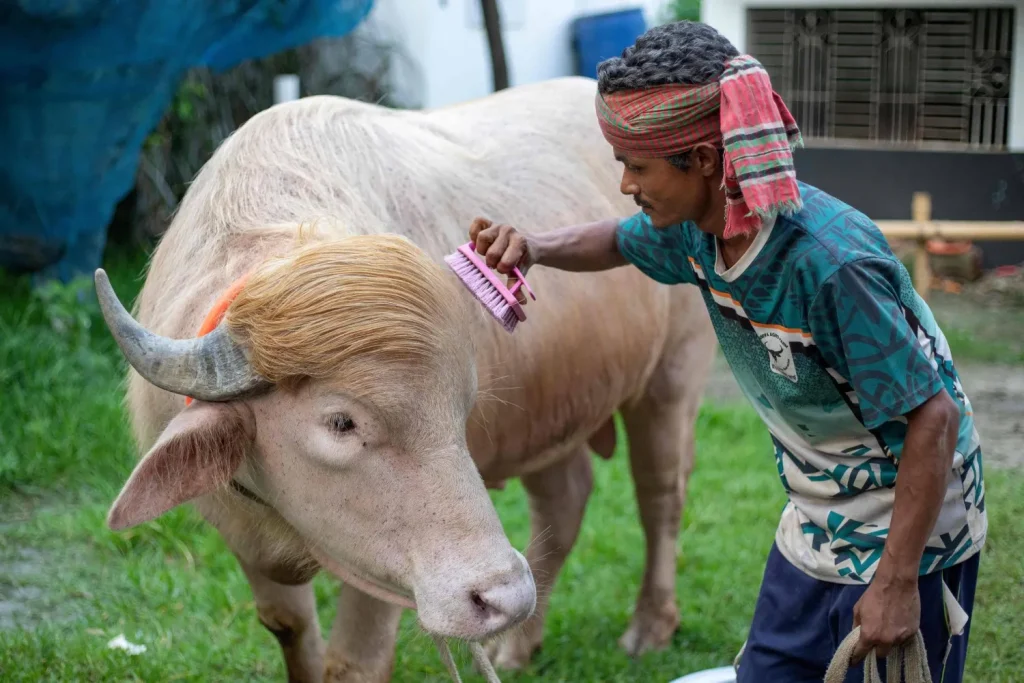
At Rabeya Agro Farm in Narayanganj, a rare white albino buffalo weighing nearly 700 kilograms was affectionately named “Donald Trump.” Because of the golden hair-like patch on its head and its unusual facial expression, the farm owners jokingly gave it the name. However, what began as a simple and humorous naming choice gradually evolved into something much bigger, transforming from a viral social media sensation into a topic involving international diplomacy, state sensitivity, and discussions about Bangladesh’s national identity. At first, people viewed the matter purely as entertainment. Thousands of visitors crowded the farm just to catch a glimpse of the “Donald Trump” buffalo. International media outlets also covered the story as a humorous and unusual event. Major foreign news organizations, including Reuters, CBS, and NDTV, published reports about the buffalo from Bangladesh. However, the situation changed when reports emerged that the viral buffalo was going to be sacrificed during Eid al-Adha. At that point, the issue moved beyond social humor and entered the realm of politics and diplomacy. Eventually, following intervention from the Ministry of Home Affairs, a decision was reportedly made to remove the buffalo from the sacrifice list and relocate it to the national zoo. This is where the idea of “Buffalo Diplomacy” truly emerged. The concept of diplomacy centered around animals is not entirely new in global politics. The most famous example is China’s “Panda Diplomacy.” For decades, China has used pandas as gifts or long-term loans to strengthen friendships, expand soft power, and reinforce political relationships with other countries. Sometimes, even an animal can become a symbol of a nation’s image, strategy, and international messaging, and the controversy surrounding the “Donald Trump” buffalo has highlighted that reality in a new way. Many people jokingly remarked that Bangladesh had unintentionally found itself in its own version of “Buffalo Diplomacy.” One side argues that the government intervened because it understood the potential seriousness of the situation. Today’s global political climate is highly polarized and sensitive. The name “Donald Trump” is no longer merely the name of an individual; it has become a global political symbol. If the buffalo had been sacrificed publicly, some fear that Islamophobic groups, segments of Western media, or political actors could have intentionally misrepresented the event. There were concerns that Bangladesh’s religious culture and Muslim traditions might be portrayed negatively or taken out of context. From this perspective, many believe the government acted to avoid unnecessary diplomatic risks. Critics, however, see the matter very differently. According to them, the fact that a sacrificial animal was named “Donald Trump” should not automatically be interpreted as an international insult. A farm owner has the right to name an animal however they wish, and sacrificing it as part of a religious tradition would have been entirely normal. Critics argue that if the state becomes uncomfortable merely because of a viral name, it reflects a lack of diplomatic confidence. Many have drawn comparisons with India, saying that larger states often face controversies directly and establish their positions more firmly. In contrast, Bangladesh’s excessive caution, in their view, has appeared to symbolize insecurity and defensiveness. Another large group believes the government could have handled the situation in a more mature and strategic way. It may have been possible to preserve the farm owner’s freedom while simultaneously communicating a clear international message. Such an approach could have projected both boldness and confidence, helping create the image of a self-assured state in the eyes of the public. Instead, by attempting to avoid any possible controversy, the government may have unintentionally created a new debate: “Is Bangladesh becoming overly defensive?” That question has now started circulating widely. The incident also attracted international attention. Several foreign media outlets described it as a form of “viral buffalo diplomacy.” Discussions and satire surrounding the issue reportedly spread across certain Iranian and Russian media spaces as well. On social media, many users began linking the controversy to the broader dynamics of contemporary global power politics. Some observers believe that amid ongoing global conflicts, international pressure, and the highly sensitive geopolitical environment surrounding the United States, the Bangladeshi government wanted to remain especially cautious about its international image. Perhaps the intervention was intended to avoid unnecessary attention, questions, or misinterpretations from the U.S. administration. Some consider this decision a sign of foresight, while others see it as an overly defensive reaction from an independent nation. Nevertheless, one thing is clear: what began as humor surrounding a buffalo eventually sparked a much larger debate about Bangladesh’s society, politics, diplomacy, and national self-confidence. While “Panda Diplomacy” represents a carefully planned form of soft power, Bangladesh’s “Buffalo Diplomacy” appeared to emerge completely unintentionally. Yet it still demonstrated how, in today’s world, even an animal can sometimes become the center of international politics, national image, and diplomatic sensitivity. Only time will tell whether the government’s decision was truly far-sighted or whether it will continue to raise even bigger questions in the future.
What is Cockroach Janta Party? The Full Story of the Viral Youth Anger Movement

Recently, a strange but powerful movement had gone viral on Indian social media, ” Cockroach Janta Party” or CJP for short. At first glance, the name may sound laughable, but behind it lies the deep anger, frustration, and protest of millions of young people in today’s India. Within just 7 to 10 days, the movement became so popular that the government was forced to take swift action. It all began with a remark made by Chief Justice of India Surya Kant. During a hearing, he referred to a group of young people as “cockroaches.” The comment deeply offended many young people, who felt that their unemployment, frustration, and struggles had been insulted in this way. At that very moment, Abhijit Dipke, a 30-year-old living in Boston, seized the opportunity and launched a website and social media accounts under the name Cockroach Janta Party. He declared himself the founder of the movement and said it was “the voice of idle and unemployed youth.” Their posts were very different, sharp satire, funny memes, and direct criticism of the government and institutions. On issues such as the NEET paper leak, irregularities in recruitment exams, the failure of the education system, and unemployment, they spoke in a way that drew young people by the thousands. Within just a few days, their Instagram following crossed 20 million. Their manifesto contained several clear demands. These included ending post-retirement benefits for judges, introducing 50 percent reservation for women, supporting independent media, imposing a 20-year ban on political leaders switching parties, and demanding the education minister’s resignation over exam irregularities such as those in NEET. These demands struck a strong chord among the youth. But the government did not welcome this rapid rise. Suddenly, their official website was blocked, and their X (Twitter) account was also shut down. The government said it was a threat to national security and that the action was taken based on an Intelligence Bureau report. Abhijit Dipke has said that he and his family have received death threats. He has now filed a case in the Delhi High Court seeking the unblocking of the account. Political reactions have also come from both sides. The BJP attacked the movement as a “foreign conspiracy” and something “backed by the opposition,” saying it was an attempt to destabilize the country. On the other hand, Congress leader Shashi Tharoor said that in a democracy, there should be space for satirical criticism and for young people to express their anger. He called for channeling that anger in the right direction. In fact, Cockroach Janta Party is not a registered political party. It will not contest any election. It is simply a satirical expression of the long-suppressed frustration and anger of young people. But its rapid spread and the government’s equally swift crackdown have together made one thing clear: the condition of the youth and the reality of digital politics in today’s India remain highly sensitive.
Public Servants: Serving the State or the Party ?

One of the fundamental conditions for maintaining political stability in a state is ensuring the professional neutrality, accountability, and constitutional responsibility of public officials. Administrative officers play a crucial role in preserving institutional balance between political parties within the state structure. However, when the administrative system becomes subordinated to partisan influence, the institutional foundation of the state gradually weakens. As a consequence, democracy itself not only becomes vulnerable but, at times, its very existence comes into question. The state is inherently a political institution, and political parties are an integral part of it. Although the Constitution of Bangladesh recognizes democracy as the core principle of governance, democracy in the political culture of the Indian subcontinent has rarely developed into a fully institutionalized system. Bangladesh is no exception. Since independence, the country has repeatedly experienced different forms of authoritarian rule under the façade of democracy. Immediately after independence, flawed elections and the establishment of BAKSAL dismantled the multi-party political structure. Later, military coups, prolonged military rule, and shifting political equations shaped the country’s trajectory. Although the mass uprising of 1990 created hope for the restoration of democracy, the political realities that followed the 1991 election repeatedly challenged that expectation. The Magura by-election, the one-sided election of 1996, and subsequent political confrontations continuously weakened democratic institutions. However, after 2008, the crisis deepened further as constitutional institutions increasingly came under executive control. This raised serious public concerns regarding administrative neutrality and the effectiveness of democratic institutions. In this context, the role of public servants becomes critically important. Although they operate under the executive branch of government, their conduct and responsibilities are regulated by clear laws and codes of conduct. According to the Government Servants (Conduct) Rules, 1979, no public official is allowed to engage directly or indirectly in political activities. Yet, the reality often reflects the opposite. In many cases, partisan loyalty, political identity, and overt support for the ruling party have become major factors behind promotions and institutional influence within the administration. Recently, a high-ranking police official publicly expressed loyalty to the government and openly embraced the ideology of the ruling party during a speech. Despite the presence of top government officials at the event, no visible concern or administrative action followed. Yet Rule 25 of the Government Servants (Conduct) Rules, 1979 clearly states that no public servant may become a member of any political party or participate in political activities. Such incidents therefore represent not only violations of official conduct rules, but also serious threats to administrative neutrality itself. Bangladesh’s recent political history demonstrates how politicized and submissive bureaucracies can push a state toward dangerous instability. Over the years, administrative culture based on political allegiance has weakened democratic institutions and eroded public trust. Following recent political movements and democratic aspirations, there was hope that the administrative structure would return to a path of neutrality and accountability. In reality, however, signs of continued politicization remain evident. Even unofficial recommendation letters from MPs and ministers regarding promotions have become increasingly normalized. Rules 20 and 30 of the Government Servants (Conduct) Rules prohibit public servants from using political or external influence regarding service-related matters. Furthermore, the Government Servants (Discipline and Appeal) Rules, 2018 provide punishments ranging from reprimand and demotion to compulsory retirement or dismissal for misconduct. Yet due to the lack of effective enforcement, these regulations often remain confined to paper rather than practice. Democracy is not merely an election-centered system; it is fundamentally an institution-centered political culture. That culture becomes strong only when the administration rises above political loyalty and remains accountable solely to the Constitution, the law, and the people. The democratic future of Bangladesh largely depends on restoring that institutional balance. Otherwise, merit, professionalism, and constitutional responsibility within the administration will continue to surrender to political favoritism and partisan interests, ultimately weakening the state itself and undermining its democratic foundations.
The Forty Rules of Love: Spiritual Enlightenment or Romantic Idealism?

“God is a meticulous clockmaker. Everything in this world happens exactly at its appointed time — not a minute earlier, nor a minute later. That clock works equally for everyone. In that divine clock, the moments of love and death are predetermined for every soul.” The Forty Rules of Love by Elif Shafak is one of the most widely discussed contemporary novels exploring spirituality, love, and self-discovery. Through an intricate narrative that connects past and present, the novel attempts to blend Sufi philosophy with themes of personal freedom, emotional awakening, and human connection. Yet, beneath its philosophical atmosphere and poetic language, the book often appears to prioritize romantic emotion and worldly attachment over the authentic depth of Sufi spirituality. The novel revolves around the legendary 13th-century Sufi poet Jalal ad-Din Muhammad Rumi and his spiritual mentor Shams Tabrizi. Parallel to this historical narrative is the modern-day story of Ella, a middle-aged woman trapped in an emotionally unfulfilling marriage. By intertwining these two timelines, the author seeks to construct a philosophical exploration of love and spiritual liberation. One of the most debated aspects of the novel is Ella’s transformation. After twenty years of marriage and raising three children, she abandons her family following a brief online connection and exposure to a manuscript. The novel frames this decision as an act of self-discovery and spiritual awakening. However, from a more realistic perspective, her actions can also be interpreted as a romanticized portrayal of emotional dissatisfaction and escapism. Ella’s loneliness, monotony, and emotional emptiness are presented in such a way that leaving behind her responsibilities seems to become the only route toward freedom and fulfillment. As a result, the narrative often glorifies personal desire and emotional liberation more than genuine spiritual realization. The central appeal of The Forty Rules of Love lies in its “Forty Rules” — philosophical reflections intended to represent spiritual truths about love and existence. Yet as the novel progresses, it becomes increasingly evident that these principles emphasize human relationships, emotional attraction, and sentimental intimacy more than unconditional devotion to the Creator. Authentic Sufi philosophy is rooted in the purification of the soul, the annihilation of ego, humility, patience, and complete surrender to divine love. In contrast, the novel frequently places worldly love and spiritual love almost on equal footing. Consequently, the profound spiritual essence of Sufism often becomes overshadowed by romantic idealism and emotional intensity. Another significant point of discussion is the portrayal of Shams of Tabriz. In the novel, he is depicted as a mysterious and almost supernatural figure capable of extraordinary insight and mystical perception. While this characterization adds dramatic depth to the story, it also distances Shams from the historical and spiritual reality of who he was. Historically, Shams was known not as a miracle-performing mystic, but as a spiritual teacher devoted to awakening the human soul. The essence of Sufism does not lie in displaying supernatural powers; rather, it lies in self-discipline, humility, inner transformation, and closeness to God. However, the novel often transforms Shams into a modern mystical archetype, making him appear more mythical than spiritually authentic. Although the novel repeatedly speaks of transcendent love, much of that love remains deeply tied to physical attraction, emotional longing, and personal conflict. While Shams verbally advocates rising above worldly attachment, the narrative itself continually returns to themes of emotional struggle and romantic tension. This ultimately raises a profound question: Is The Forty Rules of Love truly a story about unconditional love for the Divine, or is it primarily a literary attempt to reinterpret human romance through the language of spirituality? Perhaps the most morally unsettling aspect of the novel is the marriage between Shams and Kimya. Shams is portrayed as a man possessing immense spiritual wisdom, yet his emotional distance, neglect toward Kimya, and her tragic fate create a striking contradiction within the story. This inconsistency weakens the moral and spiritual credibility that the novel attempts to establish around his character. Despite these criticisms, the novel’s worldwide popularity is understandable. Its accessible language, emotional storytelling, philosophical tone, and atmospheric narrative make it deeply engaging for modern readers. However, for those seeking a historically grounded understanding of Sufism, the authentic relationship between Rumi and Shams, or a more rigorous exploration of spiritual philosophy, the novel may feel emotionally compelling yet spiritually incomplete. In the end, The Forty Rules of Love succeeds more as a poetic and romantic literary work than as an accurate representation of Sufi spirituality. Rather than fully touching the profound truths of divine love, the novel often remains centered on human emotion, romantic longing, and personal liberation wrapped in the language of mysticism.
The Loving Father Behind the Rebel Poet
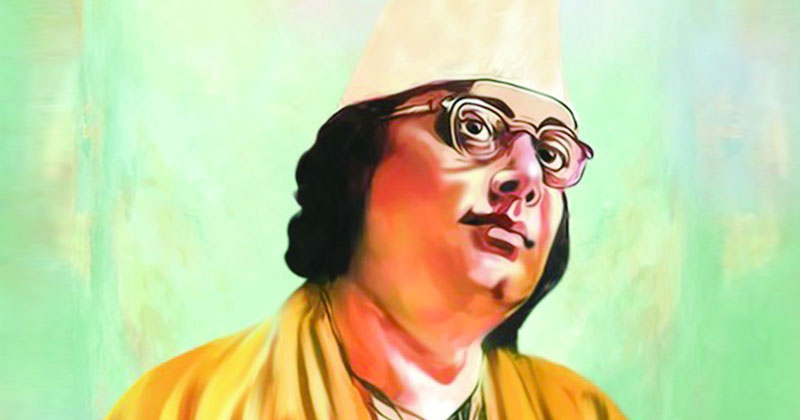
When the Kolkata police arrived to search Kazi Nazrul Islam’s house for banned books like Bisher Banshi, Bhangar Gaan, and Proloy Shikha, the poet did not resist. The officers turned the house upside down, scattering belongings everywhere, yet Nazrul remained calm and indifferent. But suddenly, the police noticed a small box in a corner. As they moved toward it, the rebel poet became frantic. He pleaded with the lead officer, “Do whatever you want, but please do not touch this box.” Ignoring his request, the police opened it. Inside were neatly arranged tiny clothes and toys belonging to Nazrul’s beloved son, Bulbul, who had passed away years earlier. The embarrassed officers saw tears shimmering in the poet’s eyes. Though celebrated in Bengali literature as the “Rebel Poet,” this deeply emotional side of Nazrul was revealed through the memories and interviews of his son, Kazi Sabyasachi. Nazrul adored his children and constantly worried about them. When little Bulbul died of smallpox at just four years old, the grief shattered him. Sabyasachi once said about his father, “I do not know how many people were blessed with such a generous-hearted father. In that sense, my brother and I were truly fortunate.” Sabyasachi’s nickname was “Sani,” inspired by Chinese revolutionary leader Sun Yat-sen, whom Nazrul admired deeply. His younger brother, Kazi Aniruddha, was lovingly called “Nini,” after Vladimir Lenin. Nazrul had four sons in total. His first son, Krishna Muhammad, died in infancy, while Bulbul passed away at the age of four. ‘তোমার সানি যুদ্ধে যাবে মুখটি করে চাঁদ পানা কোল ন্যাওটা তোমার নিনি বোমার ভয়ে আধখানা…’ He also made up another playful rhyme for the two brothers: ‘সানি নিনি দুই ভাই ব্যাং মারে ঠুইঠাই।’ Whenever Nazrul traveled away from home, he regularly wrote letters to his sons. Every letter ended with the same affectionate line: “Take my kisses. Yours, Baba.” Before falling seriously ill, Nazrul once dreamed of building a home in Baguiati, Kolkata. He even paid an advance for several bighas of land there. He would often take his family to visit the site and excitedly describe his plans: a bungalow-style house with a pond in the middle, fish in the water, and rooms arranged carefully for the family. He especially worried about little Nini going too close to the pond because the boy could not swim. But the dream never materialized. One day, while inspecting the land, Nazrul was disturbed by the foul smell of garbage carts passing nearby. Covering his nose with a handkerchief and applying perfume for himself and his sons, he firmly declared, “No, we will not build a house here. I won’t be able to write in this stench. My boys will fall sick.” Nazrul also loved taking his sons to football matches, theaters, and cinemas. Once, during an IFA Shield match between Mohammedan Sporting and K.C.B., he suddenly realized Sani and Nini were missing in the crowd. Panic-stricken, he began shouting, “Where is Sani? Where is Nini?” The entire stadium stared in shock until the boys were finally found and safely brought home in a taxi. Yet Nazrul’s affection was balanced with discipline. One afternoon, while the adults were busy playing cards, young Sabyasachi and Aniruddha decided to experiment with matches. Soon, they accidentally set a sofa on fire, and within moments the room was engulfed in flames. When Nazrul discovered what had happened, he glared at the boys with such fierce anger that both brothers trembled in fear.
Before 1971, Fazlul Huq Already Knew Pakistan Would Fail
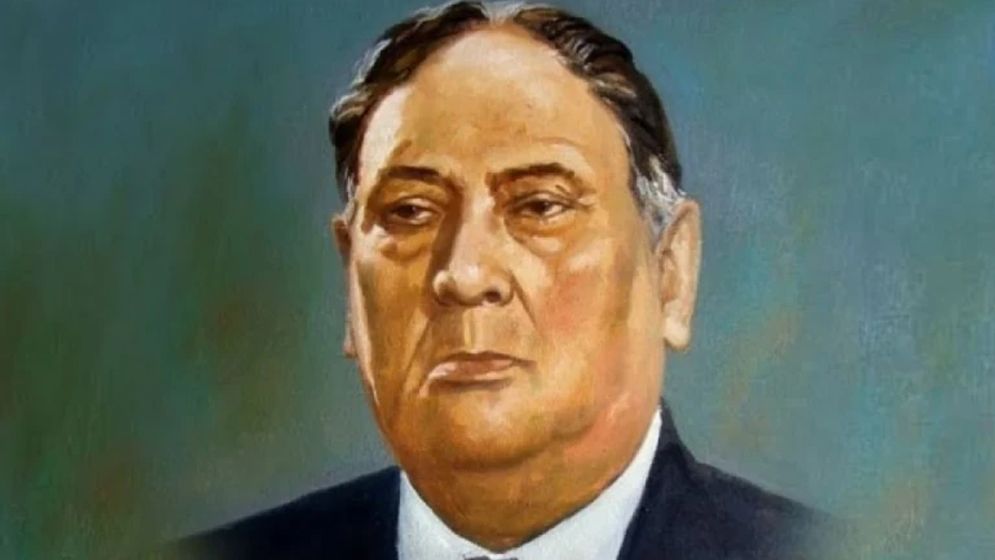
The elites of Kolkata once argued that there was no need to establish a university in Dhaka. According to them, a small agricultural college near Farmgate or Dhanmondi would be enough. Outraged by this narrow-minded and self-serving attitude, A. K. Fazlul Huq went to the British authorities and firmly argued that Dhaka deserved a full-fledged university. The British eventually softened their stance, though the First World War delayed the project. When University of Dhaka was finally established in 1921, Sher-e-Bangla Fazlul Huq was serving as the Education Minister of Bengal. In 1916, he became the president of the All-India Muslim League. The following year, in 1917, he became the General Secretary of the Indian National Congress. He remains the only person in history to have simultaneously held the positions of President of the Muslim League and General Secretary of the Congress. During 1918–19, Jawaharlal Nehru served as his personal secretary. Before the 1937 elections, Fazlul Huq declared that if elected, he would abolish the zamindari system forever. To stop him, landlords across Bengal and Kolkata spent enormous amounts of money against him. But it was of no use—the peasants voted for their own leader. At the historic Lahore Resolution session in 1940, Muhammad Ali Jinnah was delivering his speech when a sudden murmur spread through the audience. People’s attention shifted away from Jinnah because Fazlul Huq had just entered the hall. Seeing this, Jinnah reportedly remarked: “When the tiger arrives, the lamb must give way.” It was Fazlul Huq who moved the historic Lahore Resolution. In his proposal, he envisioned separate Muslim-majority states: one in the northwestern region and another comprising Bengal and Assam in the east. However, only a few days later, Jinnah altered the wording of the resolution. The original phrase “Muslim majority states” was changed into “Muslim majority state,” transforming the vision of two sovereign Muslim states into a single Pakistan. Fazlul Huq bitterly remarked: “Jinnah circumcised my Lahore Resolution.” He believed that a country divided into eastern and western wings with India in between could never survive in the long run. History proved his fears correct in 1971 during the Bangladesh Liberation War. Sheikh Mujibur Rahman later wrote in his memoirs that ordinary people loved Fazlul Huq so deeply that criticizing him often provoked public anger. Bangabandhu’s own father once advised him: “Whatever you do, never speak against Sher-e-Bangla. He did not become Sher-e-Bangla without reason.” Professionally, Fazlul Huq was one of the most respected lawyers of the Calcutta High Court. Before studying law, he completed triple honours in Physics, Chemistry, and Mathematics, and later earned a master’s degree in Mathematics. Once, during a legislative budget session, an MP personally attacked him and even began singing a mocking song aimed at humiliating him. Fazlul Huq calmly responded: “Mr. Speaker, I can jolly well face the music, but I cannot face a monkey.” When controversy erupted, he cleverly clarified: “I never mentioned any honourable member of this House. But if any honourable member thinks that the cap fits him, I withdraw my remark.” Throughout his life, he held almost every major political office possible. He served as the first Prime Minister of Bengal, the Chief Minister of East Bengal, the Home Minister of Pakistan, the Governor of East Pakistan, and the Chancellor of the University of Dhaka. Yet above all, Fazlul Huq became beloved because he stood for the peasants and working-class people of Bengal. He once said: “The day the newspapers of Kolkata begin praising me, know that the peasants of Bengal are in danger.” In 1948, when Jinnah visited Dhaka and declared Urdu to be the sole state language of Pakistan, students fiercely protested. Jinnah suspected that Fazlul Huq was secretly encouraging the students. Eventually, the two leaders met privately. According to Fazlul Huq’s assistant, the conversation unfolded sharply. Jinnah said: “You never truly wanted Pakistan.” Fazlul Huq replied: “I was the one who moved the proposal. Later, it was mutilated.” When Jinnah warned him by saying, “You are talking to the Governor-General of Pakistan,” Fazlul Huq calmly answered: “I know the powers of a constitutional Governor-General.” And when Jinnah attempted to intimidate him further, Fazlul Huq responded boldly: “This is Bangladesh, and you are talking to the Royal Bengal Tiger.” A. K. Fazlul Huq was not merely a politician. He was the voice of Bengal’s peasants and workers, a visionary leader who foresaw the future long before others did, and one of the greatest figures in the political history of Bengal.
Mashrafe Bin Mortaza and the Art of Never Giving Up

Some people in the history of Bangladesh cricket cannot be judged by statistics alone. They become emotions, symbols of an era. Mashrafe Bin Mortaza is one such name. He was not just a fast bowler; he was a warrior who kept fighting with a broken body, a captain who rebuilt the shattered dreams of a nation’s cricket. Those who have read The Old Man and the Sea know how the old fisherman Santiago fought alone against the sea. His body broke, but his spirit did not. In Bangladesh cricket, that Santiago was Mashrafe. His knees underwent surgery countless times, and doctors advised him to rest, yet he kept returning. Because some people do not play for themselves, they play for a flag. Ernest Hemingway once wrote: “Man can be destroyed, but not defeated.” It feels as though this line was written for Mashrafe’s life itself. Born in the small southwestern district of Narail, the boy loved football, badminton, and swimming in the Chitra River more than books during his childhood. Cricket came into his life later. At first, he was more interested in batting, but time transformed him into one of the most emotional and inspiring pacers in Bangladesh’s history. People began calling him—“The Narail Express.” In his hometown, he is not merely a cricketer; he is the “Prince of Hearts.” To thousands of young people, he proved that even a boy from a small town outside Dhaka could conquer the world. There was a time when Bangladesh hardly had a genuine pace bowler. In a cricket culture dependent on spin, Mashrafe arrived like a storm. Even at the Under-19 level, his fiery bowling caught the attention of legendary West Indian pacer Andy Roberts. Roberts understood: “This boy does not just have a ball in his hand; he carries rebellion.” After playing only one match for the Bangladesh A team, Mashrafe earned a call-up to the national side. On 8 November 2001, in his Test debut against Zimbabwe, he took four wickets and announced that a new era was about to begin in Bangladesh cricket. What made it even more astonishing was that it was also his very first first-class match. Such a rare event is hardly seen in cricket history. In 2006, he was among the highest wicket-takers in ODI cricket. With 49 wickets, he not only won matches but also gifted Bangladesh a new sense of belief. That same year, during Bangladesh’s historic victory over Australia in Cardiff, he dismissed Adam Gilchrist for a duck, leaving the cricket world stunned. Just as William Wallace in Braveheart sacrificed his body for the dream of freedom, Mashrafe sacrificed his body for Bangladesh cricket. While others tried to protect their careers, he chose to protect the honor of his nation’s flag. His four wickets against India in the unforgettable victory of the 2007 World Cup remain etched in history. That day, millions of people truly began to believe that Bangladesh, too, could stand tall on the world stage. During his 16-year career, injuries forced him away from the field 11 times. A knee injury against England kept him out of cricket for two years. Yet he returned. He got injured again. And he returned. Every comeback for him was never just about cricket; it was a battle against his own limitations. The 2011 World Cup at home was cruelly taken away from him by injury. The World Cup, where the entire nation wanted to see him play, had to be watched by him as a spectator. What greater pain could there be for a warrior? Still, he did not stop. Under his leadership, Bangladesh reached the quarter-finals of the 2015 World Cup. By defeating a powerhouse like England, they announced to the world: “Bangladesh is no longer a small team.” When Bangladesh grew exhausted from losing, Mashrafe stood alone at the front. In 2020, he stepped down as ODI captain after a victory against Zimbabwe. In 88 matches as captain, he secured 50 wins—marking the beginning of a new era in Bangladesh cricket. But a person’s life is never confined only to the field. The hero of cricket eventually stepped onto the political stage as well. In 2018, Mashrafe Bin Mortaza was elected as a Member of Parliament from the Narail-2 constituency while still serving as the national team captain. Such an event is rare in the history of world sports. He once said: “I wanted to work for people on a larger scale. But politics is not as simple as cricket. In cricket, the opposition is eleven people; in politics, sometimes the opposition becomes the entire society.” There was excitement surrounding his electoral victory, but there were also questions. His massive winning margin in the 2018 election drew criticism. Some said, “The legend of the field has become part of political reality.” Others believed it was simply the love of the people of Narail that brought him that victory. During the 2024 quota reform movement, his silence created even greater controversy. Young people expected him to take a stand, because to them Mashrafe was not just a cricketer—he was a symbol of courage. Later, he himself admitted that he had failed to meet people’s expectations. This confession made him even more human. Because truly great people know how to acknowledge their own mistakes. After the fall of the government of Sheikh Hasina, his house in Narail was attacked and set on fire. Yet he did not speak the language of revenge. Instead, he said: “I will not seek justice against the people of Narail.” Perhaps within these words lies Mashrafe’s greatest identity. Kazi Nazrul Islam once wrote: “I am the eternal rebel hero.” Mashrafe, too, seems like such a silent rebel. A rebellion against his own body, against failure, and sometimes against his own shortcomings. At one point, he said: “When I die, do not bring my body back to Narail.” Perhaps hidden within this sentence is the pain of a wounded man, a silent sorrow toward the city