The Jobs AI Can Never Replace in Bangladesh
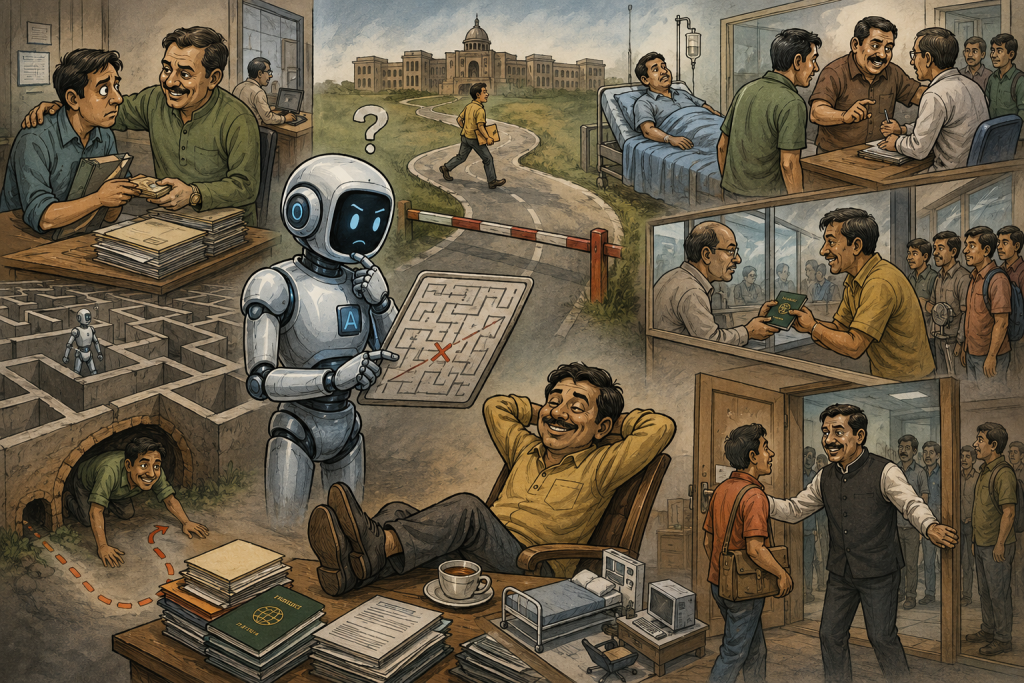
These days, everyone is talking about Artificial Intelligence. Some say AI will replace doctors. Others say lawyers, teachers, journalists, and programmers should start worrying. And honestly, they have a point. AI can already write articles, generate images, create software, and even have conversations that sound surprisingly human. But whenever I look at Bangladesh, I feel there are some jobs AI will never be able to take. Because these jobs are not built on knowledge alone. They are not built on logic, data, or technical skills. They are built on relationships, informal networks, and a deep understanding of how the system really works. Take the divorce office broker, for example. AI can explain the law. It can tell you which documents you need. It can even fill out the forms for you. But AI can never become that friendly man standing outside the office who says, “Brother, first time here? Give everything to me. I’ll manage it.” That is not a technical skill. That is a social skill. It is the ability to recognize confusion, fear, and uncertainty and then turn them into a business opportunity. The same applies to passport office brokers. In an ideal world, AI should be enough. Online applications, digital verification, automated processing everything can be done through technology. But in Bangladesh, many people still ask a very important question: “Brother, is there any shortcut?” And that’s where AI has a problem. AI follows rules. Many of our systems survive because people know how to work around those rules. Think about hospital brokers. When a patient’s family is stressed, worried, and desperate, AI can provide information. But AI cannot become part of that invisible network that knows which doctor to see, which cabin to get, which test center to visit, and who needs a phone call. AI understands algorithms. It does not understand “arranging things.” And that might be its biggest weakness in South Asia. The funny thing is that as technology becomes smarter, we are discovering that many human activities are not technological at all. They are social. In many situations, relationships matter more than qualifications. Connections matter more than procedures. And knowing someone matters more than knowing something. So yes, one day AI may drive our cars, diagnose diseases, write reports, and analyze court documents. But some professions in Bangladesh still look surprisingly safe. Because they are not really jobs. They are parallel institutions. And perhaps the world’s most powerful AI still cannot learn how to put a hand on someone’s shoulder and confidently say: “Brother, don’t worry. I have a connection.”
AI বাংলাদেশের যে চাকরিগুলো খেতে পারবে না
কৃত্রিম বুদ্ধিমত্তা বা AI নিয়ে আজকাল অনেক আলোচনা। কেউ বলছেন, AI ডাক্তারদের জায়গা নেবে। কেউ বলছেন, আইনজীবী, শিক্ষক, সাংবাদিকসহ কারও চাকরিই নিরাপদ নয়। প্রযুক্তির এই দ্রুত অগ্রগতিতে উদ্বিগ্ন হওয়ার কারণও আছে। কারণ AI ইতোমধ্যে ছবি আঁকছে, কোড লিখছে, রিপোর্ট তৈরি করছে, এমনকি মানুষের মতো কথাও বলছে। কিন্তু বাংলাদেশের বাস্তবতায় দাঁড়িয়ে আমার মাঝে মাঝে মনে হয়, কিছু পেশা আছে যেগুলো AI কোনোদিনই নিতে পারবে না। কারণ এসব পেশার মূল শক্তি দক্ষতা নয়, তথ্য নয়, এমনকি যুক্তিও নয়। এগুলোর ভিত্তি হলো সম্পর্ক, অনানুষ্ঠানিক নেটওয়ার্ক, আর সিস্টেমের ফাঁকফোকর সম্পর্কে গভীর জ্ঞান। ধরুন, একজন বিবাহবিচ্ছেদ-অফিসের দালাল। AI হয়তো আপনাকে আইনের ধারা বুঝিয়ে দিতে পারবে, প্রয়োজনীয় কাগজপত্রের তালিকা দিতে পারবে, এমনকি আবেদনপত্রও পূরণ করে দিতে পারবে। কিন্তু AI কখনো সেই ভদ্রলোক হতে পারবে না, যিনি অফিসের সামনে দাঁড়িয়ে বলবেন, “ভাই, প্রথমবার আসছেন মনে হয়? আমারে দেন, সব আমি করে দিচ্ছি।” এটা শুধু তথ্যের ব্যাপার নয়। এটা মানুষের অনিশ্চয়তা, ভয় এবং অস্থিরতাকে বুঝে সেখানে জায়গা করে নেওয়ার এক বিশেষ সামাজিক দক্ষতা। একই কথা প্রযোজ্য পাসপোর্ট অফিসের দালালের ক্ষেত্রেও। আদর্শ পৃথিবীতে AI-ই যথেষ্ট হওয়ার কথা। অনলাইনে আবেদন, ডিজিটাল যাচাই, স্বয়ংক্রিয় প্রসেসিং সবই সম্ভব। কিন্তু বাংলাদেশি বাস্তবতায় মানুষের প্রথম প্রশ্ন প্রায়ই হয়, “ভাই, শর্টকাট কোনো উপায় আছে?” AI-এর সমস্যা হলো, সে নিয়ম মেনে চলে। আর আমাদের অনেক প্রতিষ্ঠান এমনভাবে গড়ে উঠেছে যেখানে নিয়ম জানার চেয়ে “কাকে চেনেন” প্রশ্নটা কখনো কখনো বেশি গুরুত্বপূর্ণ হয়ে ওঠে। হাসপাতালের দালালদের কথাও ভাবুন। একজন রোগীর পরিবার যখন আতঙ্কিত, বিভ্রান্ত এবং অসহায়, তখন AI হয়তো তথ্য দিতে পারবে। কিন্তু সেই সুযোগে কে কোথায় নিয়ে যাবে, কোন টেস্ট করাবে, কোন কেবিনে ভর্তি করাবে এই পুরো অনানুষ্ঠানিক অর্থনীতির অংশ হওয়া AI-এর পক্ষে সম্ভব নয়। কারণ AI অ্যালগরিদম বোঝে, কিন্তু “ব্যবস্থা করে দেওয়া” নামক সাংস্কৃতিক ধারণাটা বোঝে না। মজার বিষয় হলো, প্রযুক্তি যত উন্নত হচ্ছে, ততই আমরা বুঝতে পারছি যে মানুষের কিছু আচরণ প্রযুক্তিগত নয়, সামাজিক। সেখানে দক্ষতার চেয়ে সম্পর্ক বেশি মূল্যবান, আর নিয়মের চেয়ে অনিয়ম বেশি কার্যকর। তাই AI হয়তো একদিন আমাদের জন্য প্রবন্ধ লিখবে, গাড়ি চালাবে, রোগ নির্ণয় করবে, আদালতের নথি বিশ্লেষণ করবে। কিন্তু বাংলাদেশের কিছু পেশা এখনো নিরাপদ। কারণ সেগুলো কোনো চাকরি নয়; সেগুলো আসলে একটি সমান্তরাল প্রতিষ্ঠান। এবং পৃথিবীর সবচেয়ে শক্তিশালী AI-ও সম্ভবত এখনো শিখে উঠতে পারেনি, কীভাবে কারও কাঁধে হাত রেখে বলতে হয়, “ভাই, চিন্তা করেন না। আমার লোক আছে।”
THE COMPANY THAT ACCIDENTALLY BECAME THE INTERNET’S ENGINE ROOM
NVIDIA set out to make graphics cards for gamers. Three decades later, it quietly ended up owning the hardware that runs modern artificial intelligence and, with it, an uncomfortable amount of leverage over the entire tech world. There is a strange kind of power that comes not from being the biggest, the loudest, or the most aggressive, but from being the thing everything else quietly depends on. NVIDIA has that kind of power. It is infrastructure power. The kind that makes itself felt not in press releases or keynote speeches but in the cold arithmetic of what breaks if you take it away. Think about what runs a modern AI model. Not the software. Not the algorithm written by some PhD who drinks too much coffee. The actual computation, the billions of matrix multiplications per second that translate a text prompt into a coherent paragraph or a chest X-ray scan into a diagnosis. That computation, in an overwhelming share of cases, happens on NVIDIA hardware. Specifically on chips branded H100 or A100, cooled by industrial fans in data centers the size of aircraft hangars, owned by Amazon or Microsoft or Google, and quietly rented out by the second to thousands of companies and researchers around the world. NVIDIA did not plan any of this. Or at least, not all of it. Jensen Huang, who co-founded the company in a Denny’s diner in California in 1993, wanted to build graphics processors. The GPU was a product aimed squarely at gamers who wanted smoother frame rates and more realistic explosions. For most of the 1990s and 2000s, that is exactly what NVIDIA was: a very good, very focused graphics chip company, locked in a fierce rivalry with ATI (later absorbed by AMD) over who could render more polygons per second. CUDA: THE BET THAT CHANGED EVERYTHING The real turning point was not a product. It was a software decision that, at the time, looked to most observers like a strange and expensive vanity project. In 2006, NVIDIA released CUDA, Compute Unified Device Architecture. The idea was simple but radical: let developers program GPUs not just for graphics, but for any highly parallel computation. GPUs, it turns out, are structurally different from CPUs. Where a CPU has a handful of very powerful cores optimized for sequential tasks, a GPU has thousands of smaller cores that can all run simultaneously. For graphics, this made sense. Rendering pixels is embarrassingly parallel work. But it also made GPUs extraordinarily well suited for anything that required doing many similar calculations at once. Things like simulating physics. Doing financial modeling. And, as it turned out, training neural networks. The machine learning community noticed. A landmark 2012 paper by Geoffrey Hinton’s team at the University of Toronto, the famous AlexNet, used NVIDIA GPUs to train a deep neural network that blew past everything else in an image recognition competition. The speedup compared to CPU-based training was not marginal. It was transformative. Suddenly every serious AI researcher wanted NVIDIA hardware, and more importantly, they wanted CUDA, because years of libraries and tools had already been built on top of it. This is the part of the story that is easy to miss. The GPUs themselves are impressive hardware, but hardware can theoretically be replicated. What is harder to replicate is the software ecosystem. CUDA has had a twenty-year head start. Frameworks like TensorFlow and PyTorch are built around it. Research papers assume it. PhD students learn on it. When a new AI startup spins up and needs to train a model, they do not re-evaluate the chip ecosystem from first principles. They reach for what the entire field already knows how to use. That network effect is NVIDIA’s real moat, and it is deeper than most people outside the industry appreciate. THE DATA CENTER BECOMES THE PRODUCT For most of NVIDIA’s history, gaming was its bread and butter. GeForce graphics cards were what kept the lights on, and the company’s data center revenue was a smaller, growing, but secondary line of business. That changed with breathtaking speed. The arrival of large language models, GPT-3 in 2020, then the explosion of ChatGPT in late 2022, created demand for compute that the world had simply never seen before. Training a large language model requires not a single GPU but thousands of them, running in parallel for weeks or months at enormous cost. OpenAI’s GPT-4 training reportedly cost over $100 million in compute alone. The models that came after it were larger still. Every major tech company- Google, Meta, Amazon, Microsoft- embarked on their own AI infrastructure buildouts simultaneously. What followed was the GPU shortage that defined the AI industry’s awkward adolescence. Companies that had been planning to build AI products suddenly found themselves unable to get the hardware they needed. H100 chips that nominally cost around $30,000 were trading on secondary markets for two or three times that. Cloud access to GPU clusters was oversubscribed for months. Venture capitalists, in a genuinely surreal turn, began treating “GPU allocation” as a competitive advantage in due diligence conversations. Not code quality, not team pedigree, but raw access to NVIDIA chips. NVIDIA’s revenue figures tell the story numerically, but they do not fully capture the structural shift they represent. This is no longer a company whose primary customers are teenagers buying graphics cards. It is a company whose primary customers are the largest corporations on earth, purchasing infrastructure to build products that will define the next decade of the internet. WHAT THIS MEANS FOR THE REST OF THE INDUSTRY There is a paradox sitting at the heart of the relationship between NVIDIA and the major cloud providers. AWS, Google Cloud, and Microsoft Azure are simultaneously NVIDIA’s biggest customers and among its most motivated potential rivals. They buy NVIDIA GPUs in quantities that beggar belief, then rent access to those GPUs as one of their most profitable cloud services. Every time someone uses a cloud AI API, there is a reasonable chance an NVIDIA chip is involved, and a percentage