Which is Easier, Becoming an Entrepreneur or an Employee?
People often ask a deceptively simple question: Which is easier, becoming an entrepreneur or an employee? At first glance, the answer appears obvious. Employees enjoy structured career paths, defined responsibilities, and a relatively predictable income. Entrepreneurs, on the other hand, face uncertainty, financial risk, and the constant challenge of building something from nothing. Yet the more closely we examine both paths, the more complicated the question becomes.Behind every successful entrepreneur lies a story of risk, sacrifice, and resilience. Behind every accomplished employee lies years of discipline, expertise, and consistent performance. Both journeys demand hard work. Both require persistence. And neither offers a guaranteed route to success. The answer, therefore, is neither. The real difference lies in the type of risk each path asks you to accept. As an employee, your greatest asset is competence. If you perform well, opportunities generally follow. The organization provides structure, resources, training, and a relatively clear definition of success. Your income may rise or fall, but the rules of the game are visible. Entrepreneurship is different. The entrepreneur begins with uncertainty and spends much of their journey trying to reduce it. There is no guaranteed salary, no established roadmap, and often no one to absorb the consequences of failure. Every major decision hiring, pricing, fundraising, or expansion carries financial and emotional weight. In economic terms, employees are paid for managing tasks. Entrepreneurs are rewarded for absorbing uncertainty. That distinction is critical. Research on entrepreneurship consistently shows that starting a business is not the hardest part; keeping it alive is. Many people launch businesses, but far fewer succeed in building organizations that survive long enough to become stable, job-creating enterprises. This reality exposes one of the biggest myths surrounding entrepreneurship. We celebrate founders because we see the winners. We rarely see the thousands of entrepreneurs who spend years navigating cash-flow shortages, failed products, changing markets, and personal financial risk. Yet entrepreneurship offers something uniquely powerful: leverage. An employee can create value through effort. An entrepreneur can create systems that continue generating value even when they are not present. That possibility explains why entrepreneurship continues to attract ambitious people despite its risks. But there is another misconception worth challenging. Modern culture often portrays entrepreneurship as superior to employment. Social media celebrates founders, investors, and startup success stories while treating employment as a less ambitious choice. This is a false comparison. Every successful company depends on exceptional employees. Apple needed engineers. Goldman Sachs needs analysts. Tesla needs designers. Microsoft needs managers. Even the most visionary entrepreneur ultimately succeeds by building a team of talented people. Without great employees, entrepreneurship remains an idea. Without entrepreneurs, employees have fewer opportunities. The two are not rivals. They are interdependent. Perhaps the better question is not whether entrepreneurship or employment is easier. Instead, ask yourself: Which type of difficulty suits you best? Do you prefer the challenge of mastering an existing system? Or do you prefer the challenge of creating one from scratch? One path rewards specialization and execution. The other rewards risk tolerance and resilience. One offers stability in exchange for limited control. The other offers control in exchange for constant uncertainty. Neither is inherently better. Neither is inherently easier. Both require sacrifice. Both require courage. Both demand years of learning and adaptation. Success is rarely determined by whether you become an entrepreneur or an employee. It is determined by whether you understand the trade-offs of your chosen path and are willing to pay the price that comes with it. Because every meaningful career is difficult. The only question is whether the difficulty you choose is one you can live with.
AI and the Alienation of Work: Echoes of Marx in the Age of Automation
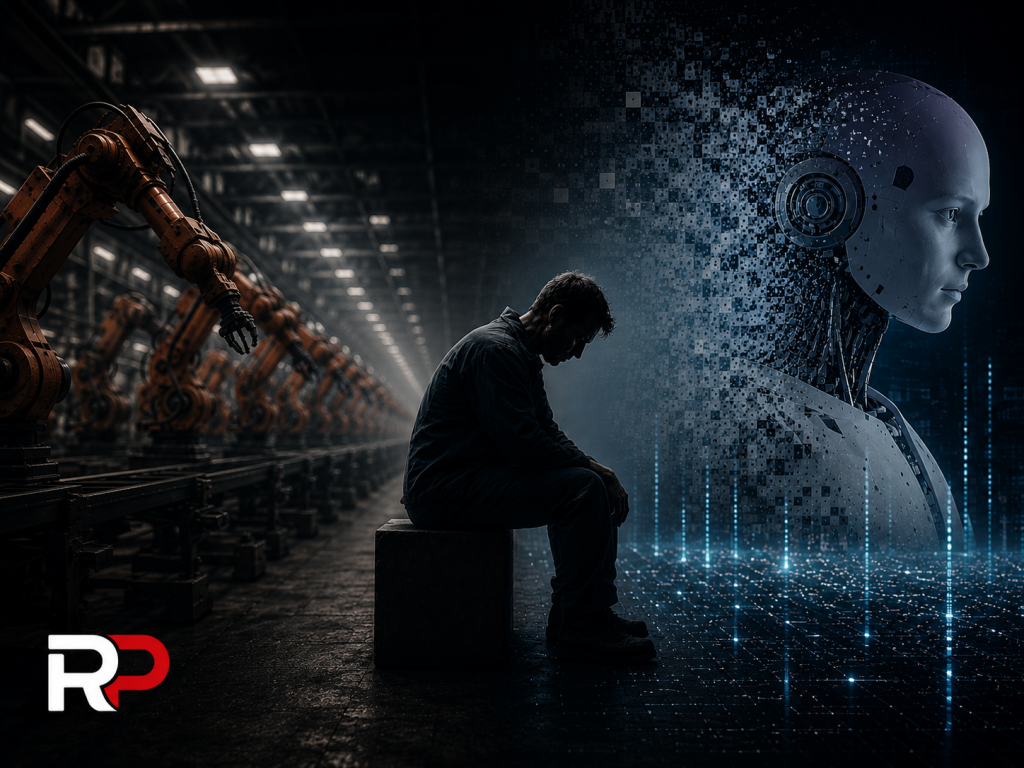
The Industrial Revolution transformed labor through machines and factories, prompting Karl Marx to develop his theory of alienation. Today, artificial intelligence is driving a parallel transformation. As AI automates tasks, reshapes workflows, and redefines human roles, Marx’s warnings about workers becoming estranged from their labor feel strikingly relevant. Marx’s Four Dimensions of Alienation In his ‘Economic and Philosophic Manuscripts of 1844’, Marx outlined alienation as a profound disconnection under capitalism. Workers experience: Alienation from the product of labor: The things workers create belong to the capitalist, not the producer, turning the output into an alien, opposing force. Alienation from the process of production: Labor feels external and coerced rather than a fulfilling expression of human creativity. Work becomes drudgery rather than self-realization. Alienation from species-being (human potential): Repetitive, fragmented tasks stifle creativity, social connection, and personal development, reducing people to animal-like survival mode. Alienation from fellow humans: Competitive structures and division of labor foster isolation instead of cooperative relationships. These were not mere complaints about bad jobs. Marx saw alienation as a systemic feature of capitalist production that dehumanizes workers. AI’s New Forms of Alienation Modern workplaces already show parallels. AI-powered tools in call centers, content moderation, logistics, coding, and creative fields often position humans as supervisors or data labelers rather than autonomous creators. Workers monitor algorithms, provide inputs, or handle edge cases, but they lose control over the core creative or decision-making process. This creates fresh risks: Deskilling and loss of agency: Routine cognitive work—once a source of skill and pride—gets automated. Remaining tasks can feel like “feeding the machine,” leaving employees reactive rather than proactive. Surveillance and data-driven control: Platforms track every keystroke, metric, and interaction. This intensifies the sense that labor serves external powers (algorithms and distant owners) rather than personal or collective goals. Gig and platform economies: Delivery drivers, ride-share workers, and content creators often face algorithm-mediated relationships with customers and pay. Autonomy erodes as ratings, route optimization, and recommendation systems dictate the pace and nature of work. Emotional and creative hollowing: Even in knowledge work, over-reliance on generative AI for writing, design, or analysis can make outputs feel less personal. Workers may question the value of their own contributions when AI produces similar results faster. Studies and analyses of digital labor highlight “epistemic alienation” (loss of knowledge and understanding of one’s own work processes) and “affective alienation” (emotional disconnection from tasks). Not All Doom: Opportunities for Re-humanization AI need not deepen alienation. By automating drudgery data entry, repetitive analysis, dangerous physical tasks it could free humans for higher-order work involving creativity, empathy, strategy, and interpersonal connection. Promising paths forward include: Human-in-the-loop design: Involve workers in developing and governing AI systems so they retain meaningful control and ownership. Reskilling with purpose: Invest in education that emphasizes uniquely human strengths—critical thinking, ethical judgment, emotional intelligence—rather than narrow technical compliance. Policy safeguards: Universal basic services, shorter workweeks, profit-sharing from AI productivity gains, and regulations on algorithmic transparency can mitigate displacement and insecurity. Organizational culture: Prioritize well-being metrics alongside efficiency. Companies that treat employees as partners in AI adoption report higher engagement. Examples from informal sectors in developing economies show that preserving autonomy (flexible hours, direct customer relationships) can buffer against alienation, even amid economic precarity. AI should enhance rather than erode this. A Human-Centered Future Marx critiqued technology not because he opposed progress, but because he saw it deployed in ways that concentrated power and estranged people from their labor. In 2026, we face a choice: Allow AI to amplify 19th-century dynamics of control and fragmentation, or harness it to create more meaningful work. The technology itself is neutral. The outcomes depend on values embedded in its design, ownership structures, and supporting policies. If we center human flourishing, creativity, connection, and autonomy, we can move beyond alienation toward work that affirms rather than diminishes our humanity. The Industrial Revolution ultimately raised living standards despite its costs. The AI revolution can do the same, but only if we learn from history and refuse to repeat its psychological and social failures.